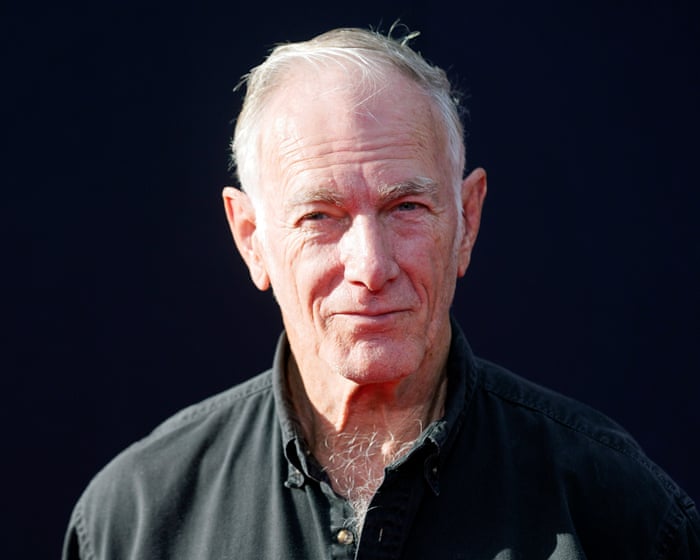
When John Sayles, a student at Williams College taking time off from his summer factory job, was hitchhiking during the summer of 1970 in West Virginia, it was often coal miners who picked him off the main interstate highways.
At the time, miners were amid the wake of a contentious union election within the United Mine Workers of America. Fierce tensions had led to the murder of union reform candidate Joseph Yablonski and his wife in December 1969.
Miners told Sayles the conflict was comparable to the Matewan Massacre, an event in 1920 he had never heard about before and, like much labor history, had largely been shelved away from the forefront of the American consciousness.
Learning that bit of American history would eventually inspire Sayles to write a screenplay and eventually direct the 1987 film Matewan.
The film, starring Chris Cooper, James Earl Jones and Mary McDonnell, depicts union organizing among coal miners and the efforts of Baldwin-Felts detective agents, hired by the Stone Mountain coal company, to stop them.
In an interview with the Guardian, Sayles noted workers at the coalmine were segregated into groups based on race and ethnicity, a labor tactic referred to as a judicious mixture meant to prevent unionization from occurring.
Yet local West Virginian, Black and Italian-immigrant miners still banded together to strike against the coal company.
“When they went on strike, all three of those groups got together and went out together, and that was really interesting to me, the way that a common enemy can overcome these other prejudices that the miners had,” Sayles said.
The Baldwin-Felts agents, in turn, assaulted, threatened, intimidated and even killed a miner in an attempt to shut down the union effort. A shootout between the two groups on 19 May 1920 would leave seven agents, the Matewan mayor and two miners dead.
The story “was structured like a western. It ends literally with the good guys and the bad guys facing each other on Main Street at high noon,” he said, adding that it had “that kind of strong ending that was kind of perfect to make a film”.
Sayles and several cast and crew of the film, including producer Maggie Renzi and actors David Strathairn, Chris Cooper, Gordon Clapp and Joe Grifasi, appeared at a July reunion screening of the film in Williamstown, Massachusetts.
At the screening, Sayles and Renzi noted the film was made to resurrect a piece of labor history that was at risk of being forgotten.
“I just felt like people needed a reminder of why we have unions,” Sayles told the Guardian about why he made the film. “Without them, you don’t have anywhere to stand.”
Sayles notes that even after the massacre, union organizing at Matewan failed and organizing workers faced significant violent resistance, until the landmark National Labor Relations Act was passed under Franklin Delano Roosevelt in 1935 that enshrined collective bargaining rights in the US.
But workers continue to face challenges. Unionizing some industries has become even more difficult because employers can now move workplaces abroad, drastically limiting the power a union has if the work can be done anywhere else, Sayles said, citing ongoing cases of employers who shut down locations where workers were on a path to unionization, such as Walmart and Starbucks.
He also emphasized workers in the US are still hampered by federal laws that restricts organizing, like the Taft Hartley Act of 1947, which prohibits national and sympathy strikes. For example, while strikes in the film industry occur, each craft is separated by its own labor union and must strike independent from one another.
But collective action can bring together large coalitions that inflict change.
“We’re so balkanized in this country that you almost have to have people who are totally outside of your group to join you to get enough of a mass to say, ‘No, this isn’t going to happen,’” Sayles said. “But I think that that anger and that feeling of being betrayed, when it busts out in a larger community of people who aren’t necessarily on the frontline, the way that it did in Minnesota, and you get those numbers, then the other side actually does have to pay attention.”
Source note
First published by The Guardian Culture
This article was supplied by The Guardian Culture through its RSS feed and formatted for Crooli Signal. The reporting remains with the original publisher.
Read the original at The Guardian Culture