From
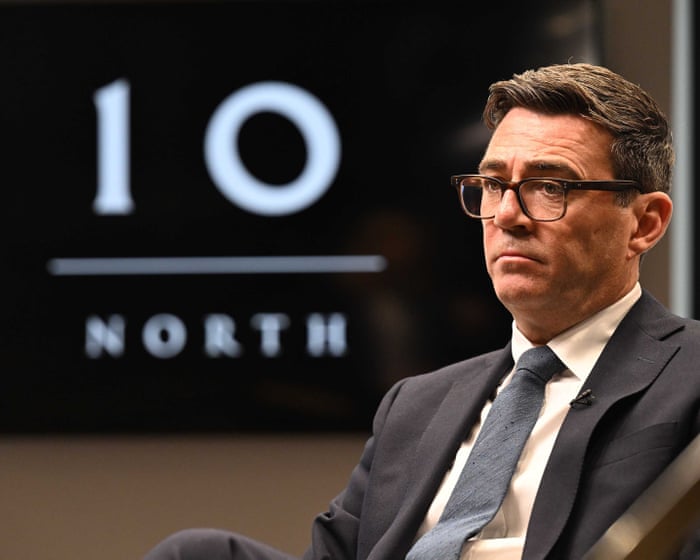
Andy Burnham to set out devolution plan amid criticism it won't benefit regions equally
Good morning and welcome to our live coverage of UK politics. From 2028 English regional mayors, for the first time, will be handed a share of income tax receipts instead of central grants and be less beholden to the Treasury by being able to borrow (mainly from private investors) to invest in big projects.
Mayors will also be able to keep a share of business rates totalling tens of millions of pounds by April 2027, and gain greater control over services such as housing and transport, under plans that form part of the government’s devolution agenda.
As my colleague Josh Halliday notes in this story, these will replace existing grants rather than being additional money, but local leaders said no longer relying on ringfenced Treasury handouts would be transformative.
Traditionally, the Treasury in Whitehall has controlled the distribution of local funding, leading to patchy distribution of funds across the country and disempowered local leaders feeling money is not going where it is needed most.
The prime minister, Andy Burnham, is expected to visit a community centre in the north of England this morning and officially announce what has been described as “the biggest transfer of power from Westminster in a generation”. The government said it would be developing different proposals for Scotland, Wales and Northern Ireland.
The plans have been criticised by the Conservatives for being vague, with more details to be released in a white paper and the budget this autumn.
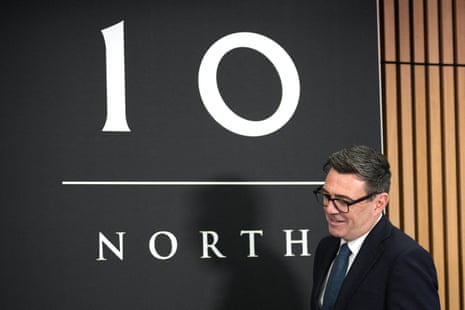
Andy Burnham will announce his devolution plan on Friday. Photograph: Christopher Furlong/Reuters
The Conservative shadow chancellor, Mel Stride, said that if faster growing areas get more funding it “could mean those who lose out are precisely those areas which have seen weaker local economies over recent years.”
Some mayors are thought to be considering using their powers to roll out tax reliefs, including the Conservative mayor of Tees Valley and Reform UK’s Greater Lincolnshire mayor, Dame Andrea Jenkyns.
Louise Haigh, who is overseeing No 10 North in her new role as chancellor of the duchy of Lancaster, was asked whether the scheme will enable rich areas to get richer while poorer areas get poorer. Speaking on Times Radio, she acknowledged that London, which already attracts major investment, will be able to retain more money under the government’s tax devolution plans.
Haigh said:
double quotation markThere is already a way that the business rates retention is distributed to correspond with central funding formula to correct for that. Because you wouldn’t want to have it that places like London and Manchester and Bristol were able to retain more of theirs while other areas that weren’t growing at the same rate, were falling behind. So there will be a formula and funding position set out in the budget that that corrects this, but really, we are the most centralised nation in the G7, and that has held back our growth and our productivity outside London and the south-east for too long.
Asked whether London will be able to retain more money than it has done previously, She added:
double quotation markYes, that’s right, and it will have more powers devolved, 16-19 funding, employment support budgets and the ability to tailor their own vocational routes. This will be an important part of developing their own local regional growth strategy as well.
MPs Diane Abbott and Joani Reid have been readmitted into Labour and had the parliamentary whip restored, just under two weeks into Andy Burnham’s premiership.
The party confirmed that this followed separate independent disciplinary processes, although Labour said the leadership played no role in either decision.
Abbott, 72, the mother of the House of Commons, was suspended for a second time last summer after saying she did not regret comments about racism that had led to her initial loss of the whip in 2023.
Reid, the MP for East Kilbride and Strathaven who was elected in 2024, voluntarily relinquished the whip in March this year. Her husband had been arrested on suspicion of assisting a foreign intelligence service in a case linked to China. Reid has never been accused of wrongdoing.
The Guardian understands from Labour party sources that Reid has never been party to the police investigations into alleged Chinese spying.
You can read more on this story by the Guardian’s political correspondent, Aletha Adu, here:
Good morning and welcome to our live coverage of UK politics. From 2028 English regional mayors, for the first time, will be handed a share of income tax receipts instead of central grants and be less beholden to the Treasury by being able to borrow (mainly from private investors) to invest in big projects.
Mayors will also be able to keep a share of business rates totalling tens of millions of pounds by April 2027, and gain greater control over services such as housing and transport, under plans that form part of the government’s devolution agenda.
As my colleague Josh Halliday notes in this story, these will replace existing grants rather than being additional money, but local leaders said no longer relying on ringfenced Treasury handouts would be transformative.
Traditionally, the Treasury in Whitehall has controlled the distribution of local funding, leading to patchy distribution of funds across the country and disempowered local leaders feeling money is not going where it is needed most.
The prime minister, Andy Burnham, is expected to visit a community centre in the north of England this morning and officially announce what has been described as “the biggest transfer of power from Westminster in a generation”. The government said it would be developing different proposals for Scotland, Wales and Northern Ireland.
The plans have been criticised by the Conservatives for being vague, with more details to be released in a white paper and the budget this autumn.
The Conservative shadow chancellor, Mel Stride, said that if faster growing areas get more funding it “could mean those who lose out are precisely those areas which have seen weaker local economies over recent years.”
Some mayors are thought to be considering using their powers to roll out tax reliefs, including the Conservative mayor of Tees Valley and Reform UK’s Greater Lincolnshire mayor, Dame Andrea Jenkyns.
Louise Haigh, who is overseeing No 10 North in her new role as chancellor of the duchy of Lancaster, was asked whether the scheme will enable rich areas to get richer while poorer areas get poorer. Speaking on Times Radio, she acknowledged that London, which already attracts major investment, will be able to retain more money under the government’s tax devolution plans.
Haigh said:
\n There is already a way that the business rates retention is distributed to correspond with central funding formula to correct for that.\n Because you wouldn’t want to have it that places like London and Manchester and Bristol were able to retain more of theirs while other areas that weren’t growing at the same rate, were falling behind.\n So there will be a formula and funding position set out in the budget that that corrects this, but really, we are the most centralised nation in the G7, and that has held back our growth and our productivity outside London and the south-east for too long.\n
Asked whether London will be able to retain more money than it has done previously, She added:
\n Yes, that’s right, and it will have more powers devolved, 16-19 funding, employment support budgets and the ability to tailor their own vocational routes. This will be an important part of developing their own local regional growth strategy as well.\n
Key events
- 42m agoDiane Abbott and Joani Reid readmitted as Labour MPs
- 1h agoAndy Burnham to set out devolution plan amid criticism it won't benefit regions equally
Diane Abbott and Joani Reid readmitted as Labour MPs
Aletha Adu
MPs Diane Abbott and Joani Reid have been readmitted into Labour and had the parliamentary whip restored, just under two weeks into Andy Burnham’s premiership.
The party confirmed that this followed separate independent disciplinary processes, although Labour said the leadership played no role in either decision.
Abbott, 72, the mother of the House of Commons, was suspended for a second time last summer after saying she did not regret comments about racism that had led to her initial loss of the whip in 2023.

Diane Abbott, left, and Joani Reid. Photograph: The Guardian and Alamy
Reid, the MP for East Kilbride and Strathaven who was elected in 2024, voluntarily relinquished the whip in March this year. Her husband had been arrested on suspicion of assisting a foreign intelligence service in a case linked to China. Reid has never been accused of wrongdoing.
The Guardian understands from Labour party sources that Reid has never been party to the police investigations into alleged Chinese spying.
You can read more on this story by the Guardian’s political correspondent, Aletha Adu, here:
There are 14 regional mayors in England, including the mayor of London, with many areas not represented by one. Speaking to BBC Radio 4’s Today programme, the first secretary of state, Louise Haigh, defended the devolution plan against accusations that areas with weaker economies and without mayors could lose out on key funding.
She said:
double quotation markWe won’t be imposing mayors to areas that don’t want it but we will be creating strategic authorities in every area of England and they will be able to hold these powers and resources as well. They don’t need to have mayors in order to control them or in order to retain a share of their income tax and business rates.
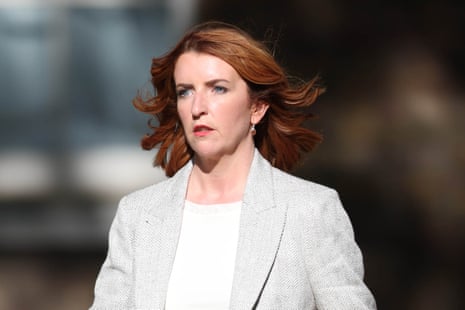
Louise Haigh said areas don’t need mayors to benefit from the new investment. Photograph: Ryan Jenkinson/Getty Images
As we mentioned in the opening post, Ben Houchen, the Conservative Tees Valley mayor, has indicated he would use so-called “fiscal devolution” to lower the tax burden for his voters. According to a report in The Times, Houchen said he wanted to make his region “a more attractive place and a more competitive place to invest in than Manchester and London”.
The Tees Valley Combined Authority comprises five constituent local authorities: Darlington, Hartlepool, Middlesbrough, Redcar and Cleveland, and Stockton-on-Tees. The total population of the area covered is about 700,000.
“Every mayor is backing fiscal devolution because they want more money to spend in their area,” Houchen, England’s only Conservative mayor, said.
“However, if the Tees Valley is handed a slice of local income tax and business rates generated locally, I’ll create a new rebate scheme to put money back into people’s pockets and let families keep more of the money they earn.”
“Fiscal devolution must be about giving places like Teesside the power to do things differently, back growth and reward the people that drive our local economy instead of squeezing every last penny out of them.”
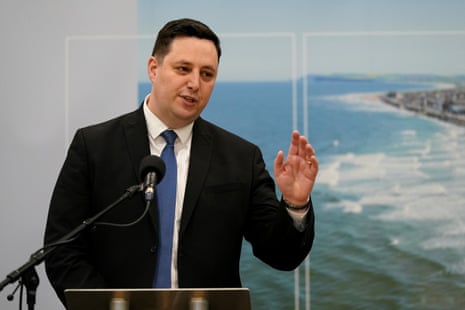
Ben Houchen has led the Tees Valley region since 2017. Photograph: Ian Forsyth/Getty Images
As a reminder, the government has not yet decided the exact portion of taxes mayors will get.
The first secretary of state, Louise Haigh, confirmed this morning that it is “not possible at the moment” for English mayors to give their local residents tax rebates under the devolution plans. Speaking to Times Radio, she said: “We’d have to see the details of that, but it certainly isn’t possible at the moment.”
Haigh added:
double quotation markThose kind of schemes necessitate HMRC to set up full schemes, that’s just not possible at the moment. The way that the mayors are set up and work is to reinvest the money into their public services, into their local economies.
Josh Halliday
Under a new “local first” principle, Andy Burnham will instruct ministers to justify why powers should remain in Whitehall rather than be devolved.
As well as greater control over technical education for teenagers, announced by the government this week, some of those close to the prime minister have called for mayors to oversee schools, GPs and childcare providers through health and education commissioners – a similar role to that played by police and crime commissioners.
No 10 said Britain’s civil service of 520,000 would become “smaller and more strategic” as decision-making moves out of London, where one in five of these officials are based.
England’s directly elected mayors, who control areas spanning three-quarters of the population, would be able to use the revenue generated from business rates and income tax as they wish, including tax breaks for important industries or rebates to residents.
However, experts said one of the most significant consequences was that it would allow combined authorities to take out 30-year loans against their projected income to fund major projects that previously needed Treasury approval.
Mayors said they were currently prevented from funding huge initiatives on housing and transport because they could not take out private loans on the basis of one-year funding settlements from Whitehall. You can read more here:
Andy Burnham to set out devolution plan amid criticism it won't benefit regions equally
Good morning and welcome to our live coverage of UK politics. From 2028 English regional mayors, for the first time, will be handed a share of income tax receipts instead of central grants and be less beholden to the Treasury by being able to borrow (mainly from private investors) to invest in big projects.
Mayors will also be able to keep a share of business rates totalling tens of millions of pounds by April 2027, and gain greater control over services such as housing and transport, under plans that form part of the government’s devolution agenda.
As my colleague Josh Halliday notes in this story, these will replace existing grants rather than being additional money, but local leaders said no longer relying on ringfenced Treasury handouts would be transformative.
Traditionally, the Treasury in Whitehall has controlled the distribution of local funding, leading to patchy distribution of funds across the country and disempowered local leaders feeling money is not going where it is needed most.
The prime minister, Andy Burnham, is expected to visit a community centre in the north of England this morning and officially announce what has been described as “the biggest transfer of power from Westminster in a generation”. The government said it would be developing different proposals for Scotland, Wales and Northern Ireland.
The plans have been criticised by the Conservatives for being vague, with more details to be released in a white paper and the budget this autumn.
Andy Burnham will announce his devolution plan on Friday. Photograph: Christopher Furlong/Reuters
The Conservative shadow chancellor, Mel Stride, said that if faster growing areas get more funding it “could mean those who lose out are precisely those areas which have seen weaker local economies over recent years.”
Some mayors are thought to be considering using their powers to roll out tax reliefs, including the Conservative mayor of Tees Valley and Reform UK’s Greater Lincolnshire mayor, Dame Andrea Jenkyns.
Louise Haigh, who is overseeing No 10 North in her new role as chancellor of the duchy of Lancaster, was asked whether the scheme will enable rich areas to get richer while poorer areas get poorer. Speaking on Times Radio, she acknowledged that London, which already attracts major investment, will be able to retain more money under the government’s tax devolution plans.
Haigh said:
double quotation markThere is already a way that the business rates retention is distributed to correspond with central funding formula to correct for that. Because you wouldn’t want to have it that places like London and Manchester and Bristol were able to retain more of theirs while other areas that weren’t growing at the same rate, were falling behind. So there will be a formula and funding position set out in the budget that that corrects this, but really, we are the most centralised nation in the G7, and that has held back our growth and our productivity outside London and the south-east for too long.
Asked whether London will be able to retain more money than it has done previously, She added:
double quotation markYes, that’s right, and it will have more powers devolved, 16-19 funding, employment support budgets and the ability to tailor their own vocational routes. This will be an important part of developing their own local regional growth strategy as well.
Source note
First published by The Guardian UK
This article was supplied by The Guardian UK through its RSS feed and formatted for Crooli Signal. The reporting remains with the original publisher.
Read the original at The Guardian UK