Good morning, and welcome to our rolling coverage of business, the financial markets and the world economy.
Technology stocks are booming again after the recent sell-off, boosting global stock markets – despite setbacks for Elon Musk’s SpaceX and the US chipmaker AMD.
In Asia, Japan’s Nikkei rose 3.6% and South Korea’s Kospi jumped 4.1%.
Brent crude fell below $80 a barrel by Tuesday’s close, and today, oil prices have dipped further, amid hopes for a peace deal. Brent, the global benchmark, is down 0.5% at 78.95 a barrel.
Qatar said a draft proposal had been circulated and US treasury secretary Scott Bessent suggested an agreement to reopen shipping flows could be reached “today or tomorrow”. The website Axios reported that the US is hoping for a Wednesday announcement of an interim deal.
Wall Street indices climbed to record highs on Tuesday as Caterpillar and Palantir Technologies joined other companies reporting strong profits, and crude oil prices eased. However, AMD fell 8.8% after hours and SpaceX lost 7.5%, amid worries that capital expenditure is using up its cashflow.
“Oh, the irony,” said Stephen Innes, global strategist at Quintex Intel. “Wall Street is chasing the the AI trade it just sold.”
He explained:
\n The market has changed its mind on AI, but the risks have not gone away.\n The capital expenditure numbers remain staggering. Goldman Sachs calculates that US technology investment as a share of GDP has already surpassed its late-1990s peak, while the largest cloud and computing companies’ 2026 spending plans are almost 50% higher than analysts expected only six months ago.\n There is also a circularity that should not be ignored. One hyperscaler’s capex becomes a semiconductor company’s revenue, an electrical-equipment supplier’s backlog and a data-centre developer’s earnings. The infrastructure boom is producing the profits that help validate the infrastructure boom.\n That can continue far longer than skeptics expect, particularly when balance sheets remain strong, and demand exceeds available capacity. Eventually, however, investors will need to determine how much of the current earnings growth represents sustainable end demand and how much is the temporary consequence of everyone building simultaneously.\n China adds another layer. Rapid advances from Alibaba and other Chinese model developers reinforce the argument that the technological gap is narrowing, but lower-cost models are not an uncomplicated positive for US incumbents. Cheaper inference can broaden adoption while placing pressure on pricing, proprietary-model economics and the value assigned to scarcity.\n For now, investors are focused on the bullish side of cheaper AI: wider adoption, heavier compute demand and more infrastructure spending. The pressure on pricing and proprietary-model economics is a problem for another quarter.\n Disbelief has given way to an upside chase. July removed leverage, punished weak hands and compressed valuations. Earnings then reminded investors that expensive infrastructure is not necessarily unproductive infrastructure.\n Months were spent worrying that Big Tech was spending too much. The new fear is that investors sold just as those companies began proving why they had to spend it.\n
The Agenda
- \n 9am BST: Eurozone S&P Global services and composite PMIs for July
- \n 9.30am BST: UK S&P Global services and composite PMIs for July
- \n 1.15pm BST: US ADP employment change for July
- \n 3pm BST: US ISM services PMI for July
Key events
- 24m agoIntroduction: Asian shares jump on AI trade revival despite SpaceX, AMD setbacks, as oil prices dip
James Bull, technology industry senior analyst at RSM UK, said:
double quotation markSpaceX’s first results as a public company are more encouraging than many investors expected. Revenue of $7.8bn was 15% ahead of forecasts and nearly double the same period last year, losses narrowed and the AI division delivered stronger commercial progress than anticipated. However, the broader investment case remains largely unchanged from the company’s IPO in June. Starlink continues to be the group’s established revenue and profit engine, but the loss-making AI division is where the long-term bet sits. The AI business generated $2.6bn in Q2, but is still running at an operating loss of $1.3bn. While these results provide evidence of commercial traction, the more important test will be in the next quarter. The business is still investing heavily, with capital expenditure of more than $18bn in the quarter, a significant proportion of which related to AI infrastructure, which requires significant future revenue growth to justify. SpaceX says that, as recently announced compute agreements with customers including Google and Anthropic go live, the AI division could reach an annualised revenue run rate of $100bn by December, compared with $3.2bn revenue in 2025. The next set of results should provide the first insight of how quickly these agreements are translating into reported revenue.
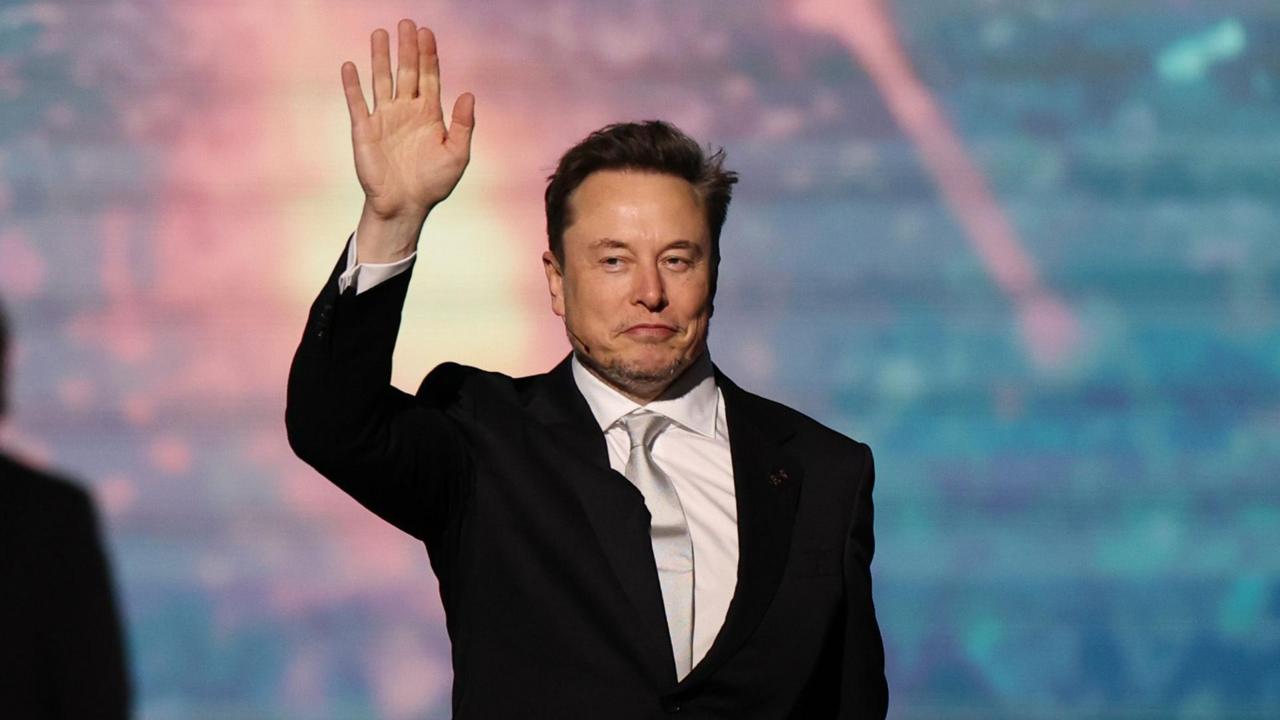
For the first time since SpaceX went public, the world got a first-hand look into the trillion-dollar corporation’s financials on Tuesday. The Elon Musk-run business reported its second-quarter earnings, saying that its revenue jumped 92% since June.
SpaceX beat Wall Street expectations, reporting $7.81bn in revenue, versus analysts’ predictions of $6.93bn. While expansive, the company is not profitable. The company reported a loss of $541m, down from a $1bn loss in the same quarter last year.
During a call with investors, Musk called it “another milestone year” for the company. “The SpaceX team is solving some of the hardest engineering problems in the history of humanity,” he said.
However, the shares still tanked as investors worried over its high capital spending.
Sam North, market analyst for the trading platform eToro, has looked at the results in detail:
double quotation markSpaceX has delivered the kind of debut quarter needed to support a $1.75 trillion valuation. Revenue surged 92% to $7.8bn, comfortably ahead of expectations, while adjusted EBITDA of $3.5bn was roughly 70% above forecasts. The most encouraging feature is the breadth of the beat. Connectivity produced $4.29bn, AI contributed $2.56bn and the space business generated $962m. With $100bn of cash and $47.5bn of backlog, SpaceX has the financial firepower to fund ambitions that would overwhelm almost any other company. But the results do not remove the central risk, they raise the stakes. SpaceX still lost $541m, Starlink’s falling revenue per user shows the cost of chasing global scale, and AI and Starship will continue consuming enormous amounts of capital. The Nvidia-backed Starmind project makes the orbital-compute vision more credible, but investors still need proof that it can become a profitable business rather than an expensive engineering experiment. This quarter buys Musk credibility and time, but with the lock-up expiry approaching and the shares already below their IPO level, SpaceX will need to keep producing exceptional numbers to prevent its valuation from returning to Earth.
Introduction: Asian shares jump on AI trade revival despite SpaceX, AMD setbacks, as oil prices dip
Good morning, and welcome to our rolling coverage of business, the financial markets and the world economy.
Technology stocks are booming again after the recent sell-off, boosting global stock markets – despite setbacks for Elon Musk’s SpaceX and the US chipmaker AMD.
In Asia, Japan’s Nikkei rose 3.6% and South Korea’s Kospi jumped 4.1%.
Brent crude fell below $80 a barrel by Tuesday’s close, and today, oil prices have dipped further, amid hopes for a peace deal. Brent, the global benchmark, is down 0.5% at 78.95 a barrel.
Qatar said a draft proposal had been circulated and US treasury secretary Scott Bessent suggested an agreement to reopen shipping flows could be reached “today or tomorrow”. The website Axios reported that the US is hoping for a Wednesday announcement of an interim deal.
Wall Street indices climbed to record highs on Tuesday as Caterpillar and Palantir Technologies joined other companies reporting strong profits, and crude oil prices eased. However, AMD fell 8.8% after hours and SpaceX lost 7.5%, amid worries that capital expenditure is using up its cashflow.
“Oh, the irony,” said Stephen Innes, global strategist at Quintex Intel. “Wall Street is chasing the the AI trade it just sold.”
He explained:
double quotation markThe market has changed its mind on AI, but the risks have not gone away. The capital expenditure numbers remain staggering. Goldman Sachs calculates that US technology investment as a share of GDP has already surpassed its late-1990s peak, while the largest cloud and computing companies’ 2026 spending plans are almost 50% higher than analysts expected only six months ago. There is also a circularity that should not be ignored. One hyperscaler’s capex becomes a semiconductor company’s revenue, an electrical-equipment supplier’s backlog and a data-centre developer’s earnings. The infrastructure boom is producing the profits that help validate the infrastructure boom. That can continue far longer than skeptics expect, particularly when balance sheets remain strong, and demand exceeds available capacity. Eventually, however, investors will need to determine how much of the current earnings growth represents sustainable end demand and how much is the temporary consequence of everyone building simultaneously. China adds another layer. Rapid advances from Alibaba and other Chinese model developers reinforce the argument that the technological gap is narrowing, but lower-cost models are not an uncomplicated positive for US incumbents. Cheaper inference can broaden adoption while placing pressure on pricing, proprietary-model economics and the value assigned to scarcity. For now, investors are focused on the bullish side of cheaper AI: wider adoption, heavier compute demand and more infrastructure spending. The pressure on pricing and proprietary-model economics is a problem for another quarter. Disbelief has given way to an upside chase. July removed leverage, punished weak hands and compressed valuations. Earnings then reminded investors that expensive infrastructure is not necessarily unproductive infrastructure. Months were spent worrying that Big Tech was spending too much. The new fear is that investors sold just as those companies began proving why they had to spend it.
The Agenda
- 9am BST: Eurozone S&P Global services and composite PMIs for July
- 9.30am BST: UK S&P Global services and composite PMIs for July
- 1.15pm BST: US ADP employment change for July
- 3pm BST: US ISM services PMI for July
Source note
First published by The Guardian Business
This article was supplied by The Guardian Business through its RSS feed and formatted for Crooli Signal. The reporting remains with the original publisher.
Read the original at The Guardian Business