BP’s chief executive has urged Andy Burnham to make use of the UK’s oil and gas resources even as the oil company prepares to sell its North Sea business after 60 years in the ageing basin.
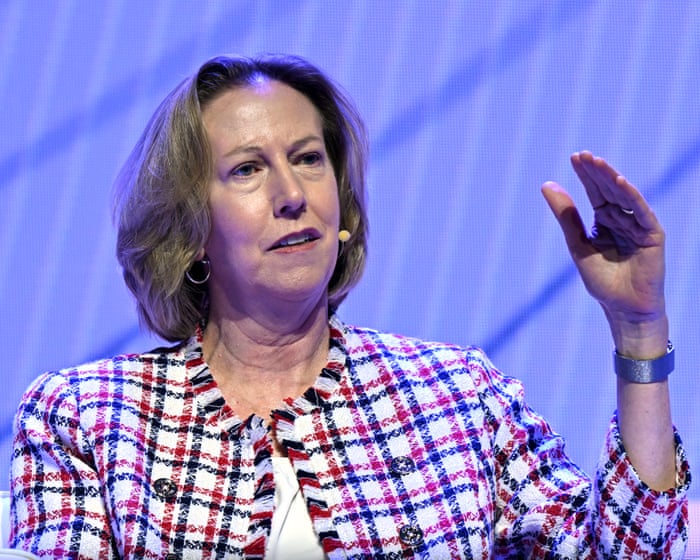
In a conversation with the new prime minister, Meg O’Neill said the country should prioritise using energy produced in the UK, “where we generate jobs, we generate tax revenue, we generate all those additional positive impacts”.
BP’s endorsement of UK oil production came days after the 117-year-old company signalled a plan to exit the North Sea after six decades, as part of a wider plan to streamline its business.
O’Neill said North Sea investments were “not competitive” within BP’s portfolio, while the company reported its highest quarterly profits since the first year of Russia’s war on Ukraine because of rising oil and gas prices caused by the Middle East crisis.
BP’s quarterly profits more than doubled to $5.73bn (£4.27bn) in the three months to the end of June, as the conflict in the Middle East continued to disrupt energy exports from the Gulf.
O’Neill added that BP had already received several unsolicited approaches to buy its North Sea fields and she was “very optimistic” that the assets would “continue to be profitable in the hands of a future owner”.
Burnham’s government is expected to make a decision on whether to allow two controversial North Sea oil and gas projects – the Jackdaw and Rosebank fields – to move ahead despite growing outrage over oil company profits and evidence of a deepening global climate crisis.
The new ministers are also facing calls to reform the North Sea tax regime. The industry has consistently argued that the UK government’s high taxes on oil and gas accelerate its natural decline.
In an interview with CNBC News, O’Neill said Burnham had “reinforced his desire to work closely with business” and “be pragmatic”.
She said: “The UK gets 75% of its energy from fossil fuels today, so that’s oil and natural gas. The first barrel of oil we consume and molecule of natural gas we need should be coming from the UK North Sea, where we generate jobs, we generate tax revenue, we generate all those additional positive impacts.
“The UK is still using a huge amount of oil and natural gas every single day, and we ought to be using our domestic resources first instead of buying those resources from a third party.
“You know, I think the new prime minister has come in with a focus on being pragmatic, and with a focus on understanding how communities around the nation can benefit from developing local economic outcomes.”
after newsletter promotion
Burnham was warned last week he could face the first revolt of his premiership over his apparent support for renewed drilling for oil and gas.
BP revealed its climbing profits days after Shell posted its second highest quarterly earnings on record after months of market volatility caused by the Middle East crisis.
Europe’s largest oil company doubled its net profit to almost $10bn in the three months to June, the highest since its record earnings in the months after Russia’s invasion of Ukraine.
The Middle East crisis has helped the Saudi oil company Aramco to a 44% rise in net profits to $32.69bn in the three months ending on 30 June, despite disruption in the strait of Hormuz, owing to higher sales revenue for refined and chemical products and crude oil.
The windfall profits for the world’s biggest oil and gas companies have faced criticism. Households and businesses are struggling with rising energy bills, and millions have been affected by severe heatwaves across Europe, which are made more likely and more severe by the fossil fuel-driven climate crisis.
Donald Trump has said Chevron and ExxonMobil, which also reported sharp profit increases this week, are “making too much money” and should return some of their profits to the public.
Rosie Downes, the head of campaigns at Friends of the Earth, said: “Clearly not everyone is feeling the pain of the energy crisis. While BP banks another round of enormous profits, millions of households are paying the price through sky-high energy bills and a climate crisis accelerating rapidly out of control with increasingly severe heatwaves, wildfires and droughts.”
Source note
First published by The Guardian UK
This article was supplied by The Guardian UK through its RSS feed and formatted for Crooli Signal. The reporting remains with the original publisher.
Read the original at The Guardian UK