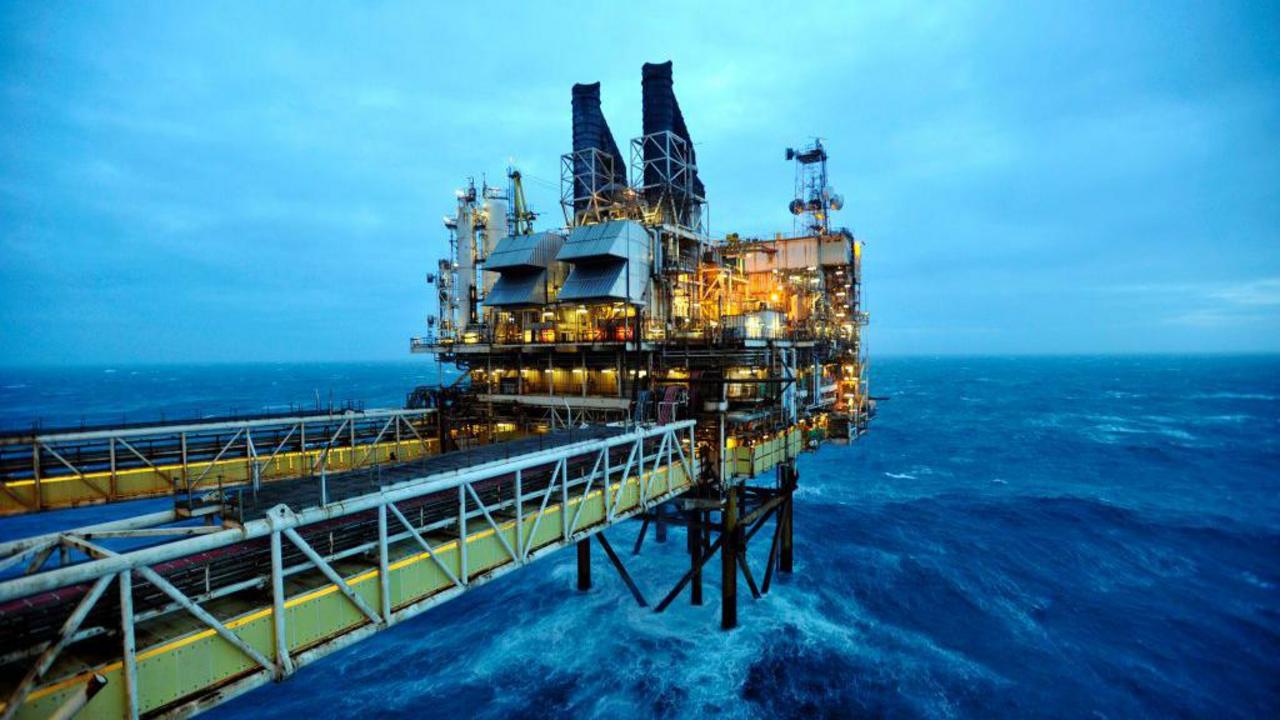
BP has said it is putting its North Sea business up for sale in a move that would end 60 years of production in the region by the oil giant.
The decision follows a review of BP's operations as it seeks to slim down the group. Its North Sea business has five production hubs - two in the central North Sea and three west of Shetland - and employs about 1,100 people.
Earlier this week, Prime Minister Andy Burnham said he told US President Donald Trump he would take a "pragmatic approach" to the issue of North Sea oil and gas.
Trump, some trade unions, industry figures and some Labour MPs all back increased drilling in the North Sea.
"The UK has been our home for more than 100 years and will continue to play an important role in our future," BP chief executive Meg O'Neill said.
"We're proud of the jobs we create, the contribution we make to the UK economy, and the work we do to keep energy flowing every day," she said.
The company said it remained committed to operating the business safely and reliably throughout the sale process.
Its North Sea business produced 117,000 barrels of oil equivalent per day in 2025, a small fraction of the oil giant's 2.3 million barrels of daily production.
O'Neill, who took the helm at BP in April, said earlier this year there was "untapped potential" in the North Sea.
However, in announcing Friday's decision she said: "As we focus our portfolio and direct capital to our highest-value opportunities, we believe our North Sea business will be better positioned as part of another company.
"It has world-class people, resilient assets and a proud heritage, and it is precisely these qualities that can attract an owner ready to back its next chapter. We are seeking an outcome that recognises that value."
The sale could potentially bring in £2bn to BP. Last month, the FT reported the company was in talks with Ithaca Energy to sell its North Sea assets for around this amount, although the talks fell through.
BP employs around 13,960 people in the UK. Its global headquarters will remain in the UK.
Energy Secretary Miatta Fahnbulleh said she was in close contact with BP, and her priority was to ensure that "the workers and local community are protected during this sale process".
The North Sea has increasingly become a topic for political debate.
In its 2024 general election manifesto, Labour said it would not issue new licences for drilling, but would honour existing ones.
But in recent months, as the Iran war pushed up global oil prices, calls have grown for more North Sea drilling to be approved, from the Conservatives, Reform UK and from President Trump, while also becoming a divisive issue within the Labour party.
Some Labour MPs have urged the government to take a more liberal approach, warning that the transition away from oil and gas must protect jobs and the cost of energy bills.
But others have backed the government's existing approach, arguing that expanding renewable energy is key to improving energy security and reducing the impact on climate change.
As energy secretary in Sir Keir Starmer's government, Ed Miliband was a staunch supporter of the manifesto position. Miliband is now the foreign secretary in Burnham's government.
Burnham himself has seemingly left the door open to future drilling. He said he told President Trump this week: "There is a resource there. When people are struggling - you can't ignore that."
Labour's deputy leader Lucy Powell previously told the BBC that Burnham would stick to the party's manifesto commitments, but there would be a "change of emphasis" on North Sea oil and gas.
Oil and gas companies have also criticised the UK's windfall tax - the Energy Profits Levy - which they argue means the North Sea has lost some of its appeal in recent years.
The Scottish government's energy minister, Stephen Gethins, said the decision would cause uncertainty for workers.
"Scotland's future prosperity – and our contribution to energy security – are reliant on North Sea energy production and, crucially, the skills and experience of that workforce," he said.
Reserved policies – such as the Energy Profits Levy – were driving an accelerated decline of North Sea oil and gas before renewables were fully ready to meet energy needs, Gethins added.
The Scottish Conservatives' energy spokesman, Andrew Bowie MP, called on the Labour government at Westminster to approve the Jackdaw and Rosebank offshore sites and cancel plans to ban new licences in the North Sea. He also called for the Energy Profits Levy to be scrapped.
Reform MSP Duncan Massey said 1,100 workers faced uncertainty with the BP sale, adding politicians should not put ideology ahead of jobs and economic reality.
The Scottish Greens said 80% of the oil from the North Sea was shipped overseas, therefore it was "doing very little to improve our energy security".
Source note
First published by BBC Politics
This article was supplied by BBC Politics through its RSS feed and formatted for Crooli Signal. The reporting remains with the original publisher.
Read the original at BBC Politics