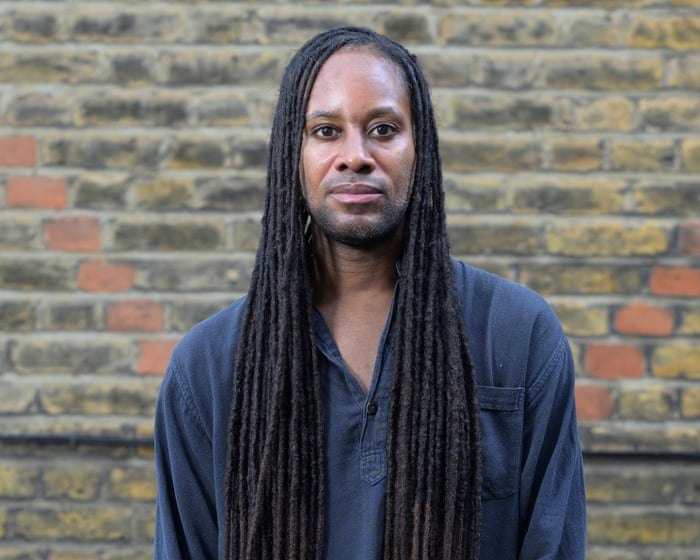
Jason Arday, the Cambridge professor accused of plagiarism and embellishment, has resigned after the university announced he was to face new investigations into his qualifications and career.
Arday, who had been dogged by a growing series of questions over his academic work and credentials, issued a statement on Wednesday night, saying the “relentless accusations, speculation and public commentary have taken a profound toll on me and on those I love”.
In the statement, published on the Good Law Project website, he wrote: “It is with profound sadness that I write to resign, with immediate effect, from my position at the University of Cambridge and Jesus College.
“When I accepted the extraordinary honour of becoming professor of sociology at Cambridge, it was, without question, the greatest professional privilege of my life.”
However, after days of detailed examination of his previous work and statements highlighting significant discrepancies, Arday said he had “concluded that the only way to bring this chapter to an end is to step away”.
Simon & Schuster had been preparing to publish Arday’s memoir, entitled Great and Unfortunate Things, later this month. His resignation may pause or even halt its publication and planned publicity tours.
Cambridge had initially defended Arday – the youngest black professor appointed in the university’s history, with a compelling life story of educational disadvantage – as “the victim of a vile campaign”. But as questions multiplied over Arday’s own claims, the university’s leaders felt that Cambridge’s reputation was in danger.
The Guardian published its own investigation uncovering discrepancies in Arday’s public accounts involving prodigious fundraising feats as well as claims he had been targeted by knife-wielding masked intruders.
Arday first faced allegations that he plagiarised parts of his PhD thesis and other academic research late last year, and has rejected the claims. An investigation by Liverpool John Moores University, which awarded his PhD in 2015, did not uphold the charges of plagiarism but said they were probably caused by “honest and reasonable error”.
Arday has denied all accusations of plagarism, telling the Guardian last week: “There have been multiple thorough investigations across several institutions as a result of the allegations, and immense scrutiny, including with an academic misconduct panel who concluded that there was no plagiarism or academic misconduct.”
On Wednesday evening, Cambridge announced it would launch an investigation after it said it received “new information” about his qualifications and career.
It said in a statement: “The University of Cambridge has begun an investigation following new information about Prof Arday’s academic qualifications and honorary appointments. In order to ensure a fair process, we will not comment further until this has concluded.
“Separately, there remains a number of ongoing complaints regarding academic misconduct, which are being handled in line with our misconduct in research policy. This is consistent with our previous statement on the matter.
“While we are fully aware of the public commentary and concerns around this matter, it remains vital that any process is thorough and adheres to both university policies and employment law.
“We also fully recognise that there is a person at the centre of this situation, and we continue to provide support to him.”
A spokesperson for Jesus College, Cambridge, said it was launching its own parallel “process”.
“Prof Arday’s college fellowship is linked to his university role and we will fully support the university.
“Prof Arday remains a fellow during this process. We recognise that this is a very difficult time for him and his family, and ask that they are treated with compassion and respect.”
The new investigations may have been triggered by Arday’s claims that he held a string of prestigious visiting fellowships and professorships at other universities, including statements in published biographies dating back to 2018 that he was a visiting fellow or visiting professor at Ohio State University in the US. Ohio State has denied that Arday was ever employed in any role.
Biographies linked to Arday have also claimed he had visiting professorships at Durham, Glasgow, Coventry and London Metropolitan universities as well as Nelson Mandela University in South Africa.
Arday’s appointment as professor of sociology at Cambridge, at the comparatively young age of 37, received wide publicity through Arday’s life story, which includes a diagnosis of autism at the age of three, being unable to speak until he was 11, or read or write until he was 18.
Despite those factors, Arday went on to university and swiftly climbed the academic ladder. After receiving his PhD in 2015 he held academic posts at Leeds Beckett, Roehampton and Durham universities, including a brief stint at Warwick University, before being appointed professor of sociology of education at Glasgow University in 2021. By early 2023 he had sought and won appointment to a professorship at Cambridge.
Arday also claimed to have completed 30 marathons in 35 days as well as running 600 miles in six days, and raising £5m for charity over several years. After facing questions he revised some of those claims, and instead said he was part of a funding raising group that he cannot name for legal reasons.
Arday told the Guardian he had been the target of multiple threats after his Cambridge appointment, including having a severed pig’s head delivered to his parents’ home. Subsequent investigations found no evidence to support this claim.
Jason Arday’s resignation statement in full
Dear colleagues,
It is with profound sadness that I write to resign, with immediate effect, from my position at the University of Cambridge and Jesus College.
When I accepted the extraordinary honour of becoming Professor of Sociology at Cambridge, it was, without question, the greatest professional privilege of my life. To become the youngest Black professor in the University’s history was something I could scarcely have imagined as a child growing up with a diagnosis of autism, unable to speak until I was eleven years old.
The response from so many people across the world was overwhelming. Thousands celebrated not simply my appointment, but what it represented: that talent, perseverance and hope can triumph over even the greatest adversity. It has been the privilege of my life to teach my students, to learn alongside them, and to witness their curiosity, kindness and ambition. They have given me far more than I could ever have given them.
Sadly, the years since my appointment have also been marked by an unrelenting level of public scrutiny and personal attack. While criticism is an inevitable part of academic life, what I have experienced has gone far beyond scholarly disagreement. The relentless accusations, speculation and public commentary have taken a profound toll on me and on those I love.
I have tried to continue because I believe deeply in the values of higher education, in rigorous scholarship, and in the transformative power of universities. I have tried because of my students, my colleagues and the countless people who have written to tell me that my journey gave them hope.
But there comes a point when the personal cost becomes too great.
I have a family. I want to be present for them. I want to reclaim some peace, some privacy and some semblance of an ordinary life. I no longer wish to feel as though I am living under a constant spotlight, where every aspect of my life is subject to public examination and judgement.
For my own wellbeing, for my family, and for those who have stood by me throughout this difficult period, I have concluded that the only way to bring this chapter to an end is to step away.
This decision should not be interpreted as a loss of faith in scholarship or in the values that first brought me to Cambridge. Nor should it be mistaken for an acceptance of the narratives that have surrounded me. It is simply the decision of someone who has reached the limits of what any person should reasonably be expected to endure.
To my students: thank you. Teaching you has been the greatest honour of my academic career. Your brilliance, compassion and determination give me enormous hope for the future.
To my colleagues and to the many thousands of people, from every corner of the world, who have supported me, defended me, written to me, and believed in me when it mattered most, I offer my deepest gratitude. Your kindness has carried me through some of the darkest moments of my life.
This is not the end of my work. It is simply the end of this chapter.
I need time to heal. I need time to simply be myself again.
And when that time comes, I will return.
I will return stronger, wiser and with the same determination that has always defined my journey. There is still so much work to do, and I look forward to doing it alongside so many of you in the years ahead.
For now, however, I ask only for understanding, for compassion, and for the space to begin again.
With gratitude, Professor Jason Arday
Source note
First published by The Guardian UK
This article was supplied by The Guardian UK through its RSS feed and formatted for Crooli Signal. The reporting remains with the original publisher.
Read the original at The Guardian UK