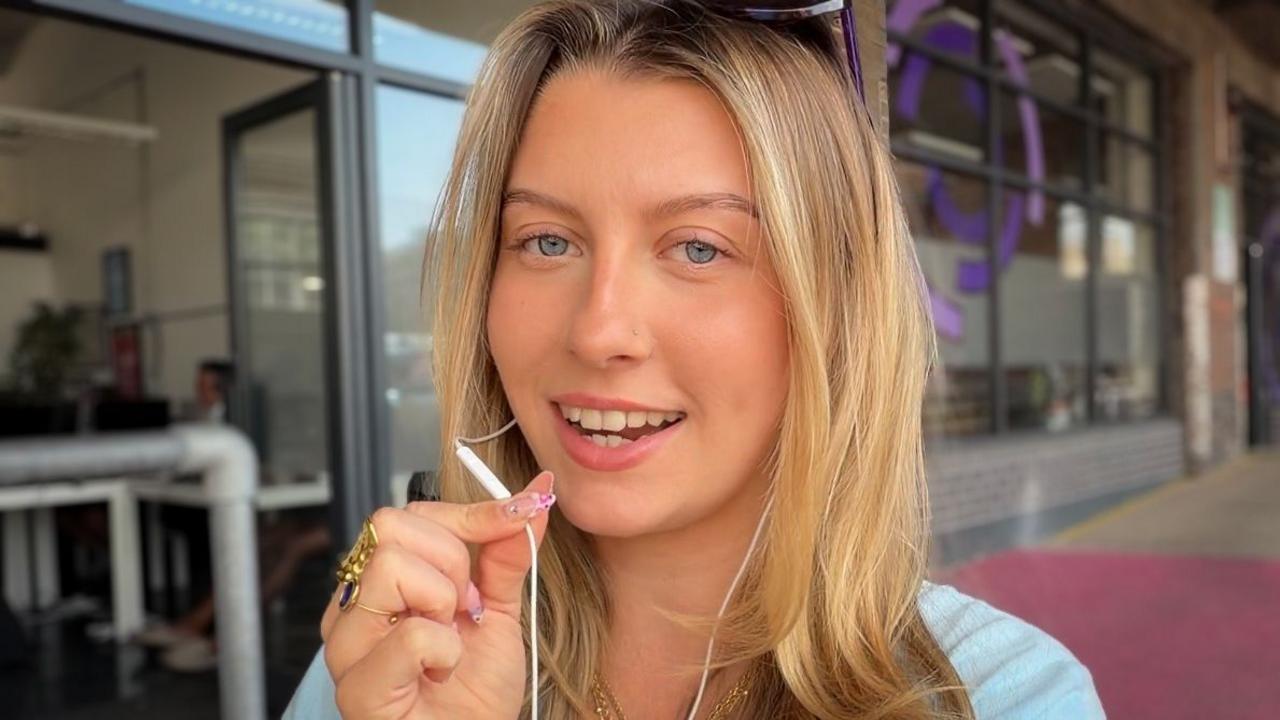
Former Team GB diver Freddie Woodward was a teenager when he realised he had a problem with porn.
"Every time I sat down to revise, all I wanted to do was open those sites," he revealed.
By age 12, he was regularly visiting what he calls "hardcore" sites. As his career progressed - which included representing his country in the Olympics - he was watching adult content several times a day.
Now aged 30, the Olympian has told the BBC how he eventually curbed his habit by shifting his mindset.
"You can't be the person who is trying to quit porn. You have to be someone who doesn't watch porn, and that takes a lot of work," he said.
So how can you spot when a porn habit has become unhealthy, and how can you tackle it?
Although it has become a common phrase, "porn addiction" is not an officially recognised condition in its own right.
"We know a lot of people have a problem with porn," explains sex and relationship psychotherapist Silva Neves, who says the matter has become more prevalent among clients at his private practice.
But experts are divided as to whether it is a true "addiction" – like someone might experience with drugs, for example – and how best to deal with it.
Researcher Campbell Ince, from Australia's Monash University, says the vast majority of clinicians now agree people can suffer from "problematic porn use", but there is still a lot to figure out about its causes and treatments.
This means there is no definitive list of symptoms or treatments available to those worried they may be addicted.
Some clinicians approach it as a compulsive sexual behaviour disorder, a condition recognised by the World Health Organization.
This is sexual behaviour that "feels out of control, is causing significant distress, and despite repeated attempts to control it, they can't," explains psychotherapist Dr Paula Hall, who works privately at the Laurel Centre, a sex and porn addiction centre, and also runs a not-for-profit service.
The NHS does say, external it is possible to be addicted to "just about anything", including sex.
So what are the markers of an unhealthy porn habit? Neves says it's "not about the frequency or duration, it's about the damage to your life".
That might be arriving late to work because you were up all night watching porn, prioritising it above commitments to your loved ones, or watching it in the office, he says.
Other crucial questions to ask yourself are whether you can actually cut back or adjust your habit when you try, and whether you carry on watching despite enjoying it less and less, adds Ince, whose research focuses on problematic porn use.
For Craig, who describes himself as a recovering addict, it was this loss of control which marked a turning point during the Covid-19 pandemic, when he was in his mid-thirties.
"I don't think it ever became a huge issue for me until lockdown, where that extra pressure, extra isolation, just compounded the issue.
"I didn't know how to get it to loosen its grip on me," he recalls.
Ince cautions that many people may feel distress about their porn use for social, moral or religious reasons – but that this does not necessarily mean your habit is out of control.
"Someone could be watching porn for five minutes, three times a week – and because they have a lot of shame, they think 'I'm an addict'," agrees Neves.
"But then there might be someone who watches it every day and thinks it's fine."
Hall similarly encourages clients to "get away from the idea of 'I'm either an addict or I'm not'", and focus instead on how much it is affecting things like your studies and relationships.
TV presenter Ore Oduba last year spoke publicly about his 30-year-long porn addiction which began at the age of nine – saying it had been "destroying my life from the inside out".
"It was the thing from a very early age that I was running to as a response to a lot of trauma", he told the We Need to Talk podcast last year, before curbing the habit.
It is not clear what might cause such behaviour, as experts say much more research is needed.
"The scientific examination is certainly accelerating, but there is a very long way to go," Ince says.
It might begin as something which gives you a break from other issues in your life, says Hall, such as a stressful career or relationship breakdown.
There may also be "predisposing factors", such as trauma, issues from early childhood, or negative self-belief, that can make it harder to curb your use, she says.
Craig, now 40, says porn became a "tool to turn to for every one of life's ups and downs".
He remembers feeling he was "broken, that there was no way out", before recovery helped him to think differently.
Hall also points to the impact of the digital environment and people becoming "addicted by design" through algorithms.
Both she and Neves say AI-generated porn is making matters worse by enabling people to create "exactly what they want and need", as Neves describes it.
If you are worried about your porn use, Ince recommends seeking out support from a qualified and experienced professional.
A registered psychologist can be particularly helpful because they may consider your mental health more broadly, "and we know that co-occurring mental health problems are more or less the rule, rather than the exception", he says.
This was the case for Craig, who did not realise his porn use may be unhealthy until he started therapy for his mental health.
"Porn addiction was like a contributing factor," he came to learn.
His therapist suggested he join a 12-step programme for sex addiction – a recovery model created by Alcoholics Anonymous – which he credits for his recovery.
"I didn't necessarily find it easy and straightforward to step away from my addiction. I feel I'm in a good place now, but also acknowledge the fact it's one day at a time."
There is currently no central, dedicated NHS service for those struggling with their porn use – although some local services offer support, and you can talk to your GP. This means treatment will more likely come from private practitioners, support groups or online self-help.
Ince suggests doing thorough research to find the right fit for you, and cautions against using online resources which may offer generic advice.
Some practitioners will help clients towards cutting out porn altogether, while others will help people "integrate it into their lives in a way that is functional," says Neves.
Seeking to understand any underlying factors will be a crucial part of treatment, says Hall.
There are some practical steps you can take yourself, she says, such as placing blocking software on your device.
She also advises recognising when you might feel more susceptible to using porn – which, for some, can be when you are stressed or alone – and planning ahead for what you might do instead.
But she says there should ultimately be more support on the NHS, particularly early intervention before porn can take over a person's life.
A spokesperson for the Department of Health and Social Care said: "It is troubling to hear accounts of individuals becoming addicted to pornography at such a young age.
"It reinforces the importance of the online safety laws we have put in place to prevent children from accessing harmful content."
Source note
First published by BBC News
This article was supplied by BBC News through its RSS feed and formatted for Crooli Signal. The reporting remains with the original publisher.
Read the original at BBC News