A Metro Bank customer has told of his fight to get more than £14,000 back after its systems failed to stop a fraud involving the AI chatbot Claude.
Zoli Rutter, a businessman from Sussex, had a total of £14,244 taken from his bank account. The scam involved fraudsters buying credits to use Claude.
When Metro Bank messaged Rutter to ask whether an attempted transaction was legitimate, he replied “no”, but the criminals were able to make a series of subsequent transactions of between £90 and £200.
The fraud is the latest to be linked to Anthropic, the company behind the Claude family of AI tools.
In May, a Claude user based in the US told Guardian Money about how gift cards to use the chatbot had been bought using his financial details. Other users shared similar stories on Reddit.
Claude has been in the news a lot lately. Last week, the Financial Conduct Authority (FCA) appeared to endorse Claude when it said Anthropic would provide access to the tool for firms taking part in a hi-tech FCA initiative (which lets financial companies safely experiment with advanced AI) in order “to help speed up their development work”.
However, this week it was revealed that some people’s conversations with Claude were publicly available online.
Rutter had been paying about £15 a month to use the chatbot for a few months when the scam happened.
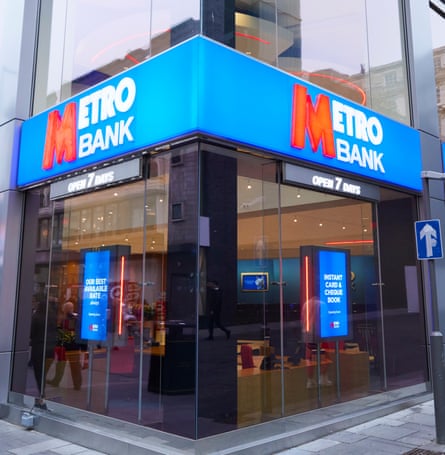
The fraudsters used the Metro Bank debit card linked to the customer’s Anthropic account to make the payments and buy credits to use on the platform. Photograph: Christopher Thomond/The Guardian
He had been using the new technology to track and analyse business invoices.
The fraudsters used the Metro Bank debit card linked to his Anthropic account to make the payments and buy credits for the platform.
On 19 June, Metro Bank spotted a suspicious transaction for £90.90 and texted Rutter to ask whether he had authorised it. When he texted back to say that he had not, he received another text to say his account would be frozen. However, just the suspect transaction was blocked and not his account.
Fraudulent transactions then continued. While some were blocked, says the bank, many were not. Metro eventually froze his card the day after the scam started, but by then, more than £14,000 worth of payments had gone through.
A spokesperson for the bank says that owing to the “complex nature of the fraud, regretfully some payments were processed” before it blocked the card fully.
After Guardian Money got in touch, Metro Bank temporarily refunded Rutter while a chargeback refund was sought from Anthropic.
In a statement, the bank said: “This is a concerning case involving a third party that the customer had made previous genuine payments to and provided card details [to], which were then used to make a series of purchases without Mr Rutter’s knowledge.
“We recognise how worrying and frustrating [the] experience has been for Mr Rutter. Metro Bank has refunded Mr Rutter while we progress a chargeback dispute request with Anthropic to refund the money that had been taken.”
It added: “We would encourage customers to contact their bank as soon as they notice any unusual transactions or are aware of any compromise to accounts where their financial details are stored.”
Anthropic says a coordinated gang had used Rutter’s cards to buy credits to use Claude. It says it has no evidence that the compromised card details had come from its own systems. The user behind the fraud has been banned, it adds.
Anthropic says anyone who has been charged for a fraudulent purchase should contact its support site and the charges will be refunded.
Rutter has since been refunded by Anthropic, and the temporary refund from Metro Bank is due to be taken back by the bank.
Metro Bank told him in a letter that he had not received the service it expected its customers to get, and it offered him £300 by way of compensation.
Rutter says he intends to make a complaint about what happened to the Financial Ombudsman Service.
The bank says it has taken steps to prevent delays in cards being blocked.
Anyone who has been affected by an unauthorised card fraud is advised to contact their bank immediately and ask for a refund. They may then be asked to fill out forms detailing what happened.The FCA says the refund should be in a customer’s account by the end of the next business day.
Source note
First published by The Guardian UK
This article was supplied by The Guardian UK through its RSS feed and formatted for Crooli Signal. The reporting remains with the original publisher.
Read the original at The Guardian UK