From
Iran and Oman make progress on a deal to reopen the strait of Hormuz, officials say
Iran and Oman have made progress toward a deal to reopen the strait of Hormuz, a potential breakthrough that could help end the war in the Middle East, regional officials have said.
Under the emerging agreement, ships would enter the Persian Gulf through an Iranian-controlled route and exit through a route controlled by Oman, with service fees charged for providing security and preserving the maritime environment, two regional officials told the Associated Press.
They said negotiations are still underway and that the final agreement could take a different form. They said any deal would be linked to lifting the US blockade on Iran’s ports.
The officials spoke on condition of anonymity to discuss the sensitive negotiations unfolding behind closed doors.
Israeli PM Benjamin Netanyahu said Israeli forces will not withdraw from their current lines in Gaza until Hamas has completely disarmed.
In remarks on social media, Netanyahu suggested there were differences between Israel and the Trump administration over a recent deal announced to disarm the militant group.
The agreement called for Hamas to begin disarming and for Israel to halt its strikes and begin withdrawing from Gaza. It was part of an October ceasefire agreement that ended major military operations but has stalled on other fronts.
Netanyahu said that disarmament should come first, and that Israeli forces would continue to “do whatever is necessary to protect themselves, our territory, and our citizens.”
He added the Trump administration “sent us a draft. We did not agree. It is not our draft. We sent our comments.
“This is our position. We stand firm on our interests, I believe both wisely and resolutely.”
The latest round of US-facilitated talks between Israel and Lebanon began on Tuesday in Rome and will continue through Thursday, US state department spokesperson Tommy Pigott has said.
“These discussions bring together technical teams from both governments to advance full implementation of the Trilateral Framework, including the pilot zone process, verified disarmament of Hizballah and other Iran-backed security threats, redeployment of Israeli forces from southern Lebanon, and laying the ground for a comprehensive peace and security agreement,” Pigott wrote in a post on X.
He added: “The United States remains fully committed to supporting both governments as they carry this process forward in a manner that delivers lasting security for both countries, eliminates security threats to Israel, and restores Lebanese state authority throughout the south.”
A reminder that at negotiations in Washington in June, Israel and Lebanon agreed to a framework deal that involves the disarmament of Hezbollah, a gradual withdrawal of Israeli forces from Lebanon’s south and the deployment of the Lebanese army to the region, starting in test areas known as “pilot zones”.
This week’s negotiations are the seventh round of US-mediated talks since Hezbollah drew Lebanon into the Middle East war in March with rocket fire at Israel in support of its backer Iran.
Israel responded with heavy airstrikes and a ground invasion that has killed more than 4,300 people in Lebanon.
- \n Iran and Oman have made progress toward a deal to reopen the strait of Hormuz, a potential breakthrough that could help end the war in the Middle East, regional officials have said. Under the emerging agreement, ships would enter the Persian Gulf through an Iranian-controlled route and exit through a route controlled by Oman, with service fees charged for providing security and preserving the maritime environment, two regional officials told the Associated Press.
- \n US secretary of state Marco Rubio said there has been progress made in discussions with Iran and Oman on getting more ships through the strait of Hormuz but no final agreement has been reached. “There’s been progress made in those talks, but not finality yet. We’re hoping that will happen very shortly,” Rubio told reporters at the State Department.
- \n The US treasury secretary, Scott Bessent, said Washington could reach a deal with Iran by tomorrow to reopen the strait of Hormuz. “We are in talks with the Iranians, and I think there is a chance we may have a deal today or tomorrow to open the strait and move towards a more normalised position in this conflict,” Bessent said in an interview with CNBC.
- \n Qatar’s foreign ministry said efforts to reach a diplomatic solution between the US and Iran were “ongoing”, despite conflicting statements from Tehran and Washington over whether negotiations had resumed. “We can confirm that the efforts are still ongoing with all parties,” the ministry spokesperson, Majed al-Ansari, told reporters at a briefing today.
- \n Iraq exported over 30 million barrels of crude oil in one month through the strategic strait of Hormuz, data from the maritime tracking firm Kpler showed on Tuesday. Before the Middle East war, which choked shipments through the vital waterway, Iraq produced around four million barrels per day, and exported an average of 105 million barrels per month, mostly from its Basra oil terminal via Hormuz.
- \n Donald Trump has criticised oil companies for “making too much money” from the global energy market disruption caused by his war on Iran. Brent crude had been trading at about $70 (£52) a barrel before the first US-Israeli strikes at the end of February, but by the end of April it had soared as high as $126 and is now trading at about $85 a barrel.
- \n Lebanese and Israeli negotiators have resumed direct talks in Rome, marking the seventh such meeting since the war between Israel and Hezbollah began in March. In televised remarks, Hezbollah’s leader, Naim Qassem, criticised the talks, saying they would bring “shame, humiliation and disappointment” to Lebanon and “successive concessions”.
- \n A mass funeral was held in Gaza City on Tuesday for 112 Palestinians whose bodies were recovered nearly three years after Israeli warplanes flattened a residential block. Hundreds of people gathered as the bodies wrapped in Palestinian flags were laid in rows near the destroyed buildings before being carried on stretchers through a narrow street for burial in a nearby cemetery.
Iran and Oman have made progress toward a deal to reopen the strait of Hormuz, a potential breakthrough that could help end the war in the Middle East, regional officials have said.
Under the emerging agreement, ships would enter the Persian Gulf through an Iranian-controlled route and exit through a route controlled by Oman, with service fees charged for providing security and preserving the maritime environment, two regional officials told the Associated Press.
They said negotiations are still underway and that the final agreement could take a different form. They said any deal would be linked to lifting the US blockade on Iran’s ports.
The officials spoke on condition of anonymity to discuss the sensitive negotiations unfolding behind closed doors.
US secretary of state Marco Rubio said there has been progress made in discussions with Iran and Oman on getting more ships through the strait of Hormuz but no final agreement has been reached.
“There’s been progress made in those talks, but not finality yet. We’re hoping that will happen very shortly,” Rubio told reporters at the State Department.
Meanwhile, Lebanese and Israeli negotiators have resumed direct talks in Rome, marking the seventh such meeting since the war between Israel and Hezbollah began in March.
In televised remarks, Hezbollah’s leader, Naim Qassem, criticised the talks, saying they would bring “shame, humiliation and disappointment” to Lebanon and “successive concessions”.
The Lebanese prime minister, Nawaf Salam, hit back, writing on X: “The greatest help to Israel was provided by those who unilaterally drew Lebanon into the adventures of futile wars... and granted it pretexts to attack our country.”
During talks in June, Israel and Lebanon agreed to a framework deal that involves the disarmament of Hezbollah, the withdrawal of Israeli troops from southern Lebanon and and the deployment of the Lebanese army to the region. Hezbollah has rejected the talks and refused to surrender its weapons.
While the fighting has largely subsided, sporadic Israeli strikes have continued in southern Lebanon since June, with the Israeli military also demolishing villages and forcing thousands of people to flee.
In further comments to CNBC, Bessent repeated the Trump administration’s claims that Iran’s military capabilities have been “wiped out”, despite Tehran continuing to hurl missiles at Gulf states.
Commenting on the Strait of Hormuz, he said that while the situation at the vital waterway was “still a little dicey”, “quite a few ships” were coming out “even now”.
He added: “I expect the energy prices to settle back down.”
There were reports this morning that a ship had been hit by an “unknown projectile” in the strait of Hormuz, near the Omani coast. One crew member is reportedly missing (see post at 13:28).
But Brent crude, the global benchmark for oil prices which had been rising earlier today, is now down 3.4% to $80.88 a barrel.
For the latest on the war’s impact on global markets, oil prices and the wider economy, follow our business live blog:
The US treasury secretary, Scott Bessent, said Washington could reach a deal with Iran by tomorrow to reopen the strait of Hormuz.
“We are in talks with the Iranians, and I think there is a chance we may have a deal today or tomorrow to open the strait and move towards a more normalised position in this conflict,” Bessent said in an interview with CNBC.
“It would be freedom of movement,” he added when asked if Iran could charge shipping tolls.
There was no immediate comment from Iran, which had earlier denied that negotiations with the US were taking place.
Hello and welcome to our live coverage of the Middle East.
Qatar’s foreign ministry said efforts to reach a diplomatic solution between the US and Iran were “ongoing”, despite conflicting statements from Tehran and Washington over whether negotiations had resumed.
“We can confirm that the efforts are still ongoing with all parties,” the ministry spokesperson, Majed al-Ansari, told reporters at a briefing today.
He said negotiations were focused on “a short-term resolution that would help us reignite the talks and go back to the mediation efforts in its totality”.
He added: “Our focus right now is on lowering escalation, reopening the strait [of Hormuz], and reopening the door for diplomacy between the parties.”
US president Donald Trump said yesterday that talks with Iran had resumed, telling reporters in the Oval Office: “This is the last chance for them to sign a good document.”
The Iranian foreign ministry spokesperson, Esmail Baghaei, denied the Trump’s claims, saying: “We are not currently negotiating with the United States.” He said the only talks under way were discussions with Oman on reopening shipping traffic in the strait of Hormuz.
The vital waterway, which carried a fifth of the world’s oil and gas before the war, has been effectively shut since the conflict began in late February and ships attempting to cross the strait have come under attack.
In one such incident, a cargo ship near the coast of Oman in the strait of Hormuz was “hit by an unknown projectile” overnight, according to the UK Maritime Trade Operations (UKMTO) agency. The ship was 20 nautical miles (23 miles) north-east of the Omani port city of Al Khasab when it reported being hit, UKMTO said. The agency did not provide further details.
Reuters later reported a Liberia-flagged dry bulk ship, Minoan Pioneer, had been hit by an unknown projectile in the strait of Hormuz while sailing close to Oman’s coast. It was unclear whether this incident was related to the earlier UKMTO report.
The British maritime risk management group Vanguard said a projectile reportedly struck the vessel’s engine room and a fire broke out in the accommodation area, Reuters reported.
“The crew are fighting the fire and require assistance, while the third engineer is reported missing,” Vanguard said.
In Gaza, a mass funeral is being held for 112 Palestinians whose bodies were recovered after nearly three years under the rubble in Gaza City. Associated Press reported they were among more than 300 people killed on 22 November 2023 when Israeli warplanes flattened an apartment block in the city’s Sabra neighbourhood. Their bodies were recovered over the weekend after emergency workers dug through the rubble for 136 hours, according to the Palestinian Civil Defence.
Despite agreeing to a ceasefire with Hamas in October, Israel has continued to bomb Gaza on a near daily basis since then, with July being the deadliest month of Israeli strikes so far this year. Gaza’s health ministry said 152 people were killed last month, while heavy bombing on Sunday killed a further 18 Palestinians.
Trump’s Board of Peace, established earlier this year as part of the US-brokered ceasefire, appeared to change its conditions for Israel to withdraw from Gaza after its top officials held a meeting yesterday with the Israeli prime minister, Benjamin Netanyahu.
“We note that the withdrawal of the IDF [Israel Defense Force’] beyond the yellow line will take place only once decommissioning is complete, as Hamas committed to the mediators. This applies to light weapons, heavy weapons and the tunnels alike,” the Board of Peace said.
In its roadmap for peace published last week, the board proposed that the “complete Israeli withdrawal from the Gaza Strip” be tied to the disarmament process, indicating that the two moves would happen simultaneously. But it did not say how this would happen, with both sides insisting the other make the first move.
Key events
- 5m agoNetanyahu: No Israeli withdrawal from Gaza until Hamas disarmed
- 2h agoNew round of US-facilitated Israel-Lebanon talks have begun, says US state department
- 2h agoThe day so far
- 2h agoIran and Oman make progress on a deal to reopen the strait of Hormuz, officials say
- 4h agoUS sees progress in strait talks, hopes for deal very shortly, Rubio says
- 5h agoLebanon and Israel hold fresh talks in Rome
- 6h agoBessent: I expect the energy prices to settle back down
- 6h agoBessent: US could reach deal with Iran to reopen strait of Hormuz by tomorrow
- 6h agoQatar says diplomatic efforts 'ongoing' as Iran insists it does not seek to expand war
Netanyahu: No Israeli withdrawal from Gaza until Hamas disarmed
Israeli PM Benjamin Netanyahu said Israeli forces will not withdraw from their current lines in Gaza until Hamas has completely disarmed.
In remarks on social media, Netanyahu suggested there were differences between Israel and the Trump administration over a recent deal announced to disarm the militant group.
The agreement called for Hamas to begin disarming and for Israel to halt its strikes and begin withdrawing from Gaza. It was part of an October ceasefire agreement that ended major military operations but has stalled on other fronts.
Netanyahu said that disarmament should come first, and that Israeli forces would continue to “do whatever is necessary to protect themselves, our territory, and our citizens.”
He added the Trump administration “sent us a draft. We did not agree. It is not our draft. We sent our comments.
“This is our position. We stand firm on our interests, I believe both wisely and resolutely.”
Haroon Janjua
“It doesn’t matter who gets the credit for making the deal; all we ask is that the sea be safe again. Our only means of earning a living is fishing, and each day that the sea remains tense is another day without an income,” Ahmed, a 52-year-old fisherman near the strait of Hormuz, told the Guardian.
“The sea has provided livelihood for our families for generations. We hope that the politicians make a quick decision so we can resume our fishing without fear of attacks, limitations, or being caught up in the middle,” he said.
It’s not only the large oil companies that get hurt when the strait is closed or dangerous, Ahmed said. “Fishermen such as ourselves have everything taken away from us. We hope that this deal will restore peace in the strait.” He added: “Our fishing nets have been empty not because there aren’t any fish, but because many of us are afraid to go out into the sea.”
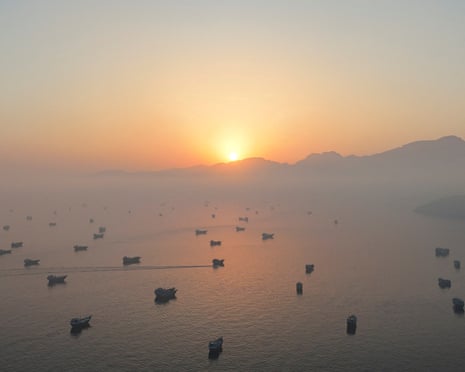
Vessels in the strait of Hormuz, as seen from Musandam, Oman, on 15 June. Photograph: Reuters
Any agreement formalising Iran’s control of the strait of Hormuz would mark a significant strategic victory for Tehran. For that reason, the United States could seek to block a deal by refusing to lift its blockade of Iran’s ports.
A reminder that the critical waterway was an open international waterway before the US and Israel attacked Iran on 28 February.
A US official familiar with the negotiations told the Associated Press on Tuesday that any “temporary” routes established through the strait would not involve approvals by Iran or charges.
The official, who was not authorized to comment publicly and spoke on condition of anonymity, said the US remains committed to returning to the status quo in which “no party controls the lanes or the ability to transit through them”.
That’s in line with what Donald Trump said on Monday. The US president told reporters in the Oval Office that he’s opposed to tolling in the strait (unless it’s the US). “I’m not going to let them charge,” Trump said. “Anybody’s going to charge, we’ll charge.”
Further to our earlier post citing regional officials, Iran’s foreign ministry spokesman Esmaeil Baghaei has said that Iran is continuing negotiations with Oman aimed at ensuring the safe flow of traffic through the strait of Hormuz.
As cited in Iranian state media, Baghaei said discussions focused on designating safe inbound and outbound lanes while protecting both countries’ sovereign rights and national security interests.
“Iran is working with Oman to develop the necessary mechanisms for future arrangements governing the management of maritime traffic through this strategic waterway,” he said, adding that the talks have been assessed positively at both technical and political levels.
New round of US-facilitated Israel-Lebanon talks have begun, says US state department
The latest round of US-facilitated talks between Israel and Lebanon began on Tuesday in Rome and will continue through Thursday, US state department spokesperson Tommy Pigott has said.
“These discussions bring together technical teams from both governments to advance full implementation of the Trilateral Framework, including the pilot zone process, verified disarmament of Hizballah and other Iran-backed security threats, redeployment of Israeli forces from southern Lebanon, and laying the ground for a comprehensive peace and security agreement,” Pigott wrote in a post on X.
He added: “The United States remains fully committed to supporting both governments as they carry this process forward in a manner that delivers lasting security for both countries, eliminates security threats to Israel, and restores Lebanese state authority throughout the south.”
A reminder that at negotiations in Washington in June, Israel and Lebanon agreed to a framework deal that involves the disarmament of Hezbollah, a gradual withdrawal of Israeli forces from Lebanon’s south and the deployment of the Lebanese army to the region, starting in test areas known as “pilot zones”.
This week’s negotiations are the seventh round of US-mediated talks since Hezbollah drew Lebanon into the Middle East war in March with rocket fire at Israel in support of its backer Iran.
Israel responded with heavy airstrikes and a ground invasion that has killed more than 4,300 people in Lebanon.
The day so far
- Iran and Oman have made progress toward a deal to reopen the strait of Hormuz, a potential breakthrough that could help end the war in the Middle East, regional officials have said. Under the emerging agreement, ships would enter the Persian Gulf through an Iranian-controlled route and exit through a route controlled by Oman, with service fees charged for providing security and preserving the maritime environment, two regional officials told the Associated Press.
- US secretary of state Marco Rubio said there has been progress made in discussions with Iran and Oman on getting more ships through the strait of Hormuz but no final agreement has been reached. “There’s been progress made in those talks, but not finality yet. We’re hoping that will happen very shortly,” Rubio told reporters at the State Department.
- The US treasury secretary, Scott Bessent, said Washington could reach a deal with Iran by tomorrow to reopen the strait of Hormuz. “We are in talks with the Iranians, and I think there is a chance we may have a deal today or tomorrow to open the strait and move towards a more normalised position in this conflict,” Bessent said in an interview with CNBC.
- Qatar’s foreign ministry said efforts to reach a diplomatic solution between the US and Iran were “ongoing”, despite conflicting statements from Tehran and Washington over whether negotiations had resumed. “We can confirm that the efforts are still ongoing with all parties,” the ministry spokesperson, Majed al-Ansari, told reporters at a briefing today.
- Iraq exported over 30 million barrels of crude oil in one month through the strategic strait of Hormuz, data from the maritime tracking firm Kpler showed on Tuesday. Before the Middle East war, which choked shipments through the vital waterway, Iraq produced around four million barrels per day, and exported an average of 105 million barrels per month, mostly from its Basra oil terminal via Hormuz.
- Donald Trump has criticised oil companies for “making too much money” from the global energy market disruption caused by his war on Iran. Brent crude had been trading at about $70 (£52) a barrel before the first US-Israeli strikes at the end of February, but by the end of April it had soared as high as $126 and is now trading at about $85 a barrel.
- Lebanese and Israeli negotiators have resumed direct talks in Rome, marking the seventh such meeting since the war between Israel and Hezbollah began in March. In televised remarks, Hezbollah’s leader, Naim Qassem, criticised the talks, saying they would bring “shame, humiliation and disappointment” to Lebanon and “successive concessions”.
- A mass funeral was held in Gaza City on Tuesday for 112 Palestinians whose bodies were recovered nearly three years after Israeli warplanes flattened a residential block. Hundreds of people gathered as the bodies wrapped in Palestinian flags were laid in rows near the destroyed buildings before being carried on stretchers through a narrow street for burial in a nearby cemetery.
Iran and Oman make progress on a deal to reopen the strait of Hormuz, officials say
Iran and Oman have made progress toward a deal to reopen the strait of Hormuz, a potential breakthrough that could help end the war in the Middle East, regional officials have said.
Under the emerging agreement, ships would enter the Persian Gulf through an Iranian-controlled route and exit through a route controlled by Oman, with service fees charged for providing security and preserving the maritime environment, two regional officials told the Associated Press.
They said negotiations are still underway and that the final agreement could take a different form. They said any deal would be linked to lifting the US blockade on Iran’s ports.
The officials spoke on condition of anonymity to discuss the sensitive negotiations unfolding behind closed doors.
Iraq exported over 30 million barrels of crude oil in one month through the strategic strait of Hormuz, data from the maritime tracking firm Kpler showed on Tuesday.
Before the Middle East war, which choked shipments through the vital waterway, Iraq produced around four million barrels per day, and exported an average of 105 million barrels per month, mostly from its Basra oil terminal via Hormuz.
Around 30 million barrels of Iraqi crude oil passed through Hormuz between 4 July and 4 August, according to vessels detected by Kpler.
A mass funeral was held in Gaza City on Tuesday for 112 Palestinians whose bodies were recovered nearly three years after Israeli warplanes flattened a residential block.
Hundreds of people gathered as the bodies wrapped in Palestinian flags were laid in rows near the destroyed buildings before being carried on stretchers through a narrow street for burial in a nearby cemetery.
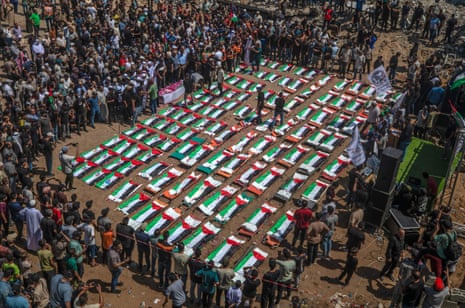
Palestinians gather during a mass funeral for 112 members of the Abu Sharia and Al-Hasayna families in the eastern Gaza City, 04 August 2026. Photograph: Mohammed Saber/EPA
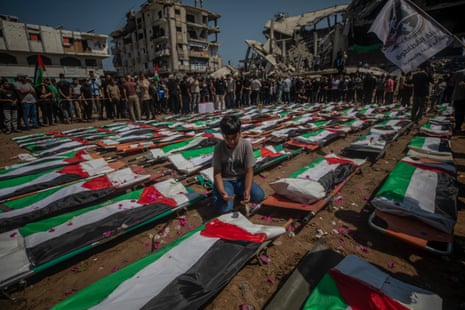
Palestinians gather during a mass funeral for 112 members of the Abu Sharia and Al-Hasayna families in the eastern Gaza City, 04 August 2026. Photograph: Mohammed Saber/EPA
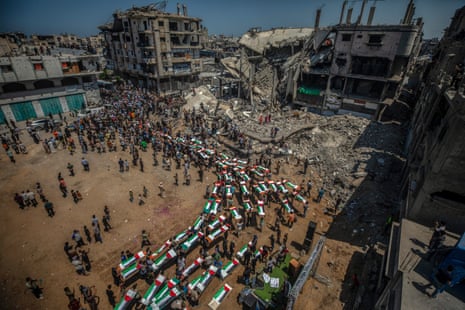
Palestinians gather during a mass funeral for 112 members of the Abu Sharia and Al-Hasayna families in the eastern Gaza City, 04 August 2026. Photograph: Mohammed Saber/EPA
US sees progress in strait talks, hopes for deal very shortly, Rubio says
US secretary of state Marco Rubio said there has been progress made in discussions with Iran and Oman on getting more ships through the strait of Hormuz but no final agreement has been reached.
“There’s been progress made in those talks, but not finality yet. We’re hoping that will happen very shortly,” Rubio told reporters at the State Department.
Here are some pictures on the newswires from Gaza, where a funeral was held for 112 Palestinians who were killed in an Israeli airstrike in November 2023. Gaza’s Civil Defense agency said it recovered the remains during two weeks of searching through rubble.
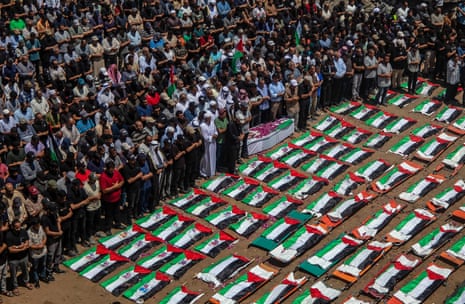
According to Gaza’s Civil Defense, the victims, including women and children, were killed on 22 November 2023 and remained trapped beneath the debris for nearly three years before being recovered and laid to rest. Photograph: Mohammed Saber/EPA
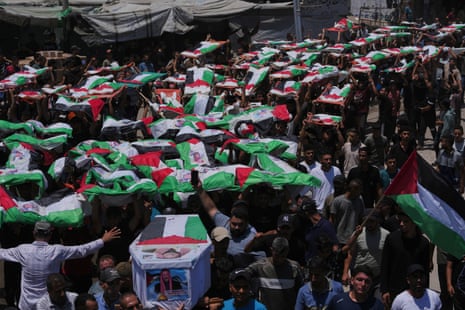
Palestinians carry the flag-draped bodies through Gaza City. Photograph: Jehad Alshrafi/AP
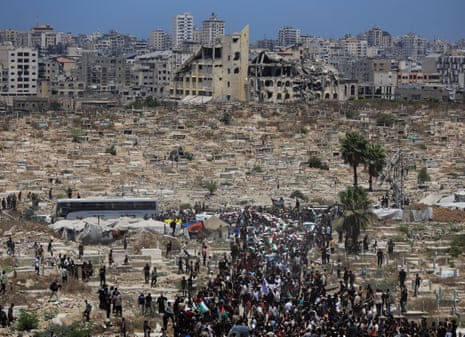
The attack in November 2023 killed more than 300 people in Gaza City’s Sabra neighbourhood. Photograph: Dawoud Abu Alkas/Reuters
Jillian Ambrose
Donald Trump has criticised oil companies for “making too much money” from the global energy market disruption caused by his war on Iran.
Brent crude had been trading at about $70 (£52) a barrel before the first US-Israeli strikes at the end of February, but by the end of April it had soared as high as $126 and is now trading at about $85 a barrel.
The US president took aim at the windfall profits revealed last week by ExxonMobil and Chevron, and said the companies would “give some of that back to the public”.
“They’re making too much money based on a shortage,” he told reporters at the White House on Monday evening. “I don’t like it.”
Trump was speaking just hours before BP reported its profits had doubled in the last quarter, to $5.7bn.
Read more:
Lebanon and Israel hold fresh talks in Rome
Meanwhile, Lebanese and Israeli negotiators have resumed direct talks in Rome, marking the seventh such meeting since the war between Israel and Hezbollah began in March.
In televised remarks, Hezbollah’s leader, Naim Qassem, criticised the talks, saying they would bring “shame, humiliation and disappointment” to Lebanon and “successive concessions”.

A motorcade arrives at the US embassy in Rome, Italy, where talks between Israel and Lebanon are expected to take place. Photograph: AP
The Lebanese prime minister, Nawaf Salam, hit back, writing on X: “The greatest help to Israel was provided by those who unilaterally drew Lebanon into the adventures of futile wars... and granted it pretexts to attack our country.”
During talks in June, Israel and Lebanon agreed to a framework deal that involves the disarmament of Hezbollah, the withdrawal of Israeli troops from southern Lebanon and and the deployment of the Lebanese army to the region. Hezbollah has rejected the talks and refused to surrender its weapons.
While the fighting has largely subsided, sporadic Israeli strikes have continued in southern Lebanon since June, with the Israeli military also demolishing villages and forcing thousands of people to flee.
Bessent: I expect the energy prices to settle back down
In further comments to CNBC, Bessent repeated the Trump administration’s claims that Iran’s military capabilities have been “wiped out”, despite Tehran continuing to hurl missiles at Gulf states.
Commenting on the Strait of Hormuz, he said that while the situation at the vital waterway was “still a little dicey”, “quite a few ships” were coming out “even now”.
He added: “I expect the energy prices to settle back down.”
There were reports this morning that a ship had been hit by an “unknown projectile” in the strait of Hormuz, near the Omani coast. One crew member is reportedly missing (see post at 13:28).
But Brent crude, the global benchmark for oil prices which had been rising earlier today, is now down 3.4% to $80.88 a barrel.
For the latest on the war’s impact on global markets, oil prices and the wider economy, follow our business live blog:
Bessent: US could reach deal with Iran to reopen strait of Hormuz by tomorrow
The US treasury secretary, Scott Bessent, said Washington could reach a deal with Iran by tomorrow to reopen the strait of Hormuz.
“We are in talks with the Iranians, and I think there is a chance we may have a deal today or tomorrow to open the strait and move towards a more normalised position in this conflict,” Bessent said in an interview with CNBC.
“It would be freedom of movement,” he added when asked if Iran could charge shipping tolls.
There was no immediate comment from Iran, which had earlier denied that negotiations with the US were taking place.
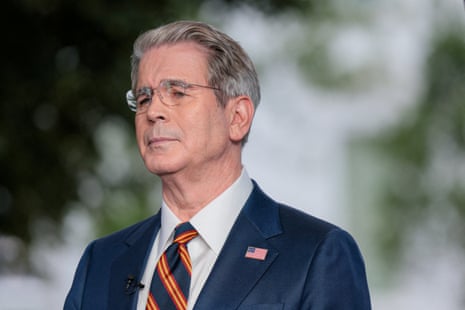
US treasury secretary Scott Bessent attends a media interview at the White House 30 July 2026. Photograph: Kylie Cooper/Reuters
Qatar says diplomatic efforts 'ongoing' as Iran insists it does not seek to expand war
Hello and welcome to our live coverage of the Middle East.
Qatar’s foreign ministry said efforts to reach a diplomatic solution between the US and Iran were “ongoing”, despite conflicting statements from Tehran and Washington over whether negotiations had resumed.
“We can confirm that the efforts are still ongoing with all parties,” the ministry spokesperson, Majed al-Ansari, told reporters at a briefing today.
He said negotiations were focused on “a short-term resolution that would help us reignite the talks and go back to the mediation efforts in its totality”.
He added: “Our focus right now is on lowering escalation, reopening the strait [of Hormuz], and reopening the door for diplomacy between the parties.”
US president Donald Trump said yesterday that talks with Iran had resumed, telling reporters in the Oval Office: “This is the last chance for them to sign a good document.”
The Iranian foreign ministry spokesperson, Esmail Baghaei, denied the Trump’s claims, saying: “We are not currently negotiating with the United States.” He said the only talks under way were discussions with Oman on reopening shipping traffic in the strait of Hormuz.
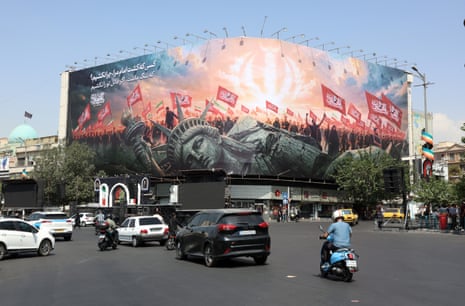
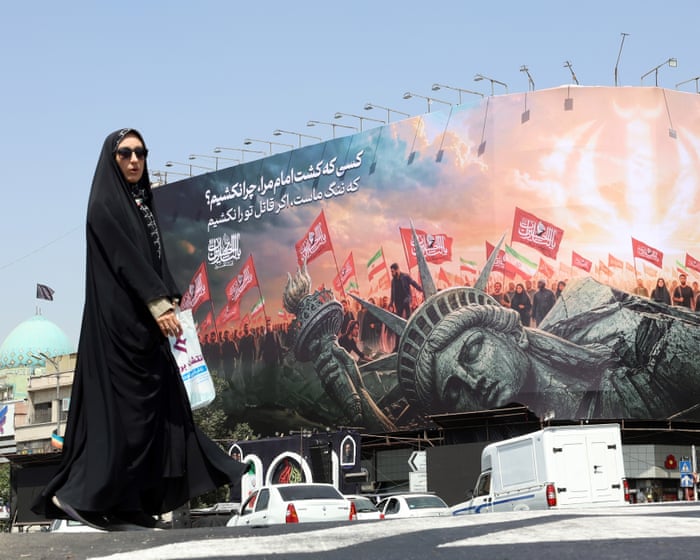
Iranians drive past an anti-US billboard at Enghelab Square in central Tehran, Iran. Photograph: Abedin Taherkenareh/EPA
The vital waterway, which carried a fifth of the world’s oil and gas before the war, has been effectively shut since the conflict began in late February and ships attempting to cross the strait have come under attack.
In one such incident, a cargo ship near the coast of Oman in the strait of Hormuz was “hit by an unknown projectile” overnight, according to the UK Maritime Trade Operations (UKMTO) agency. The ship was 20 nautical miles (23 miles) north-east of the Omani port city of Al Khasab when it reported being hit, UKMTO said. The agency did not provide further details.
Reuters later reported a Liberia-flagged dry bulk ship, Minoan Pioneer, had been hit by an unknown projectile in the strait of Hormuz while sailing close to Oman’s coast. It was unclear whether this incident was related to the earlier UKMTO report.
The British maritime risk management group Vanguard said a projectile reportedly struck the vessel’s engine room and a fire broke out in the accommodation area, Reuters reported.
“The crew are fighting the fire and require assistance, while the third engineer is reported missing,” Vanguard said.
In Gaza, a mass funeral is being held for 112 Palestinians whose bodies were recovered after nearly three years under the rubble in Gaza City. Associated Press reported they were among more than 300 people killed on 22 November 2023 when Israeli warplanes flattened an apartment block in the city’s Sabra neighbourhood. Their bodies were recovered over the weekend after emergency workers dug through the rubble for 136 hours, according to the Palestinian Civil Defence.
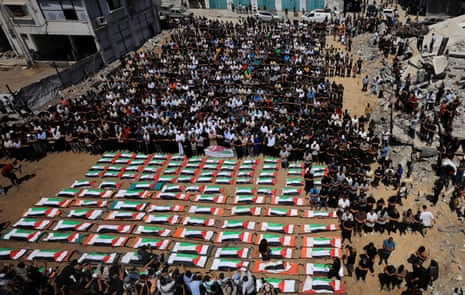
Palestinians attend the funeral of 112 members of the Hassayna and Abu Sharia clan in Gaza City, who were killed in an Israeli strike in 2023 and whose remains were recovered from beneath the rubble, according to Gaza's Civil Defense. Photograph: Dawoud Abu Alkas/Reuters
Despite agreeing to a ceasefire with Hamas in October, Israel has continued to bomb Gaza on a near daily basis since then, with July being the deadliest month of Israeli strikes so far this year. Gaza’s health ministry said 152 people were killed last month, while heavy bombing on Sunday killed a further 18 Palestinians.
Trump’s Board of Peace, established earlier this year as part of the US-brokered ceasefire, appeared to change its conditions for Israel to withdraw from Gaza after its top officials held a meeting yesterday with the Israeli prime minister, Benjamin Netanyahu.
“We note that the withdrawal of the IDF [Israel Defense Force’] beyond the yellow line will take place only once decommissioning is complete, as Hamas committed to the mediators. This applies to light weapons, heavy weapons and the tunnels alike,” the Board of Peace said.
In its roadmap for peace published last week, the board proposed that the “complete Israeli withdrawal from the Gaza Strip” be tied to the disarmament process, indicating that the two moves would happen simultaneously. But it did not say how this would happen, with both sides insisting the other make the first move.
Source note
First published by The Guardian World
This article was supplied by The Guardian World through its RSS feed and formatted for Crooli Signal. The reporting remains with the original publisher.
Read the original at The Guardian World