From
US and Iran signal hope for Hormuz deal but terms of agreement remain unclear
Hello and welcome to our live coverage of the Middle East.
US officials, including Donald Trump, have said a deal over the strait of Hormuz could be reached today, with continued diplomatic efforts potentially paving the way for US-Iran talks to resume.
“It could happen. Tomorrow or the next day,” the US president told reporters last night. “A lot of progress has been made.”
That optimism was shared by Iran, which said talks with Oman to reopen the critical shipping route were progressing “positively”.
It followed similar statements by the US’s secretary of state Marco Rubio and treasury secretary Scott Bessent, both of whom said progress had been made in those talks.
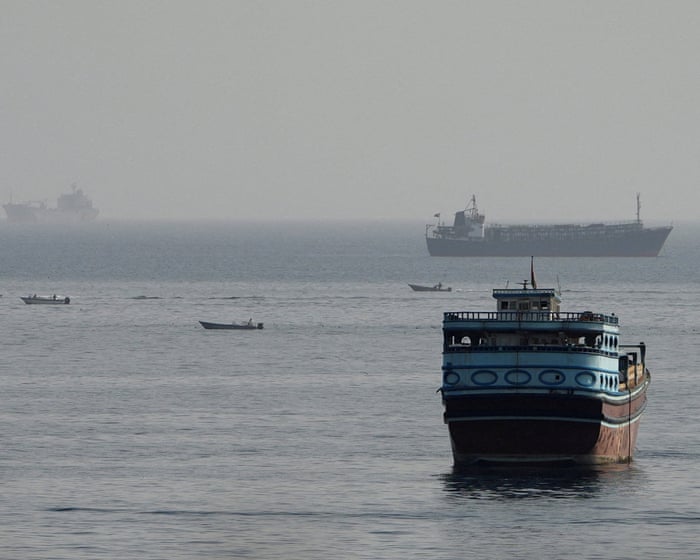
It remains to be seen what any agreement would include, as Iran has pushed for greater control of the strait of Hormuz, which carried about a fifth of the world’s oil and gas supply before the war, while the US has firmly rejected those demands. The strait has been effectively shut since 28 February, causing global energy prices to rocket.

A drone view shows vessels in the strait of Hormuz. Photograph: Reuters
A deal also does not guarantee that the strait of Hormuz would be reopened anytime soon, according to Iran’s state media. A central demand from Tehran has been the removal of the US naval blockade on Iranian ports, and it has threatened to keep the strait shut if “the United States continues to threaten Iran”. Both countries have accused each other of breaching the memorandum of understanding signed in June, which held for about a week before fresh hostilities erupted in the Gulf.
Citing an “informed source”, Iran’s state-run Islamic Republic of Iran Broadcasting (IRIB) reported:
double quotation markThe possible agreement between Iran and Oman on arrangements for vessels to pass through the strait of Hormuz has nothing to do with the immediate opening of the strait. Negotiations regarding arrangements for vessel traffic through the strait of Hormuz are purely Iranian-Omani and have no connection to the United States. If US violations continue, the strait of Hormuz will not open even with an agreement between Iran and Oman. The opening of the strait of Hormuz depends on a change in behaviour and correction of US violations.
Hello and welcome to our live coverage of the Middle East.
US officials, including Donald Trump, have said a deal over the strait of Hormuz could be reached today, with continued diplomatic efforts potentially paving the way for US-Iran talks to resume.
“It could happen. Tomorrow or the next day,” the US president told reporters last night. “A lot of progress has been made.”
That optimism was shared by Iran, which said talks with Oman to reopen the critical shipping route were progressing “positively”.
It followed similar statements by the US’s secretary of state Marco Rubio and treasury secretary Scott Bessent, both of whom said progress had been made in those talks.
It remains to be seen what any agreement would include, as Iran has pushed for greater control of the strait of Hormuz, which carried about a fifth of the world’s oil and gas supply before the war, while the US has firmly rejected those demands. The strait has been effectively shut since 28 February, causing global energy prices to rocket.
A deal also does not guarantee that the strait of Hormuz would be reopened anytime soon, according to Iran’s state media. A central demand from Tehran has been the removal of the US naval blockade on Iranian ports, and it has threatened to keep the strait shut if “the United States continues to threaten Iran”. Both countries have accused each other of breaching the memorandum of understanding signed in June, which held for about a week before fresh hostilities erupted in the Gulf.
Citing an “informed source”, Iran’s state-run Islamic Republic of Iran Broadcasting (IRIB) reported:
\n The possible agreement between Iran and Oman on arrangements for vessels to pass through the strait of Hormuz has nothing to do with the immediate opening of the strait.\n Negotiations regarding arrangements for vessel traffic through the strait of Hormuz are purely Iranian-Omani and have no connection to the United States.\n If US violations continue, the strait of Hormuz will not open even with an agreement between Iran and Oman.\n The opening of the strait of Hormuz depends on a change in behaviour and correction of US violations.\n
Key events
- 26m agoUS and Iran signal hope for Hormuz deal but terms of agreement remain unclear
One idea being floated is for Iran to control the route for ships entering the Gulf, while Oman would be responsible for the exit route. The Associated Press spoke to two regional officials familiar with the Iran-Oman talks who said service fees would be charged for keeping ships safe and protecting the waters.
Iran has repeatedly said the strait of Hormuz will not operate as it did before the war, as it seeks to secure a greater role in managing the critical shipping route. The Trump administration, however, has rejected any deal that would allow Iran such control.
“I’m not going to let them charge,” Donald Trump told reporters on Monday. “Anybody’s going to charge, we’ll charge.”
US and Iran signal hope for Hormuz deal but terms of agreement remain unclear
Hello and welcome to our live coverage of the Middle East.
US officials, including Donald Trump, have said a deal over the strait of Hormuz could be reached today, with continued diplomatic efforts potentially paving the way for US-Iran talks to resume.
“It could happen. Tomorrow or the next day,” the US president told reporters last night. “A lot of progress has been made.”
That optimism was shared by Iran, which said talks with Oman to reopen the critical shipping route were progressing “positively”.
It followed similar statements by the US’s secretary of state Marco Rubio and treasury secretary Scott Bessent, both of whom said progress had been made in those talks.
It remains to be seen what any agreement would include, as Iran has pushed for greater control of the strait of Hormuz, which carried about a fifth of the world’s oil and gas supply before the war, while the US has firmly rejected those demands. The strait has been effectively shut since 28 February, causing global energy prices to rocket.
A drone view shows vessels in the strait of Hormuz. Photograph: Reuters
A deal also does not guarantee that the strait of Hormuz would be reopened anytime soon, according to Iran’s state media. A central demand from Tehran has been the removal of the US naval blockade on Iranian ports, and it has threatened to keep the strait shut if “the United States continues to threaten Iran”. Both countries have accused each other of breaching the memorandum of understanding signed in June, which held for about a week before fresh hostilities erupted in the Gulf.
Citing an “informed source”, Iran’s state-run Islamic Republic of Iran Broadcasting (IRIB) reported:
double quotation markThe possible agreement between Iran and Oman on arrangements for vessels to pass through the strait of Hormuz has nothing to do with the immediate opening of the strait. Negotiations regarding arrangements for vessel traffic through the strait of Hormuz are purely Iranian-Omani and have no connection to the United States. If US violations continue, the strait of Hormuz will not open even with an agreement between Iran and Oman. The opening of the strait of Hormuz depends on a change in behaviour and correction of US violations.
Source note
First published by The Guardian World
This article was supplied by The Guardian World through its RSS feed and formatted for Crooli Signal. The reporting remains with the original publisher.
Read the original at The Guardian World