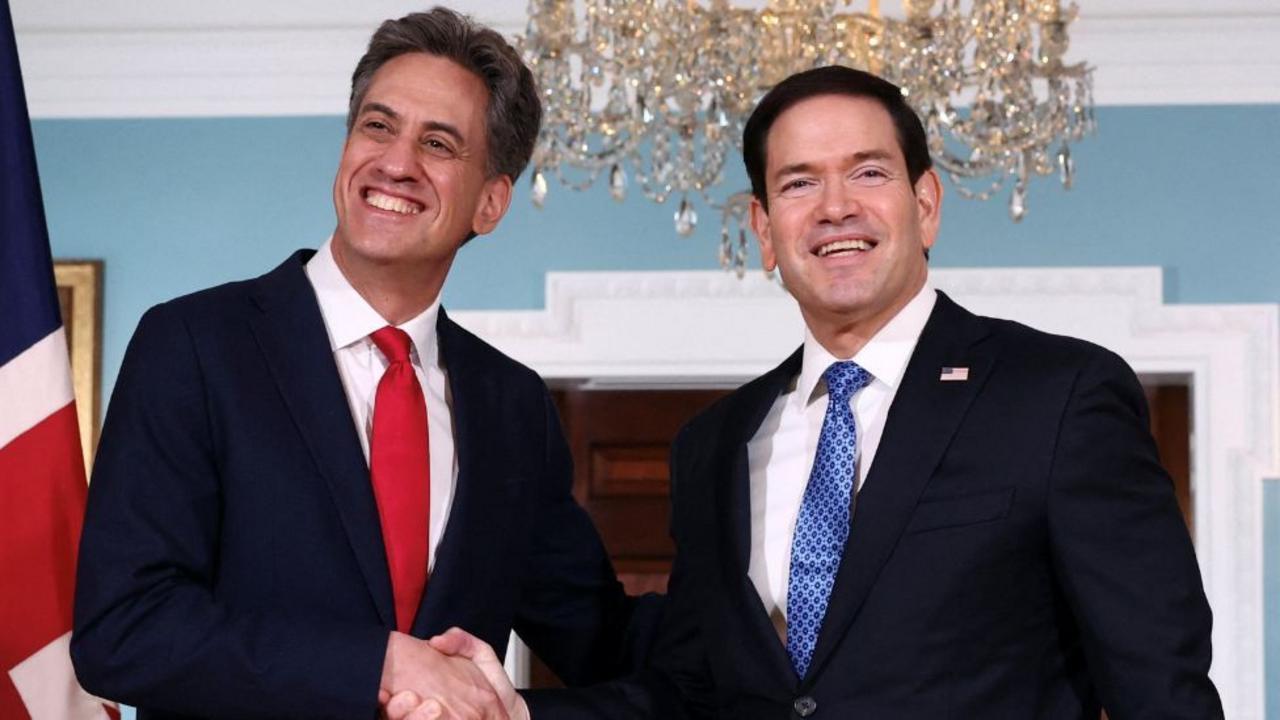
Reopening the Strait of Hormuz is essential to bringing down the cost of living in the UK, Foreign Secretary Ed Miliband has said as he met his US counterpart Marco Rubio.
The Labour minister is in Washington for his first official one-on-one meeting with Rubio.
The pair were expected to discuss the war in Ukraine and the humanitarian crisis in Gaza.
Miliband was invited to the US capital by Rubio after they met on the sidelines of a foreign ministers' summit in the Philippines, where the former Labour leader made his debut as foreign secretary.
The White House was reported to be concerned about Prime Minister Andy Burnham's decision to hand Miliband the Foreign Office brief, given his previous criticism of US President Donald Trump as a racist and a misogynist.
Trump is also a trenchant opponent of wind farms and supports the opening up North Sea oil and use of fossil fuels, whereas in his former role as UK energy secretary, Miliband championed net zero and renewables.
Burnham has signalled a shift in North Sea oil policy, earning praise from the Oval Office, but the dynamic between Miliband and Rubio was set to be closely watched.
Last month, Washington's top diplomat in London, Warren Stephens, said Miliband had been "wrong" in 2016 to call Trump "a racist, misogynistic self-confessed groper" and added "hopefully his views have changed".
Following their meeting, US state department spokesman Tommy Pigott said: "The two discussed the importance of Europe taking on a greater role in its own security.
"They reiterated their shared commitment to safe transit in the Strait of Hormuz and ensuring Iran never develops or obtains a nuclear weapon."
In a statement after the meeting, Miliband thanked Rubio for a "warm, productive meeting".
He said: "The UK and US are the closest of allies, bound by culture, history and interests, including our shared commitment as Nato allies.
"We discussed the vital importance of reopening the Strait of Hormuz, which is essential to protecting British families and businesses on the cost of living, this government's number one priority."
The strategic sea route, which had been open before the US and Israel launched the war in February, has been a flashpoint in the Middle East conflict and disruption to trade has driven up fuel and food prices.
Miliband added: "We also discussed standing together with Ukraine in the face of Putin's war, and spoke about the intolerable situation in Gaza and the urgent need to address the humanitarian situation there, as we work towards a lasting peace for Palestinians and Israelis."
Miliband will be taking the UK's seat on the World Bank board, so he will also meet its president Ajay Banga during his visit to discuss development, climate change and strengthening global resilience
Separately on Wednesday, new Defence Secretary Wes Streeting visited Ukraine for the first time since he started in the role.
He met President Volodymyr Zelensky at the National Security Defence Council meeting in Kyiv earlier today, which is a meeting with all the military and civil officials and ministers in government.
In a post on Telegram, Zelensky said he and Streeting discussed how London and Kyiv could jointly protect people who face "ballistic threats" from Russia.
He said: "We discussed how the UK could help Ukraine better protect our cities and communities from such ballistic threats - both bilaterally and multilaterally - just as it has done many times before by helping secure supplies of scarce defensive equipment.
"In particular, we discussed opportunities to establish co-production of certain types of weaponry, as both the UK and Ukraine possess strong battle-proven capabilities.
"We also discussed sanctions against Russian enterprises involved in the production of ballistic missiles."
He added: "I am grateful to the United Kingdom, His Majesty, the Prime Minister, and the British people for their unwavering support."
Source note
First published by BBC Politics
This article was supplied by BBC Politics through its RSS feed and formatted for Crooli Signal. The reporting remains with the original publisher.
Read the original at BBC Politics