Warning: Contains graphic details of sexual offences
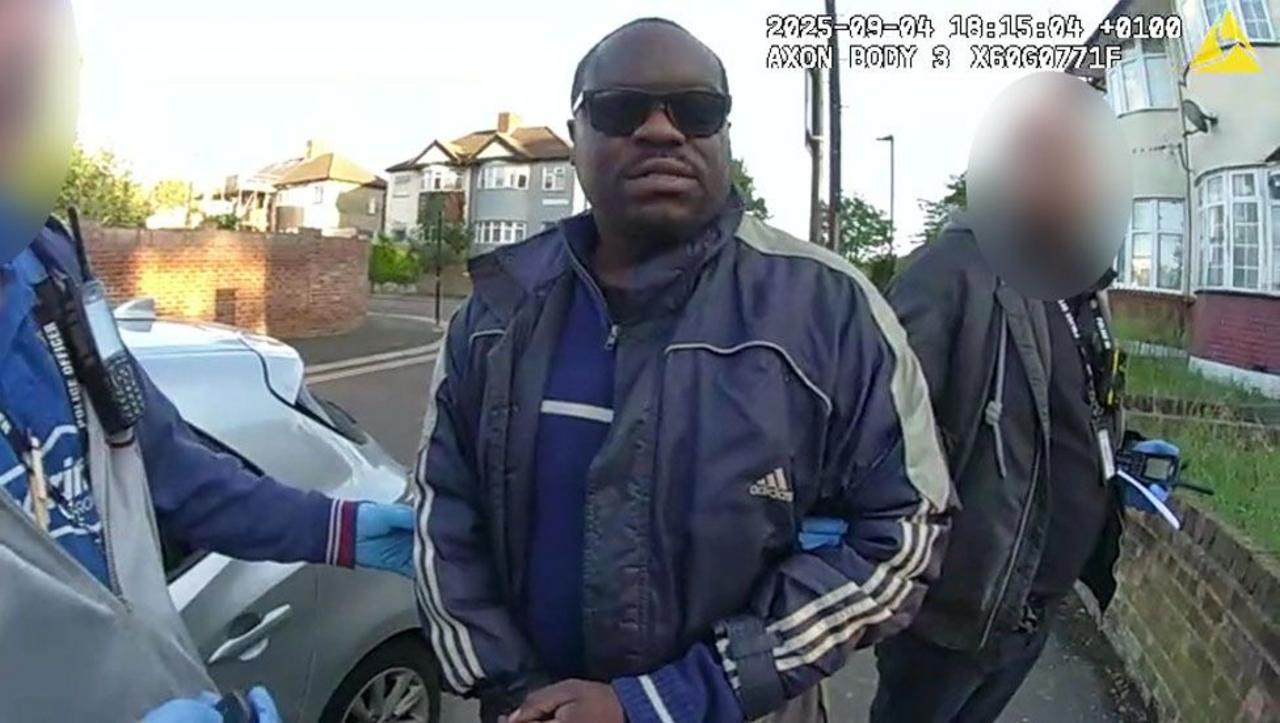
A convicted sex offender murdered two women, raped a third, and sexually assaulted others on public transport, after police, prosecutors and courts made a series of disastrous decisions that left him free to roam the streets.
A jury at the Old Bailey has now found Simon Levy guilty of the murders of Carmenza Valencia-Trujillo, 53, and Sheryl Wilkins, 39, in London last year - and also the violent rape of another woman in a car park.
Levy had been downgraded by the Metropolitan Police as a risk to women before he carried out the attacks.
The Met told the BBC it accepts the life of Wilkins could have been saved. The force had apologised to her family, it said.
Levy, a jobless loner who lived with his mother, attacked the three women while on bail for sex assaults on trains in London, and went on to carry out further assaults on public transport.
Details of his crimes on public transport, plus the sexual assault of a prison officer while he was in jail for earlier offences, can now be reported. He was convicted of them in February.
We can also say that between late 2024 and summer 2025 he was freed on bail by police, and then the courts, multiple times - even after having been charged with the sex offences and having broken his bail conditions.
He was also being monitored and risk-managed by the Met Police throughout.
We can also now report that:
- Levy had already been in prison for two sexual assaults, and Scotland Yard downgraded Levy's risk to women upon his release in 2024, a decision now under investigation by the police watchdog
- The Met closed its investigation into the rape he carried out in January 2025 despite the fact Levy could have been identified
- The force did not class Valencia-Trujillo's death in March 2025 as a murder, or pass the case to specialist homicide detectives, until after Levy had killed again
- The Met took three years to investigate and charge Levy with the sexual assault of the prison officer, with the Crown Prosecution Service (CPS) also acting too slowly
- British Transport Police's (BTP) investigation into Levy's sexual assaults was beset by delays, meaning he was not charged for more than six months, despite being filmed carrying out an attack
- The Met and BTP both gave Levy back a stolen travelcard which let him travel without paying and commit crimes, including the first murder
There has been a "collective system failure" and it is a "tragedy beyond words", Deputy Assistant Commissioner Kevin Southworth from the Met told the BBC.
Det Ch Supt Pete Fulton, from BTP, said the delay in his force's enquiries on Levy "absolutely wasn't good enough" and was down to "incompetence" by two officers who have since been moved to other roles.
The CPS has apologised for "shortcomings" in its attempts to have Levy remanded in custody.
In 2021, he received a three-year prison sentence for the sexual assault of two women, in separate attacks at public events in London in summer 2018.
Levy had put his hand down the two women's trousers or shorts, with one of the offences resulting in a charge of assault by penetration.
Despite describing the offences as "extremely serious", Judge Christopher Hehir refused to impose a Sexual Harm Prevention Order on Levy, which would have placed limits on the sex offender's activity upon release.
Such orders are used to enforce restrictions on who an offender can have contact with, as well as their internet use or travel, but the judge said the draft order was too broad.
He decided it was not necessary for such public protection, according to a transcript of the sentencing hearing at Southwark Crown Court, seen by the BBC.
Police and prosecutors did not challenge the decision.
The judge said Levy would nevertheless be "subject indefinitely" to the monitoring requirements for convicted sex offenders, once released back into the community.
The Met was responsible for this monitoring, which involved police officers visiting his home and collecting intelligence on him.
But their monitoring would prove to be a failure.
When Levy was first released from prison on licence in 2023, he was classed as a high-risk sex offender. He was on licence and managed by multiple agencies including the Met and the Probation Service.
He was briefly returned to prison in May 2024 to finish his three-year sentence for his sex offending, after being accused of rape and therefore breaking his licence conditions. He was not charged with any further offence.
When he was finally released in August 2024, at the end of his sentence, the Met became solely responsible for risk-managing Levy. The force immediately downgraded him from a high-risk sex offender to a medium-risk one.
His risk status was not upgraded even after he carried on sexually assaulting women, something the Met knew as he had been charged with multiple offences by their sister force, BTP.
The consequence of the downgrade was less focus and monitoring.
Two Met officers are now under investigation by the police watchdog, the Independent Office of Police Conduct (IOPC).
Even while he was in prison, Levy continued his predatory behaviour.
In April 2022 he sexually assaulted a female prison officer in HMP Brixton. She reported it the same day, but Levy was only questioned by the Met five months after his release from prison the following year.
The assault was captured on CCTV. He had grabbed the officer's backside as he passed her on the stairs.
After he was questioned by police, nothing happened. The investigation lapsed and Levy was left free to abuse more women. He was not charged until October 2025.
By then, he had gone on to attack multiple women.
The Crown Prosecution Service also failed to act as swiftly as it could in the case of the prison officer.
A CPS source said that, notwithstanding the Met's delays, it could have authorised a charge at the start of 2025, which was before he committed the two murders.
- Do you have information about this story? Contact us on email daniel.desimone01@bbc.co.uk or via the Signal messaging app @investigation.56
When challenged by the BBC over the long delays, Deputy Assistant Commissioner Kevin Southworth said it may have been down to "very high workloads" faced by prison officers, meaning a delay in getting the victim's account
But we told him the victim had reported her assault on the same day it had happened and that it had been captured on CCTV.
"Yes, and in fairness that angle of the inquiry isn't lost on us in terms of its significance to the overall chain of events," he replied.
Beside the failure to deal with a sexual offence against a prison officer, a significant opportunity to disrupt Levy had been thrown away.
The 10 women Levy sexually assaulted on London public transport between October 2023 and May 2025 encountered him at random.
In February this year, he was convicted of intentionally and sexually touching the women on their legs, buttocks or vagina, without their consent.
"Before I was assaulted, I was the type of person who travelled around with confidence and curiosity. I had a sense of adventure… and I would treat everyone with kindness," one victim said during Levy's sentencing.
"Now I treat everyone with suspicion. I avoid places and public, I feel unsafe around strangers, particularly males, and I struggle with busy environments and public transport."
Levy would ride the Tube network for hours, seeking busy carriages as cover for his assaults.
He tied clothing around his waist, placing his left hand beneath it, in a crude attempt to disguise it and enable him to assault women.
His first victim was attacked was on a busy Tube in central London.
Levy boarded and positioned himself directly in front of the woman, before leaning his elbow on her. She moved away.
A few minutes later, she felt something touch her, over her clothes, on her vagina. Such was the force Levy used, that she felt like it was an attempt to push his fingers inside her through clothing.
She grabbed Levy's hand and asked what he was doing, but he did not respond.
When other passengers asked if she was all right, Levy protested his innocence.
"What are you talking about - look my hand is covered," he said, pointing to the jumper draped over his arm.
Levy then called her "crazy" and "stupid" and got off the tube at Westminster station.
The woman got off at the next stop, upset and crying.
She went on to report the assault to BTP. There was CCTV available of Levy, but police did not identify him. He would only be linked to the case two years later, after more women had been attacked.
A year after his first Tube assault, he assaulted three more women in quick succession and was arrested.
After being assaulted herself, the first of those three victims then filmed Levy sexually assaulting a second, unidentified woman, travelling in the same carriage.
The first woman immediately reported what had happened to BTP and provided the footage. Levy assaulted a third woman a week later.
After he had been questioned and had denied the three offences, BTP officers said they did not have enough evidence to charge, and he was released on bail.
The subsequent BTP investigation was full of delays. It was weeks before identity parades were arranged, and BTP did not approach the CPS for six months.
When it did, in May 2025, a CPS team had to scramble to make an emergency charging decision overnight, because BTP had again arrested Levy and wanted him in court the next day. This was highly unusual - BTP had known about the initial offences for six months.
In a statement, BTP Assistant Chief Constable Charlie Doyle said: "It is clear that opportunities to expedite the investigation were missed and we have amended our procedures to address these issues to ensure that repeat offenders are dealt with expeditiously and that linked offences are prioritised more effectively."
British Transport Police also let Levy keep using a travelcard that had been stolen from a London bus driver. The force had found it when officers arrested Levy in November 2024.
BTP has said it did not realise the card had been stolen, adding "we believe the fact this was a bus operator Oyster card was missed by officers at the time".
The force added: "The thought was that the details we had on record for it would enable us to, in future, apply for historic travel data, but clearly if we knew the card had been stolen this would not have been returned to him."
Levy used the card to get free travel on public transport, including the Tube network where he carried out the sexual assaults.
He also used it when he travelled to south London on the day he murdered Valencia-Trujillo in March 2025.
The Met also gave the card back to Levy when it originally arrested and released him the next month on suspicion of the murder. The Met says that it too missed the fact he had been using a stolen travelcard.
A pattern emerged: Levy repeatedly sexually assaulted women but was also repeatedly released on bail, even after being charged with multiple assaults.
Levy was twice bailed by Highbury Magistrates Court, in May and June 2025. On both occasions BTP's formal written recommendation was that Levy be remanded in custody.
In one document, the force stated: "Levy's offending appears to be escalating in terms of frequency. He is considered by police to be a danger to the public and at high-risk of reoffending. Police have significant concerns that if granted bail, Levy will continue in his predatory sexual offending against female members of public."
Lisa Ramsarran, chief crown prosecutor for the CPS, says the service should have done more to ensure Levy was kept in custody and that "we accept there was relevant information regarding bail that was not provided to the court, when bail applications were being considered".
In a statement, she added: "Our actions fell short of the standards that victims, families and the public are entitled to expect. In particular, there were points where we could and should have taken a more robust approach to representations about bail, based on the information available.
"We cannot know what decisions the courts would have made, had different or stronger representations been advanced. But we recognise our responsibility and we are sorry for the shortcomings we have identified."
Levy was then twice bailed by Inner London Crown Court after he failed to appear for scheduled appearances, claiming he was feeling unwell.
Arrests warrants were not sought by BTP or prosecutors.
She spoke to police a few days after the rape, when she was arrested for breaching a community notice which prevented her from being in the area. In a distressed state, she explained she was on her way to the hospital because of the injuries inflicted during the attack.
Levy had violently forced her to the ground and jumped on her, breaking her collarbone and banging her head against the ground. He then suffocated and raped her. The woman thought she was going to die and lost consciousness, only regaining it later - seriously injured and alone.
She told her arresting officers she did not know Levy's name but she had seen him in the area. Indeed, years before, he had asked her for sex and tried to put his hand between her legs when she refused.
The Met proceeded to arrest the woman and took her into police custody.
Niki Adams, from the English Collective of Prostitutes, is critical of police priorities and says officers are arresting sex workers, "rather than actually paying attention to the violence and abuse that women are suffering".
Officers made some attempt to speak to the woman further about the rape while she was locked up, but she was experiencing heroin withdrawal symptoms and was not in a good state to give more information or do a full recorded interview.
After her release there were limited further attempts to speak to the woman, with police saying she could not be traced because she was homeless. But, during Levy's recent trial, a local officer accepted "we did very little" beyond checking what CCTV coverage there had been of the car park.
The woman was spoken to again on the street in late May 2025, but said she did not want to talk about the rape. Her case was then closed.
When Levy had murdered Valencia-Trujillo he made no attempt to hide her body. She was discovered, with visible injuries, lying face-down in the stairwell of a derelict block of flats.
The officers failed to class Valencia-Trujillo's death as a murder and did not pass it to a homicide team for a fuller investigation, as happens with suspected homicides. The force says this is because the formal cause of death was unclear.
A homicide assessment team had attended the scene, recommending the case stay with local officers for the time being - but those local officers did not subsequently seek advice from any homicide specialists.
This echoes the Met's failures in the Stephen Port case a decade ago, when the force failed to treat four murders as murders, until weeks after the final one.
The homicide team that eventually took over Valencia-Trujillo's case found there had been no analysis of local CCTV footage that, officers discovered, put Levy near Valencia-Trujillo on the day of the crime.
While the local team had found Levy's DNA on Valencia-Trujillo's body and arrested him, he had been released without charge.
The Met did what it could to investigate Carmenza Valencia-Trujillo's death, Southworth now says, adding that "in hindsight" it is easier to make the assessment about what happened.
But in stark terms, the Met had a murder that it had not treated as such, and the man responsible had gone on to rape and assault more women, and ultimately, kill again.
Wilkins was, like Valencia-Trujillo, highly vulnerable.
Both women, and the others, were failed by the system - murdered by a man who should never have been free to harm them.
- If you have been affected by the issues raised in this story, information and support can be found at the BBC's Action Line
Source note
First published by BBC News
This article was supplied by BBC News through its RSS feed and formatted for Crooli Signal. The reporting remains with the original publisher.
Read the original at BBC News