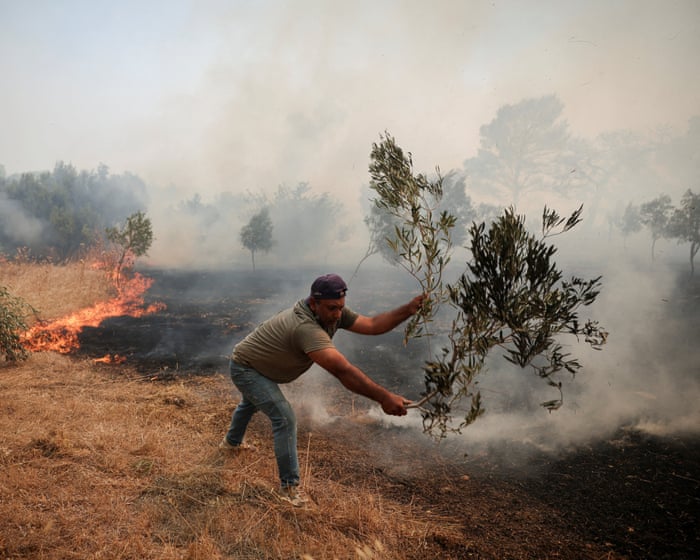
Farmers across Europe are warning of a slump in food production and rising prices as crops from maize to salads suffer as a result of extreme heat, drought and wildfires.
Olive groves have also been hit as the climate crisis drives temperatures across the continent to fresh record highs, meaning the cost of olive oil – already at elevated levels – is expected to start rising again.
The vegetable growers association Légumes de France has warned that thousands of tonnes of products worth tens of millions of euros had been lost – including salad leaves, carrots, leeks, garlic and onion with production on certain crops expected to be halved because of the lack of rain.
The scorching French weather has also held back grape growth in wine regions including Champagne, Bordeaux and Burgundy, threatening a smaller crop and one of the earliest harvests on record.
In Champagne, producers expect the earliest harvest ever, with picking likely to start around 15 August, about a month earlier than was typical a few decades ago. Growers now expect grape yields to be about 10% smaller than last year, Reuters reported.
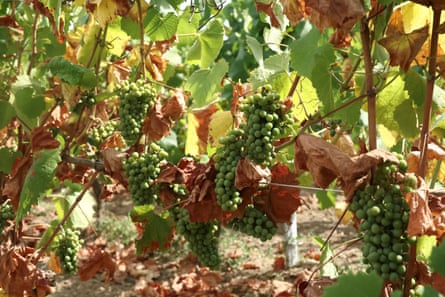
Grapes hang on vines in a drought-affected Muscadet vineyard in Saint-Fiacre-sur-Maine near Nantes. Photograph: Stéphane Mahé/Reuters
In Spain, the ministry of agriculture predicts the country’s 2026-27 cereal crop will fall from last year’s 24m tonnes to little more than 18.5m tonnes – a forecast made before wildfires took their toll.
That is despite Spain’s farmers being more adapted to hot dry conditions, growing crop varieties that can cope with higher temperatures and drawing more on irrigation and water storage to manage periods of drought.
The European Union has cut harvest predictions on a whole menu of crops with expectations for sunflowers, essential for cooking oils, down by 7%. Meanwhile, grain maize is down 6% on the previous forecast and expectations for potatoes and soya beans have been trimmed by 3%.
However, some countries have been less badly hit than others with Romania, for example, seeing more rainfall and Italy’s wheat crop proving resilient.
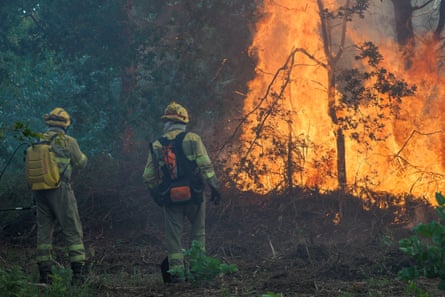
Forest firefighters try to extinguish a wildfire in Sierra do Careon in Palas de Rei, Lugo, Spain. Photograph: Eliseo Trigo/EPA
The ASAJA agricultural trade body said direct damage from fire had hit orchards, vineyards, agricultural land and greenhouses – affecting citrus fruits, avocados, almonds, vineyards, vegetables and olive groves – while water stress and extreme temperatures had hit production of tomatoes and maize.
“While local production losses may reduce export volumes for some products,” a spokesperson said, the main concern was “higher production costs” rather than restrictions on international trade.
Olive oil producers said they expected another surge in prices this year as growers struggled with a combination of extreme heat, drought and, in some cases, fires.
Groves have burned in Greece, Italy and Portugal this summer and even those nearby that were spared the flame have suffered blowing ash and poor air quality. The extreme hot weather has also prompted an increase in pests, disease and heavy storms as well as affecting fruit size.
The price of olive oil around the world had drifted down from a spike two years ago that was driven by rising demand, hot and dry weather and the spread of pests and disease. However, the prices for a one-litre bottle of extra virgin oil in UK stores remain above £7 on average and have begun rising again in recent months.
Sarah Vachon, founder of the Citizens of Soil olive oil group, said: “Unless the weather is under control soon, we should expect pricing to rise in the autumn since there will be less edible fruit to make olive oil from.”
after newsletter promotion
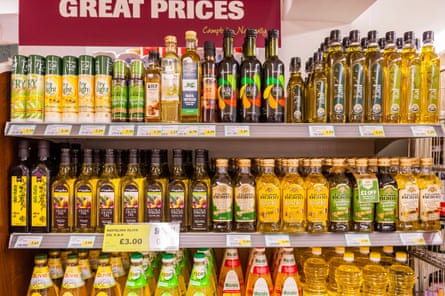
Prices for a one-litre bottle of extra virgin oil remain above £7 on average and have begun rising again in recent months. Photograph: Oramstock/Alamy
Walter Zanre, head of the UK arm of olive oil brand Filippo Berio, said temperatures in Spain, Europe’s main olive oil producer, had been closer to normal than elsewhere in Europe but trees were suffering from drought, which can prompt them to shed their crop.
“The combination of drought-induced fruit loss and an earlier harvest will be closely monitored over the coming weeks, as both factors have the potential to materially influence olive oil production volumes and market prices for [next year] he said.”
The UK harvest has also been hit by ongoing droughts with wholesalers saying they are having to turn to Spain and elsewhere for mainstay items such as iceberg lettuce and broccoli while British farmers have warned of shortages.
Jason Bull, managing director of UK food importer Eurostar Commodities, said: “Repeated heatwaves have accelerated the ripening and harvesting of winter crops across much of Europe, shortening the critical grain-filling period and potentially reducing grain size, quality and overall yields.
“Winter harvests are progressing rapidly and remain reasonable in many countries, but heat has reduced yield potential and may affect grain quality.
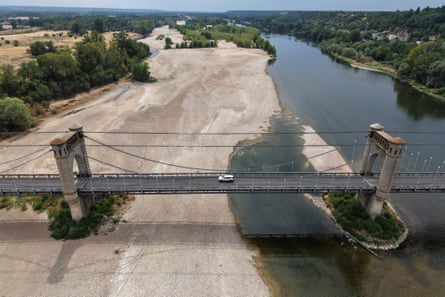
The Loire river in Langeais near Tours. Drought conditions have worsened amid heatwaves and water shortages across much of France. Photograph: Stéphane Mahé/Reuters
“Summer crops face a much more serious threat from drought, depleted soil moisture and heat during flowering. Irrigated crops are generally performing better than rain-fed crops, but rising water demand and possible irrigation restrictions create additional risk.”
He said Turkey was the “major positive exception” as a cool and wet spring supported record-high winter crop yields, while prospects for summer crops were also favourable.
Italy is also emerging as “one of the more positive stories” for the production of the kind of wheat for flour used in cakes and biscuits. The European Commission is forecasting a 10% increase in Italian output, supported by improved yields. Romania has also had a good year after several years of drought.
Cezar Gheorghe of grain market consultancy Agricolumn predicted the maize harvest would hit 8.2m tonnes this year, which compared with an official estimate of 7.75m for 2025, according to Reuters.
Source note
First published by The Guardian World
This article was supplied by The Guardian World through its RSS feed and formatted for Crooli Signal. The reporting remains with the original publisher.
Read the original at The Guardian World