‘The market is dead for flats,” says Susan Young*, who has been trying for some time without success to sell her two-bed flat in a popular Devon seaside resort.
The first-floor property is in “immaculate condition”, Young says, thanks to the £15,000-£20,000 spent on renovations. It has “superb views” across the beach. And, perhaps most crucially, it is a freehold flat, so is untainted by the controversies associated with the discredited leasehold system.
“Despite not needing to buy (that is, no chain) and dropping the price to well under what I paid for it, I have only had four viewings in nine months,” says Young, a former teacher, who moved in 2023 but now needs to relocate for family reasons.
She paid £300,000 for the property and currently has it on the market for £280,000.
She does not want to reduce the price any further and, if there are no viewings by the end of the summer, she intends to take the flat off the market and put it back on next year when, hopefully, there will be more interest from buyers.

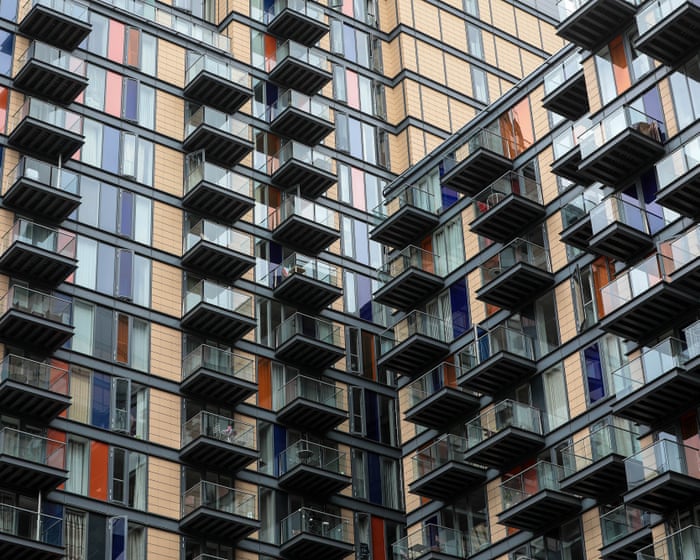
Is the market for flats in England dead? Photograph: Realimage/Alamy
She says the flats market is moribund even though hers is in a block of six where each flat owns a sixth of the freehold and they set their own management fee. “It is very dispiriting.”
Meanwhile, Louisa, who lives in London, has been trying to sell her leasehold flat for two and a half years. The sale recently fell through for a third time after several months of negotiations when the buyers demanded she knock £10,000 off the price.
She initially feared having to “sell at a massive loss, losing all my deposit and preventing me from buying in the near future. My property is above a barber shop, and I have been told that banks will not lend mortgages above these, leaving me in a position looking for reasonable cash offers.”
However, there is now some hope as she has found a cash buyer. “So I’m currently going through the process again, but I’ve stated that I will only give the sale a few months before giving up and trying to rent it out. This will be attempt number four.”
Louisa bought the flat for £200,000, and the sale that fell through recently was for £145,000.
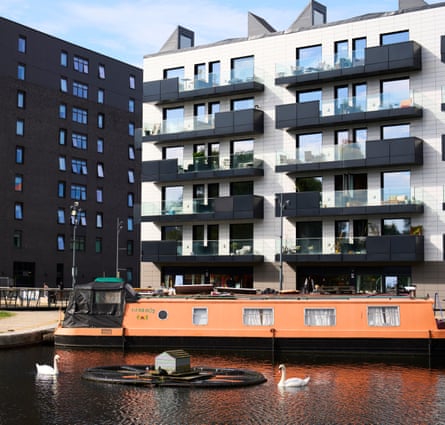
Some owners of flats in England have cut the price several times to no avail. Photograph: Christopher Thomond/The Guardian
“It’s a one-bed flat, and I now have a two-year-old daughter. This situation has meant we are unable to leave my family home, where we have been staying. I just want to move on and give my child a bedroom.
“I’m not buying again in the near future. I’m quite traumatised from the experience.”
Young and Louisa are just two of the Guardian readers who responded to a recent call-out asking about their experiences of trying to buy or sell a flat in recent months.
Many of the respondents said the same thing: they have been trying – and trying – to sell a flat. Some have cut the price several times but to no avail; others have been left in the lurch when buyers pulled out.
Some are owner-occupiers; others are small landlords who are trying to leave the rental sector.
So what’s happening?
In June, the property website Zoopla issued data showing that the average price of a house was up 43% since 2016 across the UK, but flats had increased by 10% over the same period.
Zoopla said “uncertainty around leasehold in England is affecting the pricing of flats versus houses” and that flats were taking longer to sell as a result.
Most flats listed for sale in England are leasehold. And the long list of scandals and controversies associated with this form of ownership – from high service charges and ground rents and hefty one-off bills to cladding issues, costly lease extensions and difficulty buying freeholds – has prompted governmentaction.
However, a ban on new leasehold properties in England and Wales is unlikely to come into force until after the next election, and concerns about cost and complexity are clearly having an impact now.
We asked Zoopla to crunch the numbers on flats not selling and why. It found that across most of England, the majority of leasehold flats listed for sale in 2025 had not sold within six months.
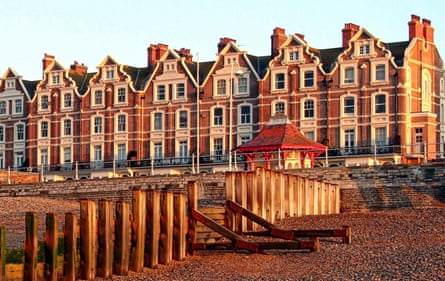
The property website Zoopla says ‘uncertainty around leasehold in England is affecting the pricing of flats versus houses’. Photograph: larigan/Patricia Hamilton/Getty Images
“London was worst – about 87% unsold – followed by the south-east (85%) and the east of England (84%),” Richard Donnell, the Zoopla executive director, says. The average was 80.5%.
As to why many flats are struggling to find buyers, Donnell says it is not only the leasehold issue, which reinforces the preference for buying a house where possible. It is also to do with who is buying and who is selling.
“Flats take longer to find buyers because the natural buyer (the first-time buyer) and the natural seller (often an investor with no urgency to move) may want two different prices,” he adds.
For example, in London, most first-time buyers are looking for flats, not houses, as flats are their main route into ownership, Donnell says. “But investor-owned flats are being priced above the typical first-time buyer budget (£450,000 v a £425,000 budget). So even though flats are what buyers there want, the ones investors are selling are out of reach.”
In addition, thousands of aspiring homeowners are finding themselves shut out of the flats market owing to banks’ increasingly restrictive mortgage lending rules, says William Coe at the mortgage broker Cleerly. At the same time, he adds, surveyors are increasingly “down valuing” flats – creating yet another barrier for buyers.
“I’ve been told I need to drop the price by another £30,000 as small flats just aren’t selling”
Barbara Doolan*, who lives in Sussex, has owned a flat in a small block in Croydon for 20 years, and has always rented it out.
She tried to sell the flat in 2024 but had no joy, despite cutting the price twice. She says she had no choice but to rent it out again, and had a “terrible experience” with the tenant, who defaulted on the rent and illegally sublet it.
“I’ve considered selling again … and the market is even worse now. Three agents have said I’d need to drop the price by another £30k to get some interest as small flats like this just aren’t selling.”
“A combination of factors has left ordinary small landlords like us trapped”
Angie West and her wife own two flats in London, one of which they bought 20 years ago as a buy-to-let investment. At the time they both worked in the voluntary sector and neither had a private or workplace pension, so they hoped the flat would provide them with some financial security in retirement.
West, who is now semi-retired, says that in late 2024 they put it on the market for £325,000. There followed a difficult period during which they reduced the asking price several times and had two separate buyers pull out.
With costs mounting, they later decided they would have to rent the property out again. More costs were racked up, and the current tenants recently gave notice and are due to leave this month.
“We intend to try selling the flat again but are very worried about what will happen if it does not sell … What concerns me most is that the combination of falling flat values, repeated failed sales, leasehold costs, licensing requirements and increasing complexity in the rental sector has left ordinary small landlords like us trapped,” says West, who lives in south London.
“The whole process feels incredibly insecure. Buyers can pull out at any stage for almost any reason, with no financial consequence to them, while sellers are left paying legal fees, management pack costs and other expenses.”
Top tips on how to sell a flat

Most first-time buyers in London are looking for flats, not houses. Photograph: Christopher Thomond/The Guardian
- Know your market “Chat to your agent about what local first-time buyers can actually afford and who is buying flats and what they are prepared to pay,” Zoopla’s Donnell says.
- Price realistically from day one Buyers have a lot of choice, so getting the asking price right is crucial. “The key to selling a flat successfully in the current market is pricing competitively from day one,” says Colleen Babcock, Rightmove’s property expert. “Our research shows that nearly three-quarters of homes that have sold so far this year have done so without a price reduction.” So if you list a property at an optimistic price, thinking you can always reduce it later, “you’re putting yourself at an immediate disadvantage”.
- Major on all the benefits The buying agent Henry Pryor says that aside from the obvious – “make it clean, make it tidy, make it desirable, make it smell of freshly baked bread and coffee …” – sellers should also emphasise the property’s “lock up and leave” benefits. Lock up and leave means requiring very little in terms of daily maintenance – for example, a flat that doesn’t have a garden or lots of rooms or areas to clean.
- Be on top of your service charge history Some potential buyers will ask for (at least) three years of service charge accounts (where relevant). So sort these out before you list the property and be ready to explain the trend, Donnell says. A recent Zoopla analysis showed that the typical leaseholder pays £1,900 a year in service charges, plus £200 a year in ground rent. If your service charges or ground rent are relatively low, then point this out, Rightmove says.
- Lease length matters About a fifth of leasehold listings have less than 100 years left on the lease, according to Zoopla. Leaseholders have the statutory right to extend their lease at a cost that rises quickly once a lease drops below 80 years, it adds. “For flats with less than 85 years remaining, consider applying to extend the lease before listing,” Donnell says. The Leasehold and Freehold Reform Act 2024 will make it cheaper and easier to extend a lease, but it’s not yet clear when these measures will come into force. The government last month said the changes would go live “as soon as possible”.
- Six may be the magic number “You should always be able to attract an investor by pricing your property so that a buyer would generate a 6% or better yield,” Pryor says. You need to work out what your flat would rent for (local estate agents should be able to provide that information), he says. Then work out what capital value would generate a 6% or better yield. To do this, take the annual potential rent – the per calendar month figure x 12 – then multiply this by 100, then divide by 6. “That’s where you need to pitch your asking price,” Pryor says, although he adds “hopefully you will do better” than that and actually find a buyer who really likes your flat.
* Name has been changed
Source note
First published by The Guardian UK
This article was supplied by The Guardian UK through its RSS feed and formatted for Crooli Signal. The reporting remains with the original publisher.
Read the original at The Guardian UK