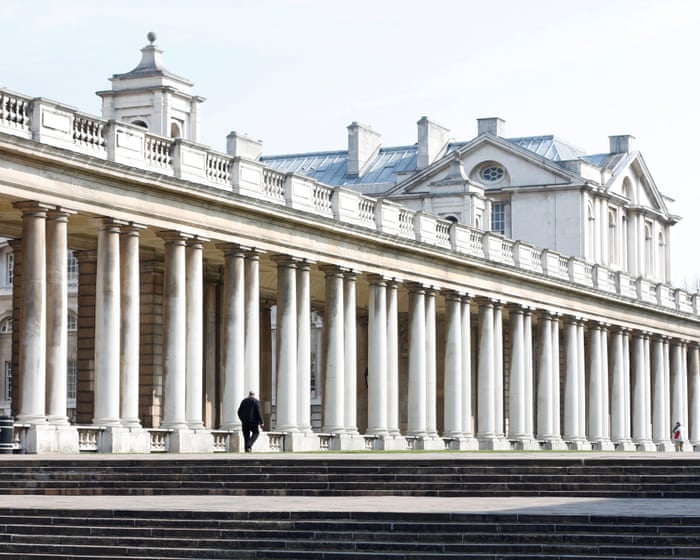
The UK’s first “super-university”, which will merge the universities of Greenwich and Kent, is set to launch in September.
The new London and South East University Group, to be known as the LASEUG, will have more than 50,000 students on four campuses across London, Medway and Kent, making it the third largest higher education institution in the UK.
The university will officially launch on 7 September, exactly one year after the plans were first announced and months after the Department for Education granted approval.
The universities will still operate as separate academic divisions and will retain their individual names and identities. Students will attend, study and graduate from their chosen institution but staff from both universities will be employed by the university group.
The University of Greenwich vice-chancellor and new chief executive of the LASEUG, Prof Jane Harrington, said: “There has been tireless work over the last year working to an ambitious timetable and developing a new university model that has never been done before.
“It means we are starting with a smooth transition, an extremely strong senior executive team and clear direction so that we can fulfil our potential as the UK’s first super-university.”
The universities previously said the merger would be a “blueprint for others to follow”, building on more than 20 years of collaboration between the two institutions, and would provide them with a strong financial foundation.
Earlier this year, King’s College London and Cranfield University announced plans to merge in August 2027.
Universities in the UK are facing increasing financial pressures, with the Office for Students (OfS) – the higher education regulator in England – warning that 24 providers were at risk of becoming insolvent and closing in the 12 months from November last year. It also said 45% of higher education providers could be facing a deficit for 2025-26.
after newsletter promotion
In May, MPs on the education select committee said the higher education sector was “facing a financial crisis” with “a clear possibility of a university closing”. Many universities had already made job cuts, sold off buildings or lands and closed courses, their report acknowledged.
“The consequences would be severe, not only for students and staff, but for local economies, communities and the UK’s global academic reputation,” the committee’s report said.
Source note
First published by The Guardian UK
This article was supplied by The Guardian UK through its RSS feed and formatted for Crooli Signal. The reporting remains with the original publisher.
Read the original at The Guardian UK