Measles outbreaks are igniting throughout the United States as the nation passes the highest case count in 30 years – putting greater pressure on state and local health departments and highlighting the importance of early identification and quick action.
The US has officially surpassed last year’s tally of measles cases, reaching 2,371 confirmed infections by the end of July. Those numbers have been driven by clusters in Arizona, South Carolina, and Utah – but in times of high transmission, outbreaks elsewhere become more likely. And with decreasing vaccination rates across the country, these sparks are falling on increasingly dry timber.
In July, Delaware announced its first case of measles in more than a decade. Two days later, officials declared an outbreak, with five known cases.
Like other parts of the country, vaccination rates have dropped in Delaware, from 98.5% of kindergartners vaccinated against measles, mumps, and rubella (MMR) in 2016 compared to 94.1% now. A threshold of about 95% is considered essential for herd immunity to protect those who cannot get vaccinated or who don’t mount a good immune reaction – including babies and cancer patients.
“We don’t want to be below that threshold. And the lower we get, the more likelihood there is that someone who can’t be vaccinated yet – because of their age or because of their immune status – is going to come into contact with someone who has unfortunately contracted measles,” said Robert Rosenbaum, Delaware’s medical director for emergency medical services and preparedness.
Attitudes toward vaccines have changed in a couple of different ways, he said. The idea of a link between autism and vaccination, now disproved by multiple studies, proved to be “horrible misinformation” that “created a lot of confusion for people”, Rosenbaum said. Some parents also began trying to create their own vaccination schedule out of the belief that children receive too many vaccines – a view frequently espoused by Donald Trump.
The pandemic supercharged existing misinformation about vaccines.
“There were a lot of people who had feelings about the Covid vaccination, and that has crossed over to other vaccinations where people are moving away from everything,” Rosenbaum said.
William Chasanov, an infectious disease physician at Beebe Healthcare in Lewes, Delaware, said he “did see the pendulum swing with Covid”. The Covid vaccines saved hundreds of thousands of lives – but at the same time, more of the public began seeing vaccines as optional, he said.
“There was a shift in thought that ‘maybe I don’t need vaccines for things that I haven’t seen,’” Chasanov said. The measles vaccine has in some ways become a victim of its own success; those who haven’t encountered measles before don’t understand why it needs to be prevented, he said.
Robert F Kennedy Jr, now the health secretary, spent about two decades spreading misinformation about vaccines – and that advocacy went into overtime during the pandemic, when wider audiences were exposed to his anti-vaccine views.
As health secretary, Kennedy has framed measles vaccination during this outbreak as a personal choice, and he has falsely claimed it’s “very difficult” for healthy children to die of measles.
But the evidence strongly points to the effectiveness and safety of two doses of the MMR vaccines, Rosenbaum said. “Anyone who isn’t advocating that is not following science consistently.”
Vaccines are key to prevent measles – but equally important is education for families who have questions about vaccines and access to healthcare for those who need the shots and other care, experts said.
Measles is an awful disease, Chasanov said. It can bring high fevers, difficulty breathing, and extreme lethargy. It can infect the brain, causing encephalitis, which can have lasting health effects. And it can lead to death – even, sometimes, years later.
“Understanding what the consequences could be is part of that education,” Chasanov said. “And it’s important to know that the measles vaccine is one of the most highly effective vaccines that we’ve had on the market for decades … Measles is highly contagious, but it’s also highly preventable.”
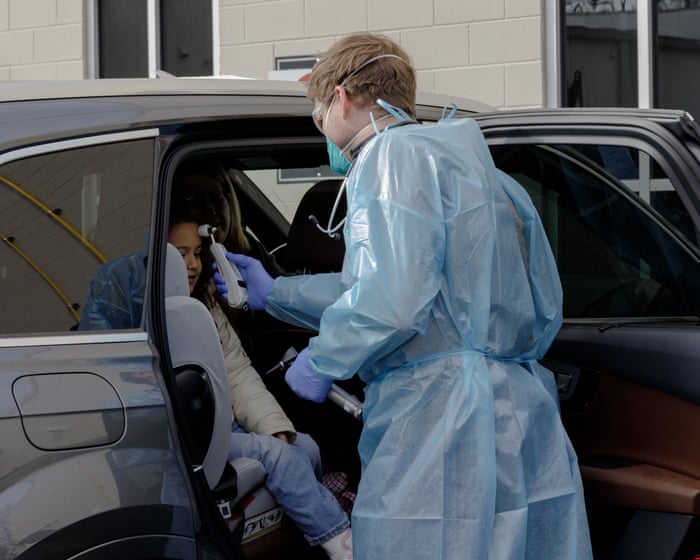
The day after the first case was announced in Delaware, more than 60 people received MMR vaccinations at public health clinics and mobile vaccination units.
“When things hit closer to home, you start asking questions because it becomes more personal,” Chasanov said. “It spurs a healthy conversation that I encourage people to have with their clinicians to say, ‘Do I need to do anything different with vaccination?’”
Anyone born before 1989 may need to get a second dose of the measles shot, which became standard practice in the late 80s. One measles shot is about 93% effective, but two are about 97% effective. Those born before 1957 likely have immunity from measles infection as a child.
At this point, public health officials aren’t recommending early vaccination for children under one or children under four who have only received one shot – unless they’re in contact with a positive patient.
“What we don’t have at this point is a large-scale epidemic where we might be changing some of those vaccine recommendations,” Rosenbaum said. “Certainly, if the numbers change or for some indication to change it, we would revisit that.”
Delaware has released few details about the cases for medical privacy reasons. The first four patients were all unvaccinated men in Kent county. The fifth patient was vaccinated and has extremely mild symptoms – one of the benefits of vaccination. An outbreak is declared when three or more connected cases appear.
“Delaware has responded very rapidly,” Chasanov said. The division of public health met with healthcare systems and providers to walk through plans in case someone with measles walks through their doors.
Officials are approaching the outbreak with a two-pronged approach: vaccination and contact tracing, the mainstays of public health. The field, however, has been battered – by the long hours and stress of the pandemic, and by chronic underfunding and growing threats that stretch public health thin.
Contact tracing is how officials discovered the four additional cases. After the first person tested positive, public health staff got in touch with anyone who was in contact with him – searching especially for very high-risk people like young children (and anyone else) not vaccinated yet or only partially immunized, pregnant people, and anyone with a weakened immune response.
“The contact tracing has really done a nice job of identifying the at-risk contacts,” Rosenbaum said. “So the good news is, I would say, if people haven’t heard from us, we’re not actively looking for them.” Now, they’re monitoring contacts to see if they develop symptoms, and they’re looking for any other cases they may have missed in contact tracing.
They’re also trying to reach anyone with poor access to healthcare, including those without health insurance.
”The public health safety net is an important one,” Rosenbaum said. “We don’t want anyone who wants to get vaccinated to feel like they’re unable to do so because of insurance status … That’s the function of public health, right? To help people who are at risk and may be vulnerable.”
Outbreaks like these are happening all over the country, with pockets of cases sprouting up and officials racing to prevent spread through early identification, contact tracing, vaccination, education, and improved healthcare access.
“We have a process that we follow,” Rosenbaum said. “And when we follow that process well, we have the opportunity to stem the outbreak.”
Source note
First published by The Guardian World
This article was supplied by The Guardian World through its RSS feed and formatted for Crooli Signal. The reporting remains with the original publisher.
Read the original at The Guardian World