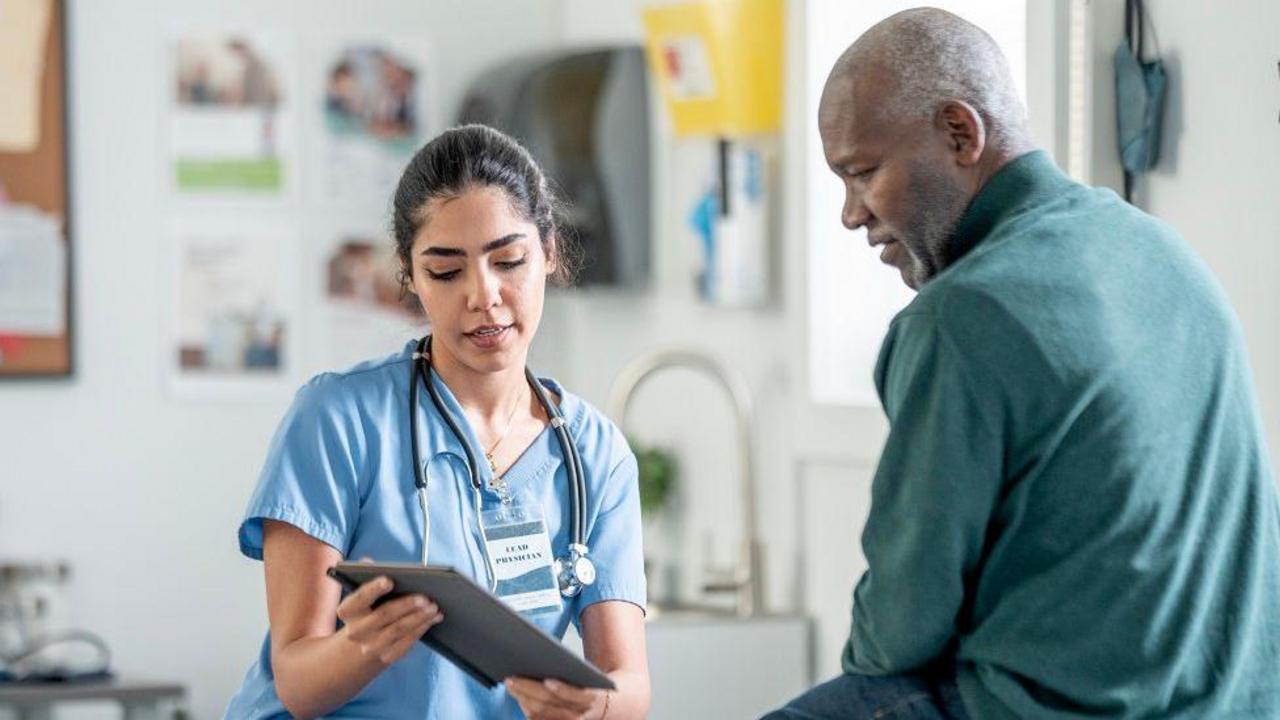
People in England needing immediate care for mental health problems will be able to access specialist walk-in hubs close to their home, the government is promising.
Ministers have set out plans to create a network of nearly 200 community mental health centres and mental health A&Es by 2029.
The aim is to give those experiencing a mental health crisis or significant distress somewhere to go to get help when they need it - with plans to open dozens of the hubs in high street locations like banks and libraries.
One in five people struggle with their mental health and thousands of people turn up at A&E when they get to crisis point because they cannot find help elsewhere.
The government believes its plans, which build on pilots that have been run over recent years, will help tackle this issue and ensure people receive expert care when they need it.
The government said there will be 100 new community mental health centres opened in a variety of locations, from libraries and banks. Some will be set up in new buildings.
They will bring together existing teams of nurses, therapists and support workers.
Many of the hubs are expected to be open seven days a week and some will have short-stay bed facilities.
Six areas have trialled the approach since 2024.
The government is also pledging to set up another 59 dedicated mental health A&Es, on top of the 23 which are already operational. Many will be attached to existing A&Es.
Prime Minister Andy Burnham said: "Nobody should be left to struggle with their mental health alone. But every day, thousands of people are waiting months for help, then finding the only door open to them is a busy A&E.
"These new centres will be a lifeline for so many," he said.
"They will bring NHS services closer to home, making it easier to get support before problems get worse and ensuring those in crisis get the right care in the right place."
Health Secretary Yvette Cooper added: "This is how we can turn the tide on mental ill health - preventing more people from reaching crisis, cutting waits for care, and building an NHS which is there for everyone when they need it.”
Speaking to BBC Breakfast, Cooper said there would be a "continual programme" of rolling out these mental health centres - with the first ones set to open this autumn.
"It will take a bit of time in some areas but 100 right across the country I think will make a real difference to getting people mental health support early," she said, adding that "prevention can be much more effective to provide healthcare".
She said the government has already increased mental health staffing, but said "what these services are going to be doing is bringing together existing teams of staff to work together in a different way".
The chief executive of the Centre for Mental Health, Andy Bell, said he welcomed the announcement on the whole - although was concerned that the mental health emergency departments had not been properly tested yet.
He also said children and young people, who will be able to use these services, needed their own dedicated hubs.
But he said he was "delighted" that the government was taking action on mental health after it had been neglected by successive governments for too long.
"This must now be backed up by investment, most crucially in the workforce needed to provide effective mental health care," he said.
Stephen Jones, of the Royal College of Nursing, said he agreed investment in staff would be crucial if the new centres were going to cope with demand.
"More services closer to people's homes are a crucial step towards more humane care," he said.
But he added: "To succeed, both will need specialist mental health nurses at the centre."
The Department of Health said that the initiative is backed by £343m and the first sites will open in autumn this year, with "further facilities following from March 2027".
Source note
First published by BBC Politics
This article was supplied by BBC Politics through its RSS feed and formatted for Crooli Signal. The reporting remains with the original publisher.
Read the original at BBC Politics