Trump signed two executive orders, a written order issued by a president to the federal government which does not require congressional approval, on Thursday.
One expands the existing definitions of non-citizens whose children are not eligible for birthright citizenship.
It prevents the automatic citizenship of babies born in the US to two non-citizen parents if one of the parents is a member of a foreign terrorist group, is a foreign government employee, has attempted to gain citizenship through fraudulent means, or is living in US territories where citizenship is not granted by US federal law.
A few of those categories were already excluded under current birthright citizenship rules, but the one relating to membership of a foreign terrorist group could raise issues, according to Colleen Putzel-Kavanaugh, an associate policy analyst at the Migration Policy Institute, an independent nonpartisan research group.
She said it is difficult to know how, when, and by whom membership would be determined, and it is also not clear "if the onus for proof falls on the government (to prove they are a member) or the individual (to prove they are not)".
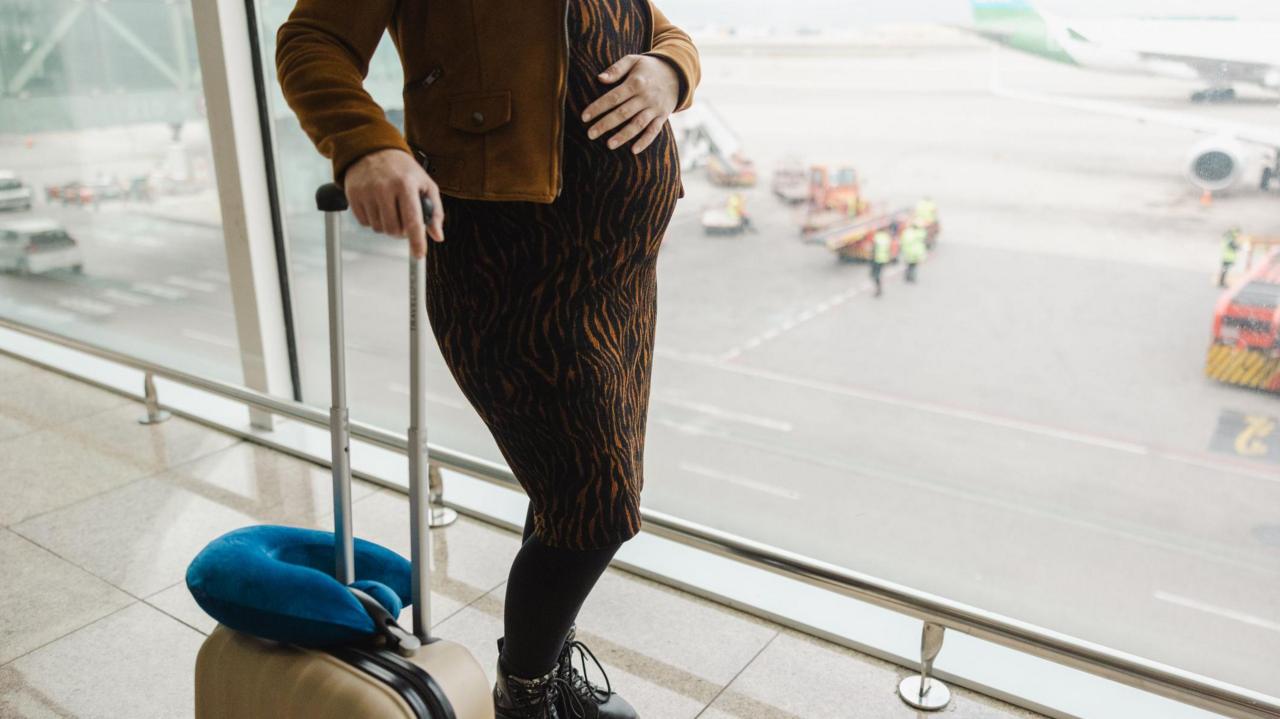
The second order, meanwhile, seeks to end the practice of birth tourism by directing the departments of state and homeland security to enhance regulations and expand enforcement against the practice.
It is already illegal to travel to the US for the purpose of giving birth.
According to the executive order, operators in the birth tourism industry use deceptive advertising to entice foreign nationals to give birth in the US.
"They promise citizenship; access to public benefits; and short-term stays in specialised facilities, hotels, or rentals, but often fail to deliver on these promises," the order says.
The principle of birthright citizenship, known in legal terms as "jus soli" or "right of the soil", is enshrined in the 14th Amendment of the US Constitution.
The law was originally meant to grant citizenship to American-born, formerly enslaved people following the American Civil War.
Currently, nearly everyone born in the US, regardless of their parents' citizenship status, is granted US citizenship - with a few exceptions.
These include children born in the US to foreign diplomats, those born to enemy soldiers during a hostile occupation of US territory, and those born in unincorporated US territories where a federal statute has not granted the right to citizenship.
People born in the US territories of Puerto Rico, Guam, and the US Virgin Islands, for example, get automatic citizenship, while those born in unincorporated American Samoa are not and are instead considered "non-citizen nationals".
Trump said on Thursday that "hundreds of thousands" of babies have been born through birth tourism in the US, without providing evidence or clarifying if that figure is annual or not.
There are no government figures specifically on women coming to the US on tourism visas to give birth, but there is data on foreign residents giving birth in the country.
These show that just over 9,500 babies were born to foreign women in the US in 2024, according to the most recent estimate, external from the Centers for Disease Control (CDC). This is based on births registered to mothers with foreign addresses.
In comparison, there were 3.7 million US births in total that same year, CDC figures show,, external meaning babies born to foreign US residents amounted to roughly 0.25% of these.
However, the MPI says the government figures are likely an undercount and that foreigners could use a US address that is not their permanent home to register a birth.
The MPI estimates, external that between 20,000 to 26,000 babies were born in the US annually as a result of birth tourism, which is about 0.5 to 0.7% of total annual births.
This figure is based on a wider review of US census data, although their study notes that it is hard to know exact numbers for certain.
"Birth tourism inherently relies on the intent of an individual to come to the US to give birth and capturing that intent in data is difficult," said Putzel-Kavanaugh.
"For some women, they may be travelling and a medical emergency could necessitate birth in the US even if their intent was to give birth back in their home country."
Source note
First published by BBC World
This article was supplied by BBC World through its RSS feed and formatted for Crooli Signal. The reporting remains with the original publisher.
Read the original at BBC World