
Thomas Pynchon was known to avoid the press and refuse interviews. There are only two official photographs of the Gravity’s Rainbow author available publicly – one taken at high school, the other during his time in the navy. He is the embodiment of the American image of a great writer: a mysterious recluse who works in a turret alone.
These days, the writerly lone wolf is more a myth than it is a reality. Most of today’s celebrated authors are trained in the profession and their qualification is the MFA (master of fine arts). Percival Everett received his from Brown, Chimamanda Ngozi Adichie studied at Johns Hopkins University, and Jhumpa Lahiri went to Boston. Great writers, now, are less rare animals discovered in the wild and more elite thoroughbreds, meticulously trained and set up for the race ahead.
An MFA is a graduate programme in a creative subject – like painting, sculpture or, in this case, writing. There are courses taught in fiction, poetry or nonfiction. They usually take two years and cost between $10,000 for a low-residency programme and upwards of $80,000 a year for a full-time programme. The vast majority of programmes are in the US: the non-profit group Poets & Writers list more than 250. That’s thousands of budding novelists enlisting each year, most expecting to graduate with a complete manuscript.
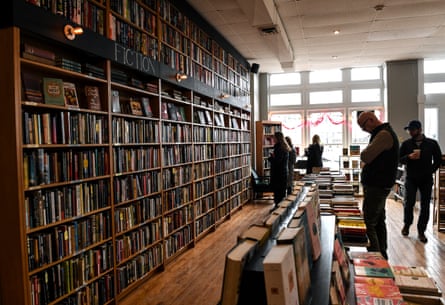
‘Perhaps the imprint MFAs have had on fiction feels more forceful at a time when the gulf between literary and popular fiction has never been wider.’ Photograph: The Washington Post/Getty Images
The MFA format was pioneered by the Iowa Writers’ Workshop which, founded in 1936, was the first MFA in creative writing. Led for years by the poet Paul Engle, it has spawned great writers such as Flannery O’Connor and Marilynne Robinson. Iowa’s teaching style is based around workshops where students sit around a table and discuss their peers’ work, guided by a professor. In theory, the pressurised environment of the workshop makes students examine work analytically – not emotionally – with an emphasis on craft, rather than content. Supposedly, it is this rigorous and supportive environment that strengthens a writer’s aesthetic muscles for a long and successful career ahead. In reality, workshop can be hell.
In Lena Dunham’s Girls, everyone in Hannah’s Iowa Writer’s Workshop is toxic, including Hannah. After she insults her cohort at a party, pigeonholing each “type” of writing, she is torn to shreds in workshop, told that her story “trivialises” abuse. When she tries to defend herself, the workshop leader cuts her off and tells her to wait until everyone’s finished with their critiques.
In the introduction to Dismantle: An Anthology of Writing from the Vona/Voices Writing Workshop, Junot Díaz writes about nearly dropping out of Cornell because of the “almost lunatical belief” by his predominantly white cohort “that race was no longer a major social force”. Workshop is not necessarily a safe space separate from the prejudices and conflicts of the outside world; rather it can be a crucible where these are intensified.
This backstabbing atmosphere is taken to demonic extremes in Mona Awad’s novel Bunny: Samantha, the outcast of a writing workshop, infiltrates its beautiful elite – wealthy girls nicknamed “the bunnies” – only to find they spend their time performing satanic rituals, creating Frankenstein men from rabbits and then murdering them.
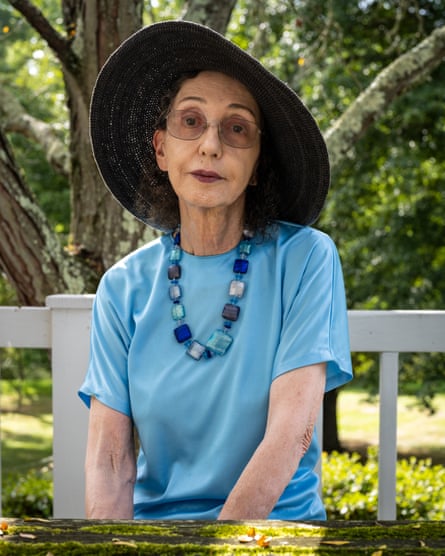
Joyce Carol Oates outside her home in Princeton, New Jersey, in 2022. Photograph: Kyle Kielinski/The Guardian
I experienced some of those dynamics, without quite as much rabbit homicide, during my MFA at New York University (NYU). I remember one workshop where someone presented their writing and no one said a thing, apart from me. The awkwardness was palpable as I nattered on, struggling for new things to pick out in the extract. No one stepped in to save me. People looked pointedly at the table or their laps. The girl next to me was Googling places to eat. Even the workshop leader ran out of things to say.
I found out later that this collective silence was an act of revenge: the student who was being workshopped hadn’t written a feedback letter to anyone that term. After that workshop, their detailed letters quickly resumed.
While the idea that the workshop is de facto a magical, hermeneutic space where mediocre writing turns into something great is a lie, it can be a tool. For the most part my workshops were generous and generative spaces where people read plentifully and with grace. A writer who is forced to confront her work regularly through the eyes of others must think about what it is she wants to write and why, and this inevitably leads to writing that is more thoughtful and ambitious. Of course, learning who to listen to is a skill in itself.
Casting a dream literary dinner
Looking at the NYU MFA faculty is like casting your dream literary dinner: Jeffrey Eugenides, Jonathan Safran Foer, Katie Kitamura, Garth Greenwell, Brandon Taylor, Joyce Carol Oates, Ocean Vuong, Sharon Olds, Claudia Rankine, Valeria Luiselli, Hari Kunzru, Parul Sehgal: the list goes on. Surely, under the warmth of such suns, you will become a star?
There is a rigour and insight a great writer can bring to your work. Anelise Chen, writing for the Rumpus, describes Zadie Smith as “the most precise teacher I have ever had … she puts our writing on an overhead projector and line-edits each page”.
Joyce Carol Oates is known for her strict style. One of her students once described her crossing through the first several pages of a story and asking: “What’s the point?” I commiserated with him, but he looked at me and said: “No, that’s what I want. To be ripped to shreds.”
It is true: much of my first novel, Jean, can be attributed to the advice of my teachers. Jean is set in 1976 in a hippy, rural boarding school for boys with “problems”, and is a broken love story between Jean and a wealthier student, Tom. When I arrived at NYU, I had a bad first draft that spanned 80 years and 12 narrative voices. After Booker-shortlisted novelist Brandon Taylor (who received his MFA from Iowa) coached me in the value of long scenes, my characters unravelled, others fell away and my novel started to take shape. It was in Garth Greenwell’s (who also received his MFA from Iowa and was the 2025 PEN/Faulkner award for fiction recipient) class where I learned how to write the sex. Jonathan Safran Foer (who does not have an MFA) read three drafts of the manuscript and made me think about how meaning tracks on a large scale; Booker-shortlisted Katie Kitamura (who does not hold an MFA) helped me navigate moments of intense emotion through restraint; and Pulitzer winner Jeffrey Eugenides (who received his MFA from Stanford) made me consider how my sentence construction fit into the broader schema of my work.
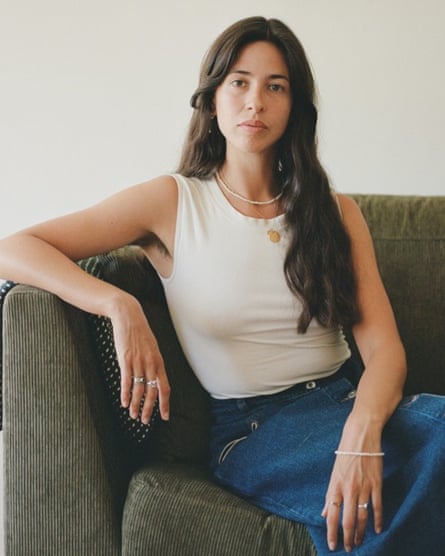
The author Madeleine Dunnigan, who published her debut novel, Jean, in January 2026. Photograph: Tyro Heath
But it is also true that relying too much on the opinion of one person is dangerous. There were classes where I obsessively counted how many times, if at all, my professor said “good”, deaf to their other advice and critique. Towards the end of my MFA, I became susceptible to, and afraid of, the slightest suggestion. My friends and I cried after our supervisions (private meetings with faculty mentors), whether good or bad, simply because we were exhausted by how much we cared. However wonderful a teacher is, the truth is no professor can live up to your wild expectations. What you want is their exclusive attention, all the time. If I’m being honest, I wanted to climb into their brains or find some way of turning them into Borrowers so I could carry them around with me all the time. It might not be healthy.
At most MFAs professors read work a few times a term. Some treat supervisions as pastoral check-ins; others use the time to analyse what you’ve written. Often, they might forget things or rearrange. They are busy and replies take time. You’re not the only person demanding their insight. They may even say things with which you disagree. After all, the suns are themselves only human.
But do all these MFA programmes produce a certain kind of MFA novel? In 2009, critic Mark McGurl published The Program Era: Postwar Fiction and the Rise of Creative Writing in which he argues that “the rise of mass higher education” is “something we should account for first if we are to understand postwar literature”. McGurl argues there is a recognisable kind of fiction produced by the MFA programme and offers a detailed taxonomy of the kinds of writing it produces: “technomodernism” for postmodern writers such as Pynchon; “high cultural pluralism” for writers engaged in the representation of identity through modernist tropes such as Philip Roth and Toni Morrison; and “lower-middle-class modernism” with minimalist and maximalist subcategories for writers such as Raymond Carver and Oates.
J Robert Lennon, writing in Salon, is more straightforward when he dismisses programme fiction as, “mannered, conservative and obvious”. And Anelise Chen takes this one step further when she writes: “let’s face it, any of us would rather read an amazing story dictated by an illiterate drunk than a boring ‘in the house and around the yard’ drama expertly crafted by a well-turned Program writer.”
What seems to be the consensus is that an MFA teaches you style as opposed to soul. A focus on craft, on how to write, creates automatons who can turn a good phrase, but whose writing is stripped of something essential. Pulitzer prize-winning Robert Olen Butler, interviewed by Edward J Delaney for the Atlantic, sums it up: “creative-writing students, who are typically trained almost exclusively in craft and technique […] don’t know the first thing about [being an artist].” Jo Ann Beard told me she could recognise an Iowa Writer’s Workshop graduate anywhere. There was something honed, particular and controlled in the writing. Perhaps the imprint MFAs have had on fiction feels more forceful at a time when the gulf between literary and popular fiction has never been wider. Do MFAs guard the ivory tower of literary fiction while “untrained” writers produce popular fiction for the masses? Or more generously, do MFAs protect a dying art?
While it is true that spending hours in a classroom under the influence of certain teachers can create similarities in style among a cohort, in my classes students submitted widely: magical realism, noir, historical, auto-fiction. They had epic aspirations.
Yet there is a sense that contemporary fiction conforms to a similar style. Is this because MFAs encourage that? I’m not sure. Or is it rather the influence of narrow trends, which force certain books into the public eye at certain times. That many of the most popular authors today have MFAs, and that those novels might have a similar style or focus on a similar subject is a bit like saying fire engines cause fires.
My MFA course at NYU has produced many great writers in recent years: Raven Leilani, Maggie Millner, Lillian Fishman. That becoming a published writer is even a possibility creates untold pressure in MFAs. Even if they deny it, everyone hopes they might be the next big thing. But this is not the case. I sold my book during the programme, but by that point I had been working on it solidly for four years and wrote seven drafts from scratch. The advance was not life-changing. There’s an argument for an MFA as the gateway to first-time publication, but it’s not a guarantee. In June 2024, I graduated and moved back to London. Six months later, I was diagnosed with breast cancer. I spent the next year either in hospital or on the sofa. During the MFA I was driven by an unrelenting force. I complained about being stressed and my demanding workload with the scorn of the healthy. It was only when I couldn’t even look at a computer screen that I reflected on what the previous two years had taught me.
Writing a novel is hard and takes a long time and they’re not all going to be the same. Ottessa Moshfegh’s first book, McGlue, which she wrote during her Brown MFA, is an experimental work about a drunken 19th-century sailor. Afterwards, she published the noir-like Eileen, the maximalist My Year of Rest and Relaxation and the esoteric Lapvona. Her books are so different it would be hard to call any one of them programme fiction.
What the MFA has done is formalised something that historically hasn’t been. But why do we give more licence to art students learning a craft? Spending hours life drawing is a bit like spending time doing detailed character studies. The problem is the commercialisation of fiction: who decides what gets published and why.
You can drive yourself crazy trying to say exactly how an MFA influences writing, and whether it is worth it. The truth is, an MFA isn’t a magic pill. It’s much harder to pastiche a style than you think; spending hours on anything takes stamina. Doing an MFA puts you in a rigorous environment for several years where, hopefully, you can learn how best you write. As Everett put it in Brown’s alumni magazine: “Brown allowed me to really just be who I am and just work.”
- Madeleine Dunnigan is the author of Jean, published by Daunt and available at guardianbookshop.com in the UK or bookshop.org in the US
Source note
First published by The Guardian US
This article was supplied by The Guardian US through its RSS feed and formatted for Crooli Signal. The reporting remains with the original publisher.
Read the original at The Guardian US