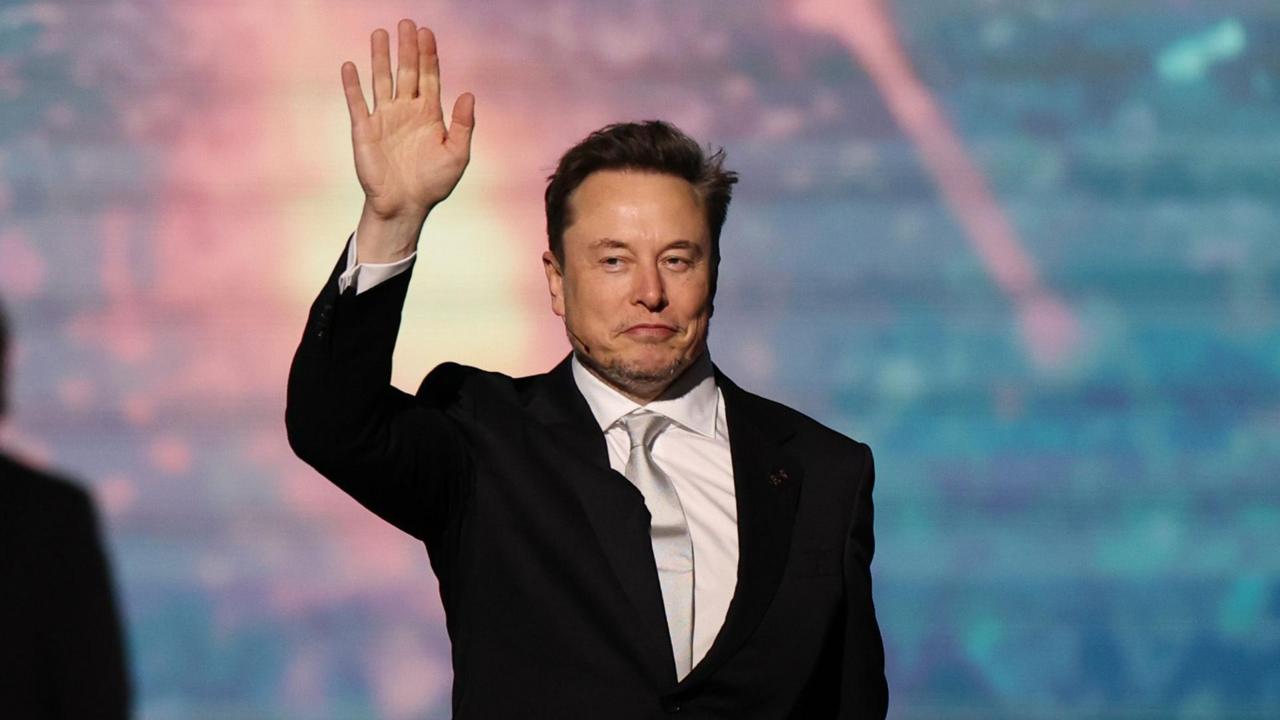
For the first time since SpaceX went public, the world is getting a first-hand look into the trillion-dollar corporation’s financials. The Elon Musk-run business reported its second-quarter earnings on Tuesday, saying that its revenue jumped 92% since June.
SpaceX beat Wall Street expectations, reporting $7.81bn in revenue, versus analysts’ predictions of $6.93bn. While expansive, the company is not profitable. The company reported a loss of $541m, down from a $1bn loss in the same quarter last year.
During a call with investors, Musk called it “another milestone year” for the company. “The SpaceX team is solving some of the hardest engineering problems in the history of humanity,” he said.
The spike in revenue is likely to quell fears from nervous investors who have been waiting for more insight into the company’s potential for profit.
SpaceX had a blockbuster initial public offering in June with the largest stock market debut in history. The IPO transformed SpaceX into a $2tn company and briefly crowned Musk the world’s first trillionaire. But since then, the company’s stock has plummeted by 24%, erasing nearly $500bn in market cap.
Even after the better-than-expected earnings, SpaceX’s stock still ticked down more than 8% in after hours trading on Tuesday, likely due to the company’s massive capital expenditures.
“This report comes at an important time, the share price crashed and burned in recent weeks, it is down 50% from its peak and is trading below its IPO price,” said Kathleen Brooks, research director at global brokerage firm XTB.
“Unsurprisingly, investors are jittery leading up to this report as it may determine the long-term direction for the stock.”
SpaceX is a conglomeration of several of Musk’s businesses, including the satellite maker and internet service provider Starlink, the artificial intelligence platform xAI, the social media company X and the SpaceX rocket business.
Last year, SpaceX pulled in a revenue of $18.7bn, while recording an operating loss of $4.3bn. The only profitable portion of the company is its connectivity arm, Starlink. For comparison, the social media company Meta generated revenue of more than $200bn last year with a net income upwards of $60bn.
Breaking out the revenue for SpaceX’s three main businesses, the company reported $962m for space, $4.29bn for connectivity and $2.56bn for AI, which beat analysts’ forecasts of $835m for space, $3.38bn for connectivity and $2.18bn for AI, according to XTB.
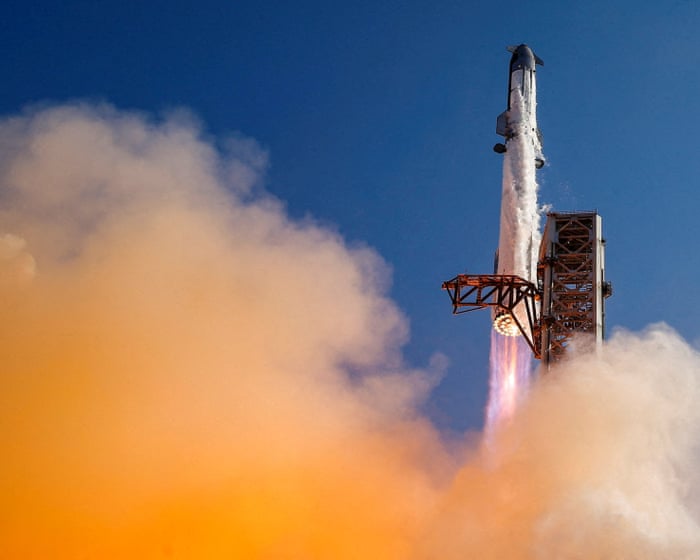
During the earnings call, Musk and other SpaceX executives touted the progress the company has made in launching its massive Starship rockets into orbit and sending even more Starlink satellites into space. They also discussed SpaceX’s ambition to build a city on the moon.
“It sounds like super sci-fi right now,” Musk said. “But it’s gonna happen.”
after newsletter promotion
His top lieutenant and the president of SpaceX, Gwynne Shotwell, followed up saying: “We want to put boots on the moon by at least 2028.”
Tuesday’s earnings come just before the first “lockup” shares in SpaceX will be free for public trading. Lockup shares are what employees and some insiders obtain before a company goes public, which they cannot trade for a set amount of time.
The purpose of a lockup is to prevent a deluge of shares from hitting the market, which can depreciate the stock price.
On Thursday, more than 900m shares from SpaceX will be open for trading – that’smore than double the current amount available and, despite the positive earnings report, could still weaken the company’s share price.
“The central question for SpaceX’s first quarter as a public company was whether the machine underneath the story actually works, and on that question Elon Musk and his team delivered a few positives,” said Thomas Monteiro, a senior analyst at Investing.com.
But he warned: “In a market already wary of heavy capex [capital expenditure] and negative free cash flow amid a shifting rates cycle, that profile may not sit well for the longer term.”
Source note
First published by The Guardian Business
This article was supplied by The Guardian Business through its RSS feed and formatted for Crooli Signal. The reporting remains with the original publisher.
Read the original at The Guardian Business