We are constitutional law, civil rights, and human rights scholars and practitioners who have spent decades litigating government abuse cases in the United States. Despite the US legal system’s flaws, our work – from securing a record civil settlement for George Floyd’s family to holding Bolivia’s ex-president accountable in US federal court for the massacre of Indigenous protesters – has demonstrated that US courts can reign in state power and provide a path to accountability. But this pathway is narrowing.
As Donald Trump attacks the courts, weaponizes the Department of Justice, and targets attorneys who challenge his administration, we have been forced to seek justice beyond our borders.
Earlier this year, we requested a thematic hearing at the Inter-American Commission on Human Rights (IACHR) on the United States’s violent suppression of protests against federal immigration policies. Never before had the commission granted such a hearing, but the extraordinary nature of the Trump administration’s actions – including allegations of excessive and lethal force against peaceful protesters, attacks on journalists and legal observers, and racial profiling and surveillance – warrants international scrutiny. On 4 August, the commission will hold that hearing.
The IACHR is unfamiliar to most Americans. Together with the Inter-American Court of Human Rights, the commission is the bedrock of the hemisphere’s human rights system. For decades, it has served as a safeguard against authoritarianism and State repression in the region, providing an avenue for victims when domestic institutions have failed. While the United States claims it is not bound by the Inter-American System’s norms, it remains subject to the commission’s oversight under the American Declaration of the Rights and Duties of Man. Condemnation by the commission has directly led to policy changes by countries, including the United States.
The IACHR typically convenes sessions of hearings three times per year, rotating the location between countries in the region. Fittingly, ours will be held in Washington DC, just two blocks from the White House.
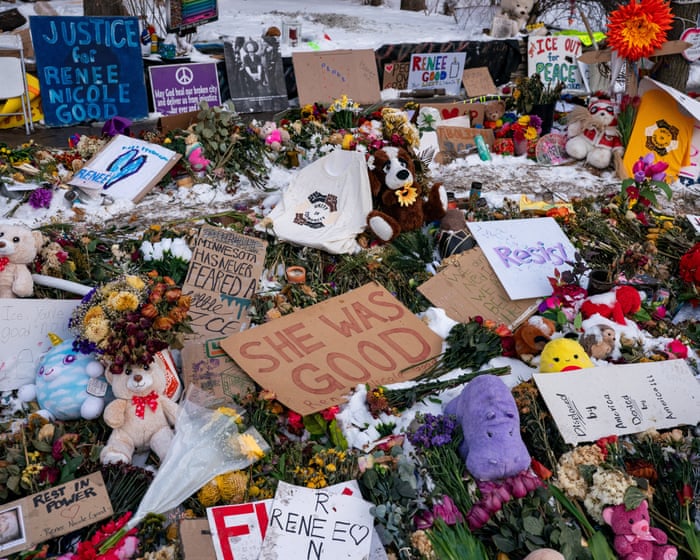
Among those participating will be counsel for the family of Renee Good, who was shot and killed in her car by an ICE agent during a Minneapolis demonstration. Following the tragic killing of Good, the then Department of Homeland Security secretary, Kristi Noem, characterized Good’s actions as “domestic terrorism”. Good’s counsel will also speak on behalf of the dozens of victims in Chicago he represents injured at protests and denied basic rights in detention – including access to food, medicine, and lawyers. Also testifying will be the Rev David Black, who was shot in the head with a pepper ball by a federal agent at a protest outside Chicago. In response, Gregory Bovino, who was serving as US Customs and Border’s “commander-at-large”, said the shooting “was absolutely in line with policy, and I applaud [the agents]”.
Renee Good and the Rev Black are only two of the hundreds of protesters and bystanders who have been injured amid demonstrations against Trump’s remarkably cruel immigration policies. On his inauguration day, Trump signed a series of xenophobic executive orders, including the “Protecting the American People Against Invasion” order. Within days, he deployed federal agents to carry out paramilitary-style raids across US cities. Families have been torn apart and thrown into detention centers or sent to third countries. Everyday Americans watched agents abduct, beat and shoot unarmed migrants. Only weeks ago, separate violent ICE operations resulted in three more deaths.
The international community has sharply criticized the United States’ treatment of immigrants. United Nations high commissioner Volker Türk said he was “astounded by the now-routine abuse and denigration of migrants and refugees”, while the United Nations committee on the elimination of racial discrimination expressed alarm over what it called the “systematic use of racial profiling” by ICE and “[r]acist hate speech by political leaders, including the President”.
Such condemnation is entirely justified, but even those who support the administration’s immigration agenda should be deeply concerned by attacks on those who protest it. Today’s target may be anti-ICE protesters. Tomorrow it could be advocates for climate justice, gun rights, abortion or labor rights. Freedom of assembly and freedom of speech are cornerstones of any functioning democracy. When they are under attack, other freedoms quickly fall.
The upcoming hearing before the commission is both extraordinary and symbolic. A body that has historically held the hemisphere’s most authoritarian governments to account will now scrutinize the United States. As the Trump administration weakens domestic checks on power, international oversight has become not only relevant. It may be our last chance to stop the backsliding that threatens our democracy.
- Thomas Becker serves as the legal and policy director at the University Network for Human Rights and teaches human rights at Columbia Law School
- Antonio Romanucci is a founding partner at Romanucci & Blandin, LLC and serves as counsel for Renee Good’s family
Source note
First published by The Guardian US
This article was supplied by The Guardian US through its RSS feed and formatted for Crooli Signal. The reporting remains with the original publisher.
Read the original at The Guardian US