Image source, Getty Images
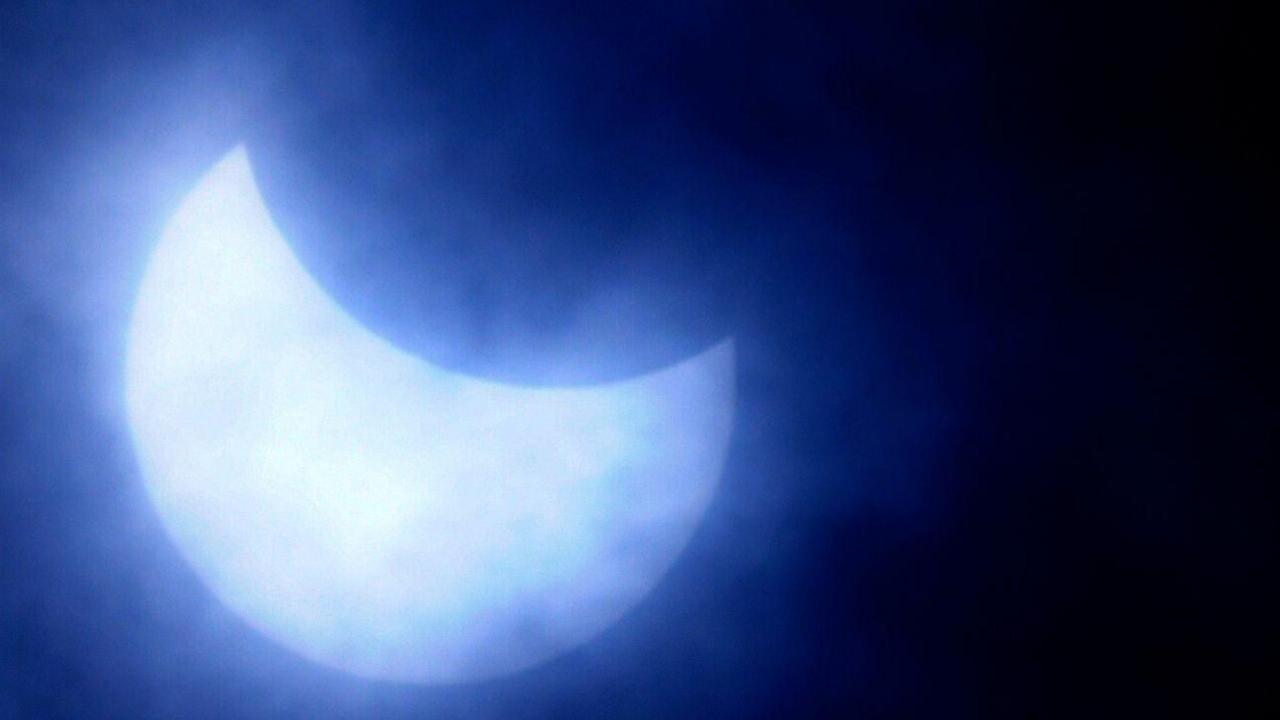
Image caption, A partial solar eclipse was seen over Glasgow in March 2015
ByClaire Thomson
BBC Scotland
People across Scotland will get the best view of a solar eclipse in nearly three decades on Wednesday.
Up to 95% of the Sun will slowly disappear behind the Moon in the most dramatic eclipse visible from the UK since August 1999.
The entire event is set to last about two hours and it is important to never look directly at the Sun.
Here is what you need to know about the partial solar eclipse, including the best places to watch it in Scotland and how to do so safely.
Where are the best places to watch the solar eclipse in Scotland?
Astronomers say the best place to see the eclipse is an elevated location with unobstructed views to the west.
"People in England are worried about having to find a clear view of the western horizon," said Astronomer Royal for Scotland Prof Catherine Heymans.
"But that is less of a problem for us in Scotland because the Sun sets later."
That means in general the Sun should be higher in the sky in Scotland at the time of the eclipse, and people will be able to see the event more clearly.
And by the time the Sun sets after approximately 21:00, the event will be well and truly over.
Image source, Getty Images
Image caption, Members of the Galloway Forest Astronomical Society set up equipment ahead of the solar eclipse in 2015
According to Heymans, the Moon will start to move in front of the Sun between about 18:01 and 18:10 BST.
The peak of the eclipse will occur about an hour later, with the whole event ending just before 20:00.
"It is so slow moving. So if you go out and the Sun is not there you have time to walk down the street to a park or climb up a hill," she added.
"The most important thing is to watch the Met Office cloud cover forecast and plan accordingly from there."
A Met Office spokesperson said: "Weather fronts grazing the west of Scotland may hamper ideal views.
"So although viewers in the south and east of Scotland will see less of the Sun covered by the Moon, they may get better views because of clearer skies."
Image source, Getty Images
Image caption, People in the north-east of Scotland also watched the partial solar eclipse in 2015
There are a number of community events, external happening across Scotland to mark the occasion:
- Beirhope Farm, Hownam, Scottish Borders. The event starts at 17:30 and features a talk from the resident astronomy expert, who will introduce Beirhope's new telescope.
- Dirleton Solar Walk, East Lothian. Certified eclipse glasses will be available as part of a "relaxed evening".
- Edinburgh Playfair Observatory, Calton Hill, Edinburgh. Members of the Astronomical Society of Edinburgh will be on hand to explain more about the eclipse.
- Red Burn Farm, Blantyre, South Lanarkshire. Starting at 18:00, eclipse glasses will be available at the family-friendly event.
- Whitelee Windfarm Visitor Centre, Eaglesham, East Renfrewshire. A range of activities are on offer, including space-themed arts and crafts and an adult workshop exploring solar eclipses and the night sky.
- Dark Space Planetarium, Kirkcudbright, Dumfries and Galloway. If skies are clear, the Dark Space team will go to the harbour with their solar telescope.
- Westport Beach Car Park, Campbeltown, Argyll and Bute. Members of the Kintyre and Gigha Night Sky Group will answer questions and eclipse glasses will be available.
- Gigha Village Hall, Argyll and Bute. Meet at Gigha Village Hall at 17:30 before walking up to the viewing location.
- Broughty Castle, Dundee. Mills Observatory will open for a special public viewing. Eclipse glasses will be available for purchase.
- Glen Tanar Visitor Centre, Aboyne, Aberdeenshire. Booking is essential to join the team at Glen Tanar for the rare astronomical event.
- Tomintoul Skyhide Stargazing Pavillion, Ballindalloch, Aberdeenshire. Both solar telescopes and eclipse glasses will be available.
- Masstowie Primary School, Elgin, Moray. Eclipse glasses will be available with SIGMA Moray's Astronomy Club teaching families to watch safely.
- Jim Savage-Lowden Observatory, Culloden Moor, Highlands. Visitors are encouraged to stay after the partial solar eclipse to watch the Perseids meteor shower.
- Midhowe Broch Car Park, Rousay, Orkney. Astronomers will be on hand to help visitors observe the eclipse safely.
- Rum Bunkhouse, Isle of Rum, Highlands. Solar telescopes will be set up at the island's campsite from 18:00.
How do I watch the eclipse safely?
It is important to never look directly at the Sun and follow proper guidance for safely viewing the eclipse.
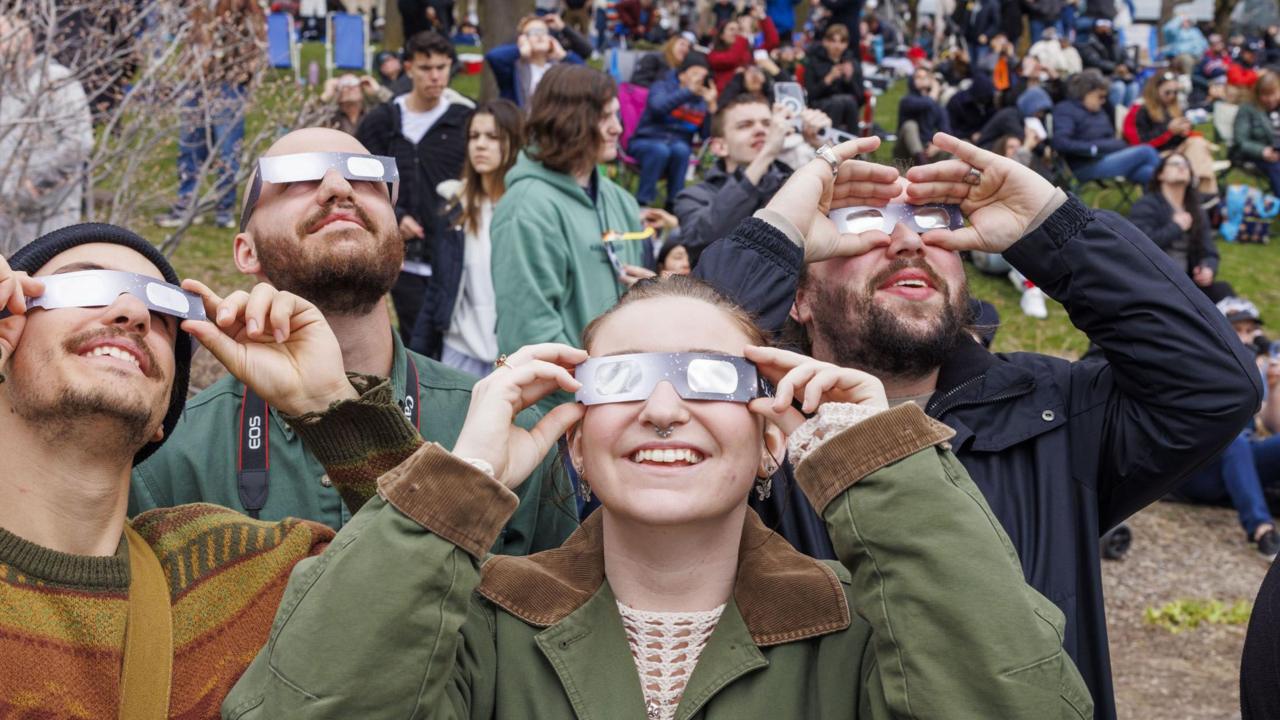
Eclipse glasses - which will be handed out at events across Scotland hosted by astronomical societies or bought online - can offer protection from harmful rays of sunlight.
Legitimate pairs will have safety certification ISO 12312-2 or ISO 12312-2:2015 printed somewhere on the glasses, according the Royal Observatory Greenwich.
Regular sunglasses do not provide adequate protection.
"Even if you don't feel like it is painful to look at the Sun, it is still really damaging to the retina," Heymans said.
"It is a two-hour extravaganza as the Moon slowly covers the Sun and then moves away again so it is not just one glimpse, and it is really dangerous to keep looking."
She added that there was a temptation to look at the Sun through the cloud but even that could harm the eyes.
Following the 1999 total solar eclipse, the Royal College of Ophthalmologists reported about 70 cases of people experiencing vision problems after watching the eclipse.
The college said about 40% of those people had looked at it for less than a minute.
Image source, Getty Images
Image caption, Eclipse glasses were given to pupils outside the Glasgow Science Centre in 2015 and can offer protection from the Sun
Alternative methods for safely viewing the eclipse, include using a solar telescope or making a pinhole projector.
"The next best thing is a colander," Heymans said - or any household object with small holes.
The holes in the colander project an indirect image of the Sun on a surface, such as a wall or the ground.
"Normally the sunlight shines through the holes but during the eclipse, chunks will be eaten out of the Sun, and at the peak, it will just be the arc in the shadow of the colander," she explained.
People should also be careful when photographing the eclipse as the Sun can damage the camera on a phone the same way as it can damage the eyes.
Cameras can be protected with eclipse glasses.
Image source, Getty Images
Image caption, The holes in the colander project an indirect image of the Sun on a surface
What will the eclipse look like in Scotland?
Parts of Spain and Portugal will witness the phenomenon of a total eclipse on Wednesday but Heymans said Scotland would be "agonisingly close".
The path of the eclipse shadow means the UK will not see a total eclipse, but in Scotland, up to 95% of the Sun will be obscured.
"Solar eclipses happen every couple of years but a total eclipse is very rare and we are a stone's throw away from it," Heymans said.
"Over the course of two hours, the Moon will be biting chunks out of the Sun as it moves across in front of it, blocking the light out."
However, the Sun will not be entirely covered.
Image source, Getty Images
Image caption, The progression of a solar eclipse
While there will be smaller solar eclipses over the next few years, the next total eclipse is not expected to take place until 23 September 2090.
"It will be darker and it will feel a little eerie but we're not going to have the sky go completely dark," she said.
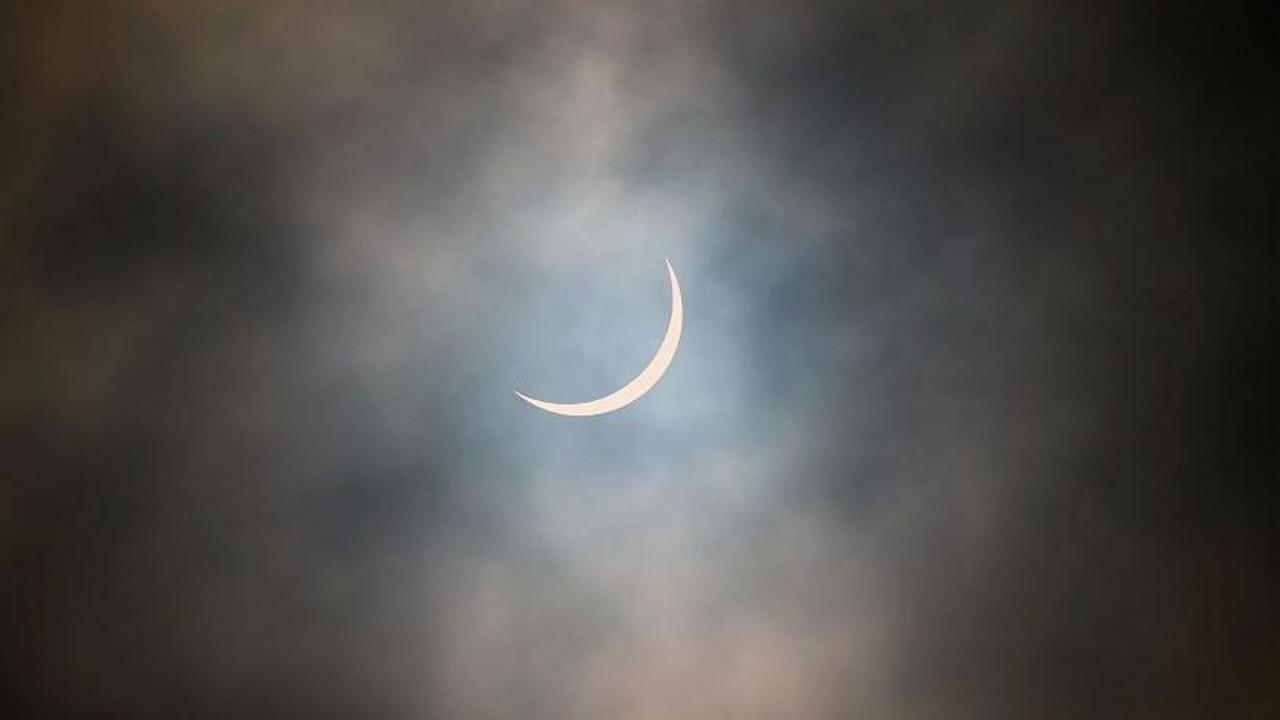
At its peak - weather permitting - only an arc of the Sun will be seen.
"It's going to be agonisingly, frustratingly close but if anyone wants to see a full total eclipse, they will have to leave the UK," Heymans added.
Source note
First published by BBC Science
This article was supplied by BBC Science through its RSS feed and formatted for Crooli Signal. The reporting remains with the original publisher.
Read the original at BBC Science